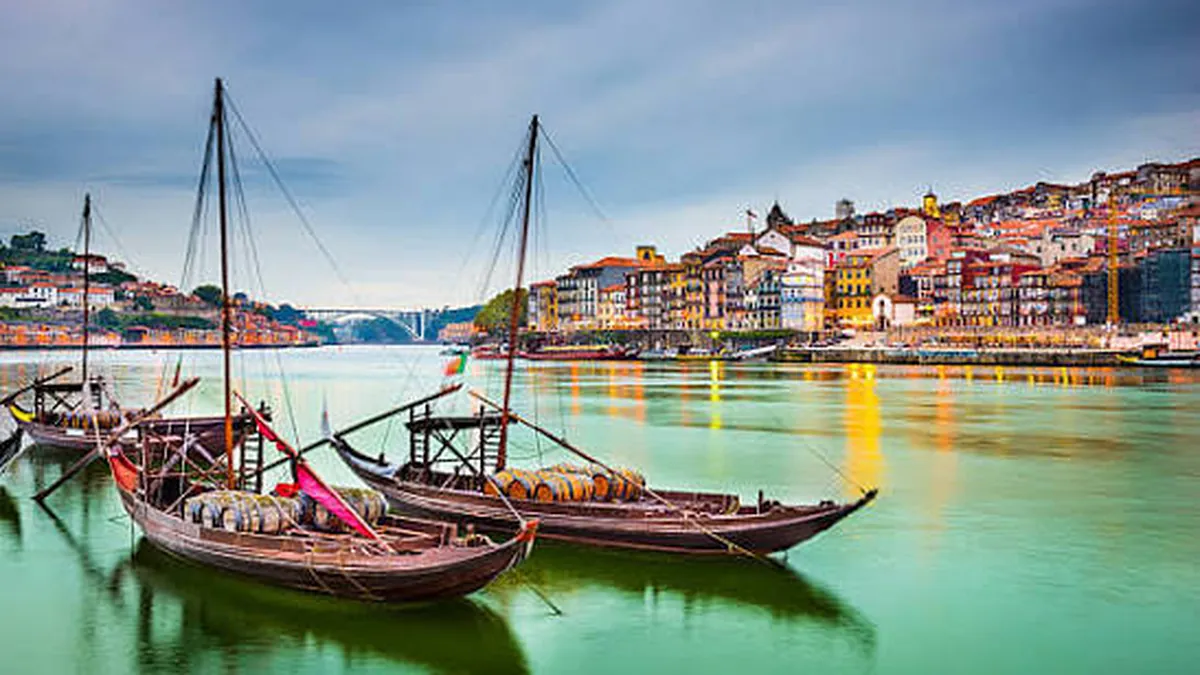
This Porto travel guide starts with the moment that hooks most visitors: seeing the Ribeira district from across the Douro River. Red rooftops stack down the hillside, azulejo-tiled facades catch the light, and the smell of grilled sardines drifts up from riverside cafés. It’s a city that rewards slow walking more than checklist tourism.
Porto is Portugal’s second-largest city, a UNESCO World Heritage riverside destination in the north known for port wine, azulejo tile art, and a walkable historic center. Most visitors need 2–3 days to cover the Ribeira district, Clérigos Tower, São Bento Station, and a Vila Nova de Gaia wine cellar tour, with an optional day trip to the Douro Valley.
Why This Porto Travel Guide Says You Should Visit
Porto doesn’t try to be Lisbon, and that’s exactly its appeal. It’s smaller, less polished around the edges, and arguably more atmospheric because of it. The historic Ribeira district earned UNESCO World Heritage status back in 1996, and the city was later named Europe’s Leading City Break Destination in 2020 — recognition that’s brought more visitors but hasn’t (yet) crowded out the local character.
What makes Porto distinct:
- Port wine culture. The wine that shares the city’s name is aged in cellars just across the river in Vila Nova de Gaia, and touring them is the single most popular activity here.
- Azulejo tiles everywhere. São Bento train station’s entrance hall, covered floor to ceiling in blue-and-white tile murals depicting Portuguese history, is often called one of the most beautiful train stations in the world.
- A compact, walkable core. Nearly everything a first-time visitor wants sits within a 20–30 minute walk, hills notwithstanding.
- Genuinely good, affordable food. You can eat extremely well here without spending Lisbon or Barcelona prices.
Quick takeaway: If you want the wine-country romance of Portugal without leaving the city, Porto delivers it more directly than anywhere else in the country.
Best Time to Visit Porto
Most guides default to “May through September,” but that’s not the full picture. Shoulder months genuinely compete with peak summer here.
- April–June and September–October: Comfortable temperatures, thinner crowds, lower accommodation prices. This is the sweet spot for most travelers.
- July–August: Warmest, busiest, and priciest. Good for beach time at Foz do Douro but expect queues at Livraria Lello and the wine cellars.
- November–March: Cooler and wetter, with real rain — not dramatic, but pack accordingly. Prices drop noticeably, and the city feels more lived-in than touristy.
Porto’s weather is genuinely milder than people expect for northern Portugal; you rarely need heavy winter gear even in the colder months.
Getting to Porto and Getting Around
From the Airport to the City Center
Francisco Sá Carneiro Airport (usually just called Porto Airport) connects to downtown via the metro’s purple E line, heading toward Estádio do Dragão. The Lapa, Trindade, and Bolhão stops all put you within walking distance of the center. A taxi or rideshare runs roughly €20–30, with a markup of up to 20% on weekends and at night.
Metro, Trams, and the Andante Card
Porto’s public transport (metro, buses, and trams) runs on a rechargeable Andante card. Zone 2 tickets cover most of the city center; if you’re coming from or going to the airport, you’ll need Zone 4. Transfers between metro, bus, and tram are free for one hour on a single fare. If you’re staying more than a day or two, the Andante Tour pass (24 or 72 hours, unlimited travel, all zones) is usually the better deal — it activates from first use, not midnight.
For the hills — and Porto has real hills — the Guindais funicular, the Ribeira elevator (Elevador da Ribeira), and the Gaia cable car (teleférico) all offer shortcuts with river views built in.
Quick takeaway: Porto is walkable, but don’t be a hero about the hills. Budget the funicular or cable car into your day rather than fighting the incline on foot every time.
Where to Stay in Porto
Picking a neighborhood matters more in Porto than in most cities, because each one shapes a genuinely different trip.
| Neighborhood | Best For | Trade-offs |
|---|---|---|
| Baixa / Aliados | First-timers, nightlife, shopping | Busier, more commercial feel |
| Ribeira | River views, historic atmosphere | Touristy, can be noisy, pricier |
| Vila Nova de Gaia | Wine lovers, quieter evenings | Fewer restaurants and nightlife options |
| Foz do Douro | Beach access, calm, upscale | Farther from the main sights |
Baixa/Aliados, centered on Avenida dos Aliados and the city hall, has Porto’s biggest concentration of hotels, bars, and restaurants — including Bolhão Market and the main shopping street, Rua de Santa Catarina. It’s the safest default choice for a first visit.
Ribeira puts you directly on the riverfront, steps from the Dom Luís I Bridge, but the cobbled charm comes with tourist crowds and higher prices for less space.
Vila Nova de Gaia, across the river, is where most of the famous port wine lodges — Cálem, Graham’s, Taylor’s, Cockburn’s — actually are. Staying here means falling asleep near the cellars but having fewer dinner options within walking distance.
Foz do Douro, where the river meets the Atlantic, suits travelers who want a beach-adjacent, quieter base and don’t mind a short tram or bus ride into the historic center.
Top Things to Do in Porto
The essentials, roughly in the order most visitors tackle them:
- Walk the Ribeira riverfront — arcaded buildings, colorful facades, and the best photo angles of the Dom Luís I Bridge.
- Climb Clérigos Tower — a 225–240 step climb (sources vary slightly) rewarded with a full panoramic view of the city.
- See São Bento Station’s tile murals — free to visit, and worth 15 minutes even if you’re not catching a train.
- Browse Livraria Lello — the ornate bookstore often cited as inspiration for Harry Potter’s aesthetic. It requires a paid, timed entry ticket booked in advance to manage crowds; the fee is credited toward a book purchase.
- Tour a port wine lodge in Vila Nova de Gaia — Cálem, Graham’s, and Taylor’s all run cellar tours with tastings, and most take under 90 minutes.
- Cross the Dom Luís I Bridge on foot — the upper deck (also used by the metro) gives the best river views; walk it at sunset if you can time it.
- Visit the Stock Exchange Palace (Palácio da Bolsa) — an ornate 19th-century civic building with an interior “Arabian Room” that surprises most first-time visitors.
- Explore Serralves Foundation — a modern art museum, Art Deco villa, and park combined, and a good change of pace from the historic center.
- Wander Bolhão Market — recently renovated, good for a quick lunch of petiscos (small plates) rather than a full sit-down meal.
- Take a Douro river cruise — the classic “six bridges” cruise runs about an hour and gives you the skyline view from the water.
Port Wine Cellars and Douro Valley Day Trips
Port wine is Porto’s namesake product, and touring the lodges in Vila Nova de Gaia is the closest thing the city has to a must-do. Most cellars — Cálem, Graham’s, Taylor’s, Cockburn’s, Poças, Burmester — offer a similar format: a 45–60 minute guided tour through the aging cellars followed by a tasting of two or three port styles. Some combine the tour with a fado performance in the evening.
If you have a full extra day, the Douro Valley itself — about an hour east of Porto — is worth the trip. It’s the world’s oldest demarcated wine region, and the landscape of terraced vineyards along the river is genuinely striking rather than just a wine-tasting excuse. Options include:
- Self-drive if you want maximum flexibility and plan to visit multiple wineries.
- Guided day tours by van or car, typically including lunch and tastings, if you don’t want to worry about driving after drinking.
- Full-day river cruises, averaging around €100 per person including meals and a tasting — slower-paced but scenic.
- Train to Pinhão, then a local tour, if you’d rather not commit to a full guided package.
Quick takeaway: If you only have time for one wine experience, do a Gaia cellar tour (a couple of hours). If you have a full day to spare, the Douro Valley is worth prioritizing over a second day wandering the city center.
What to Eat in Porto
Porto’s food identity leans hearty and unpretentious, shaped by its Atlantic coastline and working-class port-city history.
- Francesinha — the signature dish: a meat-and-cheese sandwich drenched in a beer-and-tomato-based sauce, served with fries. Café Santiago and Bufete Fase are the two names that come up most often for the best versions in the city.
- Tripas à moda do Porto — tripe stewed with white beans, sausage, and vegetables. It’s the dish that earned Porto residents the nickname “tripeiros” (tripe-eaters), and it’s a genuine point of local pride, not just a novelty.
- Bacalhau (salt cod) — Portugal’s national ingredient, with famously “365 ways to cook it,” from bacalhau à brás (scrambled with potatoes and eggs) to simple grilled versions with olive oil.
- Petiscos — Portuguese-style small plates, ideal for sampling several things at once; Bolhão Market is a good, casual spot to try a few.
- Pastel de nata and other pastries — the custard tart is ubiquitous, but Porto’s café culture (try the historic Majestic Café) is worth the visit even beyond the tart itself.
- Vinho verde — a young, slightly effervescent white wine from the region, and a lighter counterpart to port for those who want wine that isn’t dessert-sweet.
Day Trips from Porto
Porto’s location makes it an easy base for exploring the north of Portugal:
- Douro Valley (about 1 hour) — vineyard-covered hills, wine tastings, and river views; see the section above.
- Braga (about 1 hour) — religious heritage, most famously the Bom Jesus do Monte sanctuary with its zigzagging Baroque staircase.
- Guimarães (about 1 hour) — often called the “birthplace of Portugal,” with a well-preserved medieval castle and old town.
- Aveiro (about 1 hour) — a coastal canal town nicknamed the “Venice of Portugal,” known for colorful moliceiro boats and striped Art Nouveau buildings.
- Amarante (about 1 hour) — a smaller, less-visited river town in the north, good for travelers who want to escape the main tourist circuit entirely.
Most of these are doable by train or organized tour without needing a rental car.
Porto Travel Guide Itinerary: 1, 2, and 3 Days
1 Day (highlights only): Ribeira riverfront walk → São Bento Station → Clérigos Tower → cross Dom Luís I Bridge → one port wine cellar tour in Gaia → dinner back in Ribeira.
2 Days: Day 1 as above. Day 2: Livraria Lello (book ahead) → Palácio da Bolsa and São Francisco Church → Bolhão Market for lunch → afternoon at Serralves Foundation or Foz do Douro → evening fado show.
3 Days: Days 1–2 as above, then a full-day Douro Valley trip on day 3 — either self-driven, a guided tour, or the scenic train to Pinhão.
This is roughly the pacing most seasoned visitors settle on: two days comfortably covers the city itself, and a third day is best spent outside it rather than repeating ground.
Porto Travel Guide: Practical Tips on Costs, Safety, and Packing
- Budget expectations: A comfortable mid-range daily budget (accommodation, food, transport, one paid activity) runs noticeably lower than Lisbon or most Western European capitals — expect meals in the €10–20 range at casual to mid-range restaurants and wine cellar tours from roughly €15–25 per person.
- Safety: Porto is generally very safe for tourists; the usual city-travel caution around pickpockets in crowded tourist zones (Ribeira, São Bento) still applies.
- Packing: Comfortable, grippy shoes are non-negotiable — the cobblestones and hills are unforgiving in anything without real tread. Bring a light rain layer even outside winter.
- Language: English is widely understood in tourist areas, but a few Portuguese phrases go a long way with locals.
- Water: Tap water in Porto is safe to drink.
The Bottom Line
Porto rewards travelers who slow down. Two or three unhurried days here — mixing a wine cellar tour, a long riverside walk, a proper Francesinha, and one day trip into the Douro Valley — will give you a fuller sense of the city than rushing through a checklist ever could. Start with where you’ll stay, block out your Livraria Lello ticket in advance if it’s on your list, and build the rest of the trip around it.
Discover more destinations and planning tips in our travel guide library.
FAQ Section
How many days do you need in Porto?
Two full days cover the main historic sights, a wine cellar tour, and a proper meal or two. Add a third day if you want to fit in a Douro Valley day trip, which is genuinely worth the extra time if your schedule allows it.
Is Porto or Lisbon better to visit?
They’re different rather than better-or-worse. Porto is smaller, more compact, and centered on port wine and riverfront charm; Lisbon is larger with more neighborhoods and nightlife variety. Many travelers combine both on a single Portugal trip.
What is Porto famous for?
Porto is best known for port wine, the azulejo-tiled São Bento train station, the UNESCO-listed Ribeira district, and its dramatic hillside setting along the Douro River.
Do you need a car in Porto?
No. The historic center is walkable, and the metro, trams, and buses cover the rest. A car only becomes useful if you’re planning to self-drive through the Douro Valley or nearby towns.
What is the best area to stay in Porto?
Baixa/Aliados is the safest first-time choice for its central location and range of restaurants. Ribeira suits travelers who prioritize river views over quiet nights, and Vila Nova de Gaia suits those focused on the wine cellars.
Is Porto expensive?
Porto is generally more affordable than Lisbon and most major Western European cities, particularly for food and wine tours, though prices rise noticeably in July and August.
What is the best month to visit Porto?
May, June, September, and October offer the best balance of good weather, manageable crowds, and reasonable prices. Summer is warmer and busier; winter is quieter and cooler but still mild by northern European standards.
Can you drink the tap water in Porto?
Yes, Porto’s tap water is safe to drink.