Most Tokyo itineraries fall into one of two traps: they cram in every landmark and leave you exhausted by day three, or they’re so vague (“explore Shibuya, then relax”) that you land in Narita with no real plan. Neither gets you a good trip. This one is built to actually be walked.
A good Tokyo itinerary for first-time visitors covers 5–7 days, splitting the city into neighborhood-based days — Asakusa, Shibuya/Shinjuku, Harajuku, Ginza, and Akihabara/Ueno — plus one day trip to Mt. Fuji, Hakone, or Kamakura. Get a Suica card on arrival and group sights by area, not by “must-see” lists, to cut down on backtracking.
How Many Days Do You Actually Need in Tokyo?
Tokyo covers more than 2,000 square kilometers and functions less like one city and more like five or six overlapping ones stitched together by train lines. That’s the first thing to get right before you build any schedule.
Three days is enough to hit the highlights — Asakusa, Shibuya, and Shinjuku — but you’ll be moving fast and skipping almost everything else. Five days gives you breathing room for Harajuku, Ginza, and a proper food crawl. Seven days is where Tokyo stops feeling like a checklist and starts feeling like a place, with room for a day trip out to Hakone or Kamakura without it feeling rushed.
If you’re combining Tokyo with Kyoto or Osaka on a single Japan trip, three to four days in Tokyo is a common, workable split. If Tokyo is the whole trip, aim for seven.
Quick takeaway: Pick your day count based on whether Tokyo is your entire trip or one stop on a longer Japan itinerary — not based on how many attractions are on your list.
Day-by-Day Tokyo Itinerary (7 Days)
This route groups activities geographically so you’re not crossing the city twice in one afternoon. Swap days around freely — the order matters less than keeping each day in one area.
Day 1 — Asakusa and Tokyo Skytree
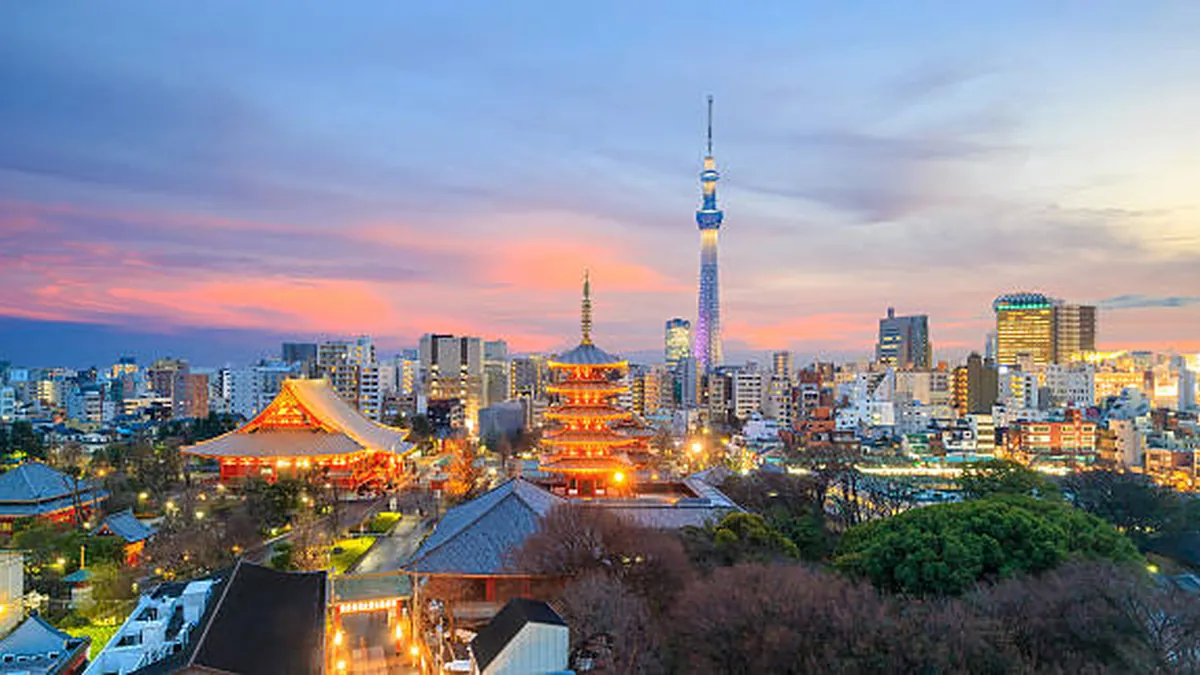
Start in Asakusa, Tokyo’s most traditional district and the easiest way to ease into the city. Senso-ji Temple, Tokyo’s oldest, sits at the end of Nakamise-dori, a shopping street lined with snack stalls and souvenir shops — go early, before the tour groups arrive.
In the afternoon, walk or take a short train ride to Tokyo Skytree. At 634 meters, it’s one of the tallest structures in the world, and on a clear day you can see Mt. Fuji from the observation deck. Time your visit for late afternoon so you catch the city lighting up at sunset.
Where to eat: Asakusa has excellent, unpretentious tempura and soba shops tucked off the main street — skip the places directly outside the temple gates, where prices climb and quality drops.
Day 2 — Shibuya and Shinjuku
Shibuya in the morning: the famous scramble crossing, then Shibuya Sky for an observation-deck view that’s less crowded before midday. Shibuya Sky and Shibuya Crossing photograph very differently depending on the hour — the crossing is a spectacle after dark, so it’s worth returning in the evening.
Move to Shinjuku in the afternoon. Shinjuku Gyoen is a genuinely calm garden in the middle of the chaos (closed Mondays, with exceptions during cherry blossom season and the autumn chrysanthemum exhibition). At night, Omoide Yokocho and Golden Gai are two very different versions of Tokyo’s drinking-alley culture: the first is smoky yakitori stalls, the second is a maze of tiny themed bars, many seating only four or five people.
Quick takeaway: Shibuya and Shinjuku are two stops apart by train but feel like different cities — don’t try to squeeze them both into a single loop without a break in between.
Day 3 — Harajuku, Meiji Shrine, and Omotesando
Harajuku in the morning, starting on Takeshita Street for youth fashion, cosplay shops, and sugary street food. A seven-minute walk brings you to the entrance of Meiji Shrine — a forested shrine complex that feels like a different world despite sitting next to one of Tokyo’s busiest train stations.
In the afternoon, Omotesando runs parallel to Takeshita Street but couldn’t feel more different: tree-lined, upscale, closer to a boulevard in Paris than a Tokyo backstreet. It’s a good lunch stop if you want a break from convenience-store snacking.
Day 4 — Ginza, Imperial Palace, and Tsukiji
Morning at the Imperial Palace grounds and East Gardens — free to enter, and one of the few genuinely quiet green spaces in central Tokyo. From there, walk toward Tsukiji Outer Market for lunch; the inner wholesale market moved to Toyosu years ago, but the outer market still runs a dense strip of seafood stalls and small restaurants. If you want to see the actual auction-style activity, Toyosu now has public observation decks.
Spend the evening in Ginza. It’s Tokyo’s most polished shopping district by day, but stay past sunset — as the office crowd clears out and the storefronts light up, it takes on a completely different, more theatrical feel. It’s also a solid choice for a calm sit-down dinner (sushi, tempura, tonkatsu) before louder nights later in the trip.
Day 5 — Akihabara and Ueno
Akihabara is sensory overload in the best way: multi-floor electronics stores, retro arcades, and themed cafés stacked on top of each other. Give it a few hours minimum — it’s easy to lose track of time here.
In the afternoon, head to Ueno Park. Between the park’s museums (Tokyo National Museum, Tokyo Metropolitan Art Museum, National Museum of Nature and Science) and its ponds and shrines, it’s an easy half-day, and a good change of pace after Akihabara’s noise.
Quick takeaway: If anime, gaming, or electronics aren’t your thing, don’t force a full day in Akihabara — an hour or two is enough to get the picture.
Day 6 — Odaiba and a Second Night District
Odaiba is Tokyo’s futuristic waterfront district, reachable by the Yurikamome monorail. TeamLab Planets is the standout draw here — an immersive digital art museum that regularly sells out its time slots, so book ahead rather than showing up same-day. The Fuji TV Building’s spherical observation deck and the Unicorn Gundam statue round out an easy, low-walking afternoon.
For the evening, pick whichever night district you haven’t covered yet — Roppongi for a more international nightlife scene, or a return trip to Shinjuku’s Kabukicho area if you want more of the neon.
Day 7 — Day Trip (Mt. Fuji, Hakone, or Kamakura)
Save your last full day for one trip outside the city (see the day-trip section below for the specifics of each route). Build in a buffer for train schedules — especially for Hakone, where local buses and trains run far less frequently than anything in central Tokyo.
Where to Stay in Tokyo (By Traveler Type)
| Area | Best For | Why |
|---|---|---|
| Shinjuku Station | First-timers, easy Shinkansen access | Central hub, close to Shibuya/Harajuku/Roppongi |
| Shibuya Station | Nightlife, younger travelers | Walking distance to Shibuya Sky, crossing, shopping |
| Tokyo Station | Comfort/luxury, day-trippers | Direct Shinkansen access, historic hotel options |
| Asakusa / Asakusabashi | Traditional atmosphere, budget-conscious | Quieter, closer to temples, smaller local restaurants |
| Ginza | Shopping-focused, business travelers | Central, upscale, easy subway access |
Shinjuku is the safest default for a first Tokyo trip: it puts you within a few stops of most of the neighborhoods in this itinerary and gives you the fastest route out to the Shinkansen if you’re continuing on to Kyoto or Osaka. Note that Shinjuku Station has two very different sides — the east side near Kabukicho is louder at night but not unsafe if you use normal city-travel common sense.
Getting Around: Suica, PASMO, and the JR Pass Question
Tokyo’s train network is dense enough that you’ll rarely need a taxi, but the payment system trips up a lot of first-timers.
Suica and PASMO are interchangeable prepaid IC cards that work on nearly every train, subway, and bus in the city — tap in, tap out, and the fare is deducted automatically. Since regular Suica issuance briefly paused, most visitors now get a Welcome Suica: no deposit, valid for 28 days from first use, sold in preloaded denominations from ¥1,000 to ¥10,000 (max balance ¥20,000), available at both airports and major stations including Tokyo, Shinjuku, and Shibuya. It only works with cash top-ups — you can’t reload it with a credit card at the machines.
Do you need a JR Pass? For a Tokyo-only trip, no — a Suica or PASMO covers everything you need, and it’s cheaper for short-distance city travel than a rail pass. A JR Pass only pays off if you’re taking multiple long-distance Shinkansen trips outside Tokyo (say, Tokyo–Kyoto–Hiroshima), and pass prices have risen enough in recent years that it’s worth running the numbers on your specific route before buying one.
Airport transfers: From Haneda Airport, the monorail or train into central Tokyo takes about 30 minutes and costs roughly ¥500. From Narita, plan on closer to an hour, with the Narita Express (N’EX) as the fastest direct option to major stations.
Quick takeaway: Buy a Welcome Suica the moment you land, top it up with cash, and only think about a JR Pass if your trip extends well beyond Tokyo.
What a Week in Tokyo Actually Costs
| Category | Budget | Mid-Range | Comfortable |
|---|---|---|---|
| Accommodation (per night) | ¥6,000–¥10,000 | ¥15,000–¥25,000 | ¥35,000+ |
| Meals (per day) | ¥2,500–¥4,000 | ¥5,000–¥8,000 | ¥10,000+ |
| Local transport (per day) | ¥800–¥1,200 | ¥1,000–¥1,500 | ¥1,500+ (taxis) |
| Attractions/activities (per day) | ¥1,000–¥2,000 | ¥3,000–¥5,000 | ¥5,000+ |
These are rough per-person daily ranges, not fixed prices — convenience-store meals and standing sushi bars can bring food costs down considerably, while omakase dinners or private tours will push them well past the “comfortable” column.
Day Trips Worth the Train Ride
- Mt. Fuji: Viewable from Tokyo Skytree on a clear day, but for an up-close visit, day tours typically head to the Fifth Station area. Weather is the main risk — check forecasts before committing, since cloud cover can hide the mountain entirely.
- Hakone: Around 90 minutes from Tokyo by train, known for hot springs and Lake Ashinoko. Local transport (the Hakone Tozan line, buses, and the Hakone Tozan cable car/ropeway) runs far less frequently than Tokyo’s city trains, so check schedules before you go — or take a direct bus to the lake if you want to skip a transfer.
- Kamakura: About an hour from Tokyo Station, and the most walkable of the three options. Get off one stop early at Kita-Kamakura to start at Engakuji, one of Japan’s most significant Zen temples, then work your way through the town’s other shrines on foot or by local train.
Best Time to Visit Tokyo
Late March through April brings cherry blossom season — beautiful, but also the most crowded and expensive stretch of the year for flights and hotels. Autumn (October–November) offers comparable mild weather with noticeably thinner crowds. Summer is hot and humid enough to affect how much walking you’ll comfortably do in a day; winter is cold but dry, with clear skies that improve your odds of seeing Mt. Fuji from the city.
Mistakes First-Timers Make (and How to Avoid Them)
- Overplanning by attraction instead of by neighborhood. Jumping between Tokyo Tower, Skytree, and Shibuya Crossing in one day sounds efficient on paper and is exhausting in practice.
- Skipping reservations for TeamLab Planets or popular restaurants. Both regularly sell out same-day slots.
- Underestimating Hakone’s transport gaps. City-level train frequency doesn’t apply once you leave central Tokyo.
- Assuming every Suica top-up method works everywhere. Auto top-up and credit-card reloading are more limited outside the Tokyo IC card area.
The Bottom Line
A Tokyo itinerary works best when it’s built around neighborhoods, not a scattered wish list. Pick 5–7 days if you can, get a Suica card on day one, and leave enough flexibility to stay somewhere a little longer than planned — that’s usually where the trip actually gets good. Start locking in your accommodation and any timed tickets (TeamLab Planets, Shibuya Sky) as soon as your dates are set, since both can sell out weeks in advance during peak seasons.
Discover more destinations and planning tips in our travel guide library.
FAQ Section
How many days do you need in Tokyo?
Three days covers the highlights, five gives you breathing room, and seven lets you add a day trip without rushing. If Tokyo is your only stop in Japan, aim for a full week; if you’re combining it with Kyoto or Osaka, three to four days is a common split.
What is the best area to stay in Tokyo for first-time visitors?
Shinjuku Station is the most practical base — central, well-connected to Shibuya and Harajuku, and close to Shinkansen access if you’re continuing elsewhere in Japan.
Do I need a JR Pass for a Tokyo-only trip?
No. A Suica or PASMO IC card covers city trains, subways, and buses more cheaply than a rail pass for short-distance travel. A JR Pass only makes financial sense if you’re taking multiple long-distance Shinkansen trips outside Tokyo.
Is 5 days enough for Tokyo?
Yes, for most first-time visitors. Five days covers the major neighborhoods — Asakusa, Shibuya, Shinjuku, Harajuku, and Ginza — with time for a slower food-focused day, though it leaves little room for a day trip.
What is the best time of year to visit Tokyo?
Late March to April (cherry blossoms) and October to November (mild weather, fewer crowds) are the strongest windows. Summer is hot and humid; winter is cold but generally dry and clear.
How much does a week in Tokyo cost?
Budget travelers can manage on roughly ¥10,000–¥15,000 per day including accommodation; mid-range trips run closer to ¥25,000–¥35,000 per day. Flights and any long-distance rail travel are separate from these daily estimates.
Can you do a day trip to Mt. Fuji from Tokyo?
Yes. Many day tours head to the Fifth Station area, and Tokyo Skytree itself offers distant views of the mountain on clear days. Weather is the main variable — cloud cover can obscure the mountain entirely.
What should first-time visitors to Tokyo not miss?
Senso-ji Temple in Asakusa, Shibuya Crossing, Meiji Shrine, and at least one evening in Shinjuku’s alley bars (Omoide Yokocho or Golden Gai) cover the essential first-trip experience.