The first time I tried to “do” Cinque Terre in a single day, I saw two villages, missed lunch, and spent most of the afternoon waiting on a train platform. Three days fixes all of that — and it’s the sweet spot between rushing and overstaying.
3-Day Cinque Terre Itinerary is enough time to visit all five villages, hike a section of the Blue Trail, and still have a slow dinner instead of a rushed one — as long as you base yourself in the region overnight rather than day-tripping from La Spezia or Florence. That’s the short version. Here’s the full plan.
Is 3 Days Really Enough for Cinque Terre?
Yes, with one condition: you need to sleep in the region, not just visit for the day.
Cinque Terre — Riomaggiore, Manarola, Corniglia, Vernazza, and Monterosso al Mare — is made up of five villages strung along a short stretch of Ligurian coastline. Trains connect them in a matter of minutes, which fools a lot of first-timers into thinking they can see everything before the last train back to their hotel in Florence or Milan.
They can’t, not really. Trying to see all five villages in one day means you’re spending more time on train platforms than in the towns themselves. Three days, by contrast, lets you slow down: one or two villages a day, a proper lunch, time to walk down to the water. It’s also enough time to fit in some hiking without turning the trip into an athletic event.
If you only have one day, most people recommend skipping Corniglia — it’s the one village not directly on the water, and the walk up from its train station takes longer than the payoff usually justifies. With three days, you don’t have to make that trade-off.
Quick takeaway: Three days = all five villages, one hike, and no marathon travel days. One day = pick two or three villages and accept you’re missing the rest.
Where to Stay: Picking Your Base Village
Where you sleep shapes your whole trip more than anything else on this list, because it determines your first and last train (or walk) of each day.
- Manarola — Central location, some of the best sunset photo spots, walkable in about 20 minutes end to end. Good middle-ground base.
- Vernazza — Widely considered the prettiest harbor of the five, with a small beach and a lively piazza, but accommodation books up fast and prices reflect it.
- Monterosso al Mare — The only village with a real sandy beach and a flatter layout, which matters if you’re traveling with kids or don’t want to climb stairs every day. It also feels a bit more resort-like than the others.
- Riomaggiore — Good train connections toward La Spezia, colorful cliffside houses, slightly less crowded in the evenings than Vernazza.
- La Spezia — Not technically one of the five villages, but a practical, cheaper base with frequent train service into the park — worth considering if village hotels are booked or overpriced for your dates.
There’s no wrong answer here. If budget matters most, base in La Spezia. If beach time matters most, base in Monterosso. If you want the classic postcard view from your window, Manarola or Vernazza.
Getting There and Getting Around
Most travelers fly into Pisa Airport, then take a train to La Spezia (roughly 1–1.5 hours), which is the main gateway into the park. Travelers coming from the Genoa side often enter through Levanto instead.
Inside the park, the Cinque Terre Express train is the backbone of getting around — it runs between Levanto and La Spezia, stopping at all five villages, typically from mid-March through early November.
You have two main ways to pay for it:
- Single tickets — Priced by season band (roughly €5 in low season up to €10 in peak season, one-way). Fine if you’re only making a couple of trips a day.
- Cinque Terre Train Card (Treno MS Card) — Covers unlimited train travel between Levanto and La Spezia, plus the hiking fee for the paid sections of the Blue Trail, plus local park buses. As a rough guide for 2026, a 3-day adult Train Card runs from about €49 in low season up to around €81 in peak season, depending on the A/B/C pricing calendar the park sets each year.
There’s also a Trekking Card, which covers the hiking fee and trail access but not train travel — a good option if you’re planning to walk between most villages and only take the train occasionally.
Quick takeaway: If you’ll ride the train more than two or three times in a day, the card usually pays for itself. If you’re mostly hiking, the cheaper Trekking Card covers the trail fee without the train add-on.
Your 3-Day Cinque Terre Itinerary
Day 1 — Monterosso al Mare and Vernazza
Start in Monterosso, the flattest and most beach-friendly of the five villages — a good way to ease into the trip after a travel day. Spend the morning on the beach or wandering the old town, then take the short train ride to Vernazza for the afternoon and evening. Vernazza’s harbor is the one most people picture when they think of Cinque Terre, and it’s worth timing your visit so you’re there for sunset over the water.
Day 2 — Corniglia and Manarola
Corniglia is the village most day-trippers skip, which is exactly why it’s worth your time on a 3-day trip — quieter streets, sweeping clifftop views, and less foot traffic. It sits above its train station, so budget time (and stairs, or the shuttle bus) to get up into town.
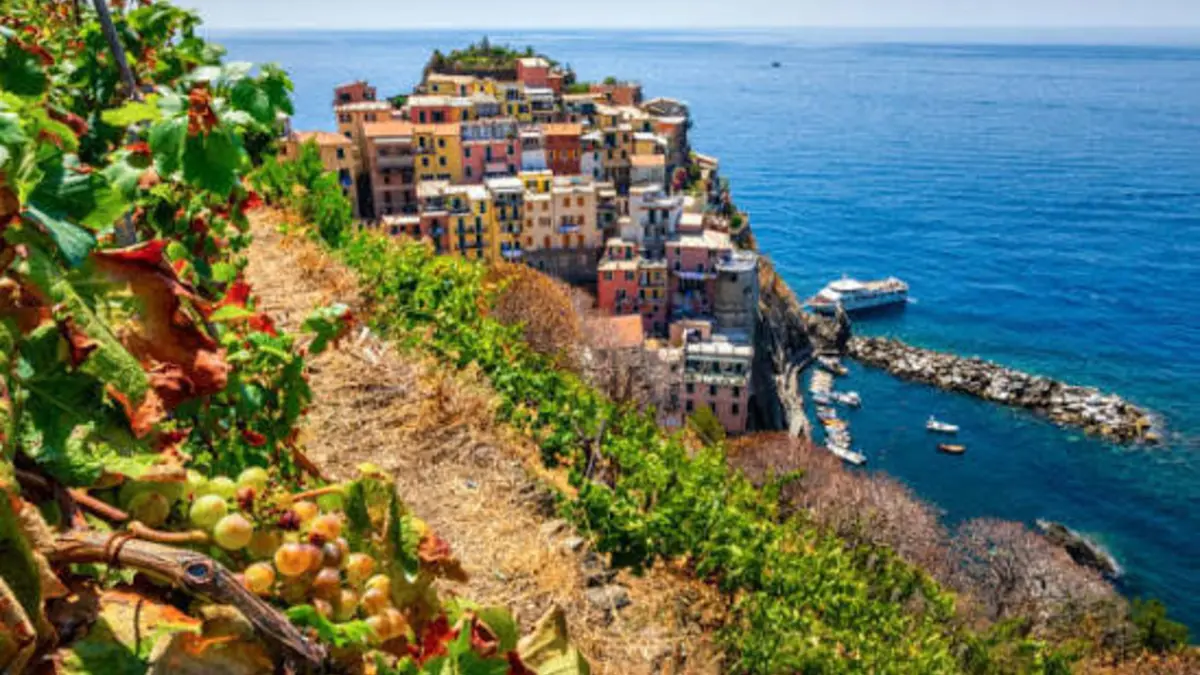
In the afternoon, head to Manarola, arguably the most photographed of the five villages thanks to its cluster of pastel houses stacked above the harbor. Stay for dinner — the view over the water at night, with the town lit up behind you, is one of the better reasons to spend the night in the region rather than day-tripping.
Day 3 — Riomaggiore, Via dell’Amore, and a Boat Tour
Finish in Riomaggiore, the southernmost village. If you only walk one stretch of trail on this trip, make it the Via dell’Amore — the short, paved cliffside path connecting Riomaggiore and Manarola, with some of the most photographed sea views in the park (note: it typically requires a separate small ticket beyond the standard park card). In the afternoon, consider a short boat tour along the coastline — it’s the one way to see all five villages from the water, and it gives your legs a break after two days of hills and stairs.
Hiking the Blue Trail: What’s Open and What It Costs
The Sentiero Azzurro (Blue Trail) is the classic coastal path linking the villages, though not every section is open or free at any given time — parts close periodically for maintenance after landslides, so check current status before you build your day around a specific stretch. The Riomaggiore–Corniglia and Corniglia–Vernazza–Monterosso sections are the most commonly walked, and access to the paid portions is included in both the Trekking Card and Train Card.
If cliffside hiking with real elevation gain isn’t your thing, you’re not missing the trip — plenty of visitors do all five villages by train and boat alone.
What 3 Days in Cinque Terre Actually Costs
| Expense | Estimated Range (per person) |
|---|---|
| Cinque Terre 3-day Train Card | €49–€81 (season-dependent) |
| Accommodation (2 nights, mid-range) | €150–€350 |
| Meals (3 days, mix of casual + one nicer dinner) | €90–€150 |
| Via dell’Amore add-on ticket | ~€10 |
| Optional boat tour | €25–€40 |
Prices shift with the park’s seasonal A/B/C pricing bands, so treat these as planning ranges rather than fixed numbers, and check current rates before you book.
Best Time of Year to Go
Late April–May and mid-September–October hit the balance most people are after: warm enough to swim, thinner crowds than July and August, and lower Train Card pricing under the park’s low/medium season bands. Peak summer is beautiful but the busiest and most expensive time to visit, and restaurant tables can be hard to get without an advance reservation.
Mistakes to Avoid
- Trying to day-trip all five villages. You’ll spend more time on platforms than in town.
- Skipping dinner reservations in peak season. Popular restaurants in Vernazza and Manarola book up, even for groups of two.
- Not validating train tickets before boarding. Ticket checks happen regularly, and an unvalidated ticket can mean a fine.
- Assuming every trail section is free. Some of the Blue Trail requires the park card or a separate ticket.
- Packing like it’s a beach trip. Stairs and uneven cobblestones are a bigger part of the terrain than sand.
Final Thoughts
Three days in Cinque Terre is enough to see all five villages properly, walk at least one real trail, and eat well without rushing between train platforms. Book your base village and any peak-season dinner reservations ahead of time, and the rest of the trip mostly plans itself.
Looking for more itinerary ideas? Check out our complete collection of travel guides.
FAQ Section
Is 3 days enough for Cinque Terre?
Yes — three days lets you visit all five villages, hike at least one section of the Blue Trail, and still have relaxed meals, as long as you stay overnight in the region rather than day-tripping.
Which Cinque Terre village should I stay in?
Manarola is a central, walkable middle ground; Monterosso suits beach lovers and flatter terrain; Vernazza is the prettiest but books up fastest; La Spezia is a cheaper base with good train access.
Do I need the Cinque Terre Card?
Only if you’ll ride the train more than two or three times a day, or plan to hike paid sections of the Blue Trail. Occasional riders can buy single tickets instead.
Can you do Cinque Terre without hiking?
Yes — trains and boats connect all five villages, so hiking is optional, not required, to see the whole area.
Is Cinque Terre worth visiting in 3 days?
Yes. Three days is generally considered the minimum for seeing all five villages without rushing, and it allows time for at least one hike and a relaxed dinner each night.
What is the best month to visit Cinque Terre?
Late April, May, September, and October offer warm weather, thinner crowds, and lower seasonal train card pricing compared to July and August.
How do you get around Cinque Terre?
Mainly by the Cinque Terre Express regional train connecting all five villages and La Spezia/Levanto, supplemented by hiking trails, park shuttle buses, and seasonal boat services.
Should I skip Corniglia?
Only if you’re on a single-day trip. With three days, Corniglia’s quieter streets and clifftop views are worth the extra walk up from its train station.