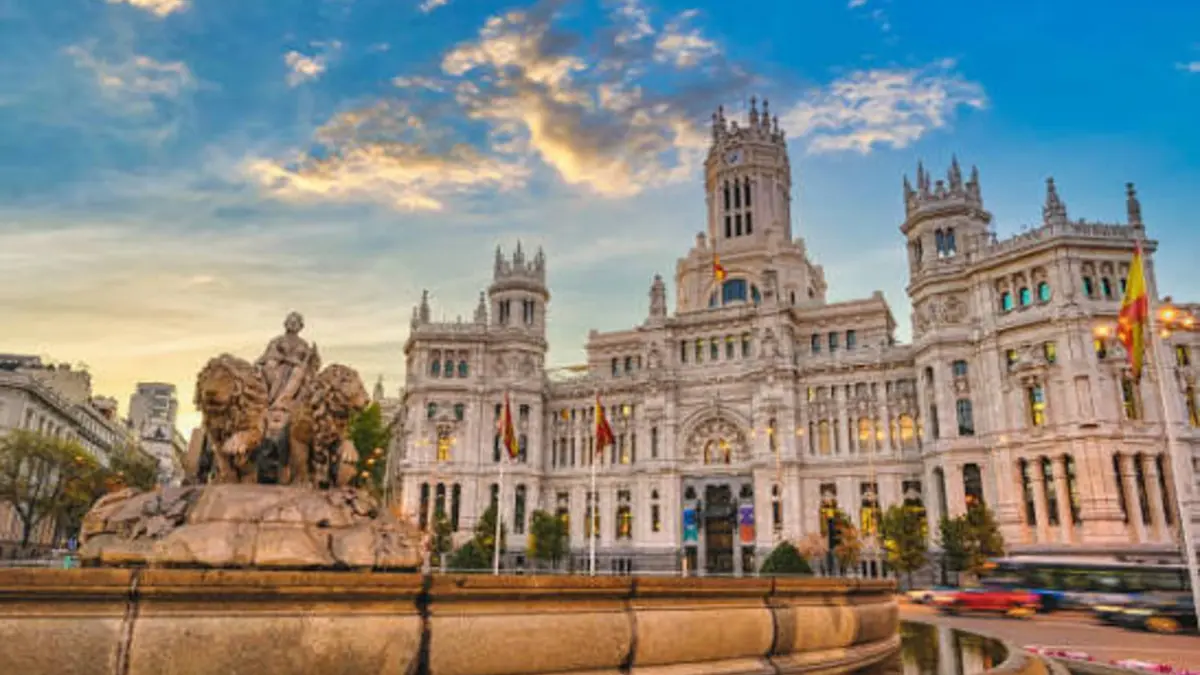
Madrid travel is easy to get wrong on a checklist and easy to get right once you understand the city’s rhythm. Most people plan Madrid travel around a checklist — Prado, Royal Palace, Retiro Park, done. That’s fine for a layover. It’s a waste for anything longer, because Madrid isn’t really a sightseeing city. It’s a city built around a daily rhythm, and once you learn that rhythm, everything else falls into place.
Madrid travel basics: Spain’s capital sits in the center of the country, reachable via Adolfo Suárez Madrid–Barajas Airport, connected to downtown by Metro Line 8 in about 20–25 minutes. Most first-time visitors spend 3 days here, splitting time between world-class museums (Prado, Reina Sofía), historic plazas, tapas bars, and at least one day trip to Toledo or Segovia.
Madrid Travel: Why Go, and Who It’s Really For
Madrid gets compared to Barcelona a lot, usually unfavorably — no beach, less obviously “postcard” architecture. That comparison misses the point. Barcelona sells you a view. Madrid sells you a routine: long lunches, an afternoon lull, then a city that wakes back up around 9pm and doesn’t really stop.
That rhythm is worth knowing before you arrive, because it explains almost every complaint first-time visitors have. Restaurants that seem closed at 6pm aren’t closed — they just haven’t opened for dinner yet. Streets that feel dead at 4pm fill up entirely by 10pm. If you show up expecting London or New York hours, Madrid will feel slow. If you adjust, it feels like one long, unhurried evening.
It also works for almost any kind of traveler. Solo travelers find it easy to navigate and safe to wander at night. Couples get rooftop bars and quiet monastery courtyards. Families get big open parks and manageable museum sizes. Art lovers get the so-called Golden Triangle of Art — Prado, Reina Sofía, and Thyssen-Bornemisza — within walking distance of each other.
The Best Time for Madrid Travel
Late spring (May–June) and early autumn (September–October) are the sweet spot. Temperatures sit in a comfortable range for walking around all day, and you avoid both the summer heat spike and winter’s shorter daylight hours.
Summer (July–August) gets genuinely hot — Madrid’s continental climate means dry, intense heat in the afternoons. It’s also when locals leave the city for the coast, and when the Rebajas (end-of-season sales) hit shops in both January–February and July–August, which is worth timing a shopping trip around if that’s a priority.
If you’re visiting in spring, the San Isidro bullfighting season draws crowds to Las Ventas — worth knowing about even if you have no interest in attending, since it affects hotel availability and local energy in May.
Quick takeaway: Aim for May, June, September, or October if your dates are flexible. Book museum tickets ahead regardless of season — the Prado and Royal Palace get busy year-round.
Getting to Madrid and Getting Around Once You’re There
From the Airport to the City Center
Adolfo Suárez Madrid–Barajas Airport has four terminals, and the two most useful ways into the city are:
- Metro Line 8 — the most reliable option. Trains run from the airport’s two metro stations (Aeropuerto T1-T2-T3 and Aeropuerto T4) to Nuevos Ministerios in the city center, taking roughly 12–15 minutes from T1-2-3 and about 20–25 minutes from T4. A one-way trip costs around €4.50–5.00 total — a standard zone fare plus a mandatory €3.00 airport supplement — unless you’re using a Tourist Travel Pass, which absorbs that supplement.
- Airport Express Bus — runs 24/7 from all terminals to Atocha train station for a flat €5, useful if you’re staying near the Art Triangle or arrive late at night when metro frequency drops.
- Taxi — a fixed flat rate of around €33 applies to any destination within Madrid’s central M-30 ring, with no meter surprises and luggage included.
Renting a car is not recommended for the city itself. Madrid Central’s low-emission zone restricts vehicle access, parking runs €20–30/day, and the compact center is genuinely easier on foot or by metro.
Metro, Buses, and the Tourist Pass
Madrid’s metro is one of Europe’s largest networks — over 300 stations across roughly a dozen lines, running from 6am to 1:30am with trains every 2–4 minutes at peak hours. Getting a Multi Card (€2.50, reusable) is the first step; everything else loads onto it.
| Option | Best For | Approx. Cost |
|---|---|---|
| Single ticket | One-off trips | €1.50–2.00 (+€3 airport supplement if applicable) |
| 10-trip Metrobús ticket | Moderate use, 2–7 days | €12.20 total (~€1.22/ride) |
| Tourist Travel Pass | Heavy use, includes airport supplement | €8.40 (1 day) to €35.40 (7 days) |
For most visitors staying 2–4 days and using the metro a handful of times a day, the 10-trip ticket is the better value. If you’re flying in and out and plan to ride constantly, the Tourist Pass removes the need to think about it — and it quietly saves you the €3 airport supplement each way.
Bicycles are welcome on the metro outside weekday rush hours (7–9:30am and 5–8pm), and BiciMAD, the city’s electric bike-share system, is a genuinely pleasant way to cut through Retiro Park on a mild afternoon.
Where to Stay: Madrid’s Neighborhoods, Decoded
Like New York or London, where you stay in Madrid shapes the whole trip, not just your commute.
- Salamanca — upscale, quiet at night, home to Calle Serrano’s luxury boutiques. Good base if you want polish over energy.
- Malasaña — hipster energy by day, club crowds by night. Central and walkable, but loud on weekends.
- La Latina — steep, atmospheric streets, some of the best tapas bars in the city, and El Rastro flea market on Sundays.
- Lavapiés — maze-like, multicultural, great for people-watching and budget eating, slightly rougher around the edges.
- Chueca — Madrid’s LGBTQ+ hub, lively bars, central location.
If it’s your first visit and you want everything within a 15-minute walk, Sol/Centro or La Latina are the safest bets. If you’d rather retreat to somewhere calmer after a day of sightseeing, Salamanca does that job well.
The Best Things to Do in Madrid
The headline attractions earn their reputation, but a few practical notes make them worth more:
- Museo del Prado — one of the world’s largest art collections, anchored by Velázquez, Goya, and El Greco. Go early or book a timed entry; it gets crowded by midday.
- Palacio Real (Royal Palace) — Europe’s largest royal palace still in official use, with over 2,000 rooms (only a fraction open to visitors). Still an active government building, so opening hours shift around state events.
- Retiro Park — a genuinely peaceful escape in the middle of the city, centered on a lake where you can rent rowboats.
- Reina Sofía and Thyssen-Bornemisza — round out the “Golden Triangle of Art” alongside the Prado, covering everything from 13th-century work to Picasso’s Guernica.
- Plaza Mayor and Puerta del Sol — the historic core; Sol is technically the geographic center of Spain, marked by the famous bear-and-strawberry-tree statue.
- Mercado de San Miguel — a covered market dating back to a 1916 wholesale food hall, now a tapas-and-wine grazing spot.
- Las Ventas — the world’s most famous bullring, hosting the San Isidro season. Worth knowing about even if you choose not to attend; it’s a genuine cultural fixture, and opinions on bullfighting among both locals and visitors are mixed, so go in informed either way.
- Gran Vía and El Rastro — for shopping, ranging from flagship stores to Spain’s largest open-air flea market on Sunday mornings.
Quick takeaway: Three days covers the highlights comfortably. Two days works as a whirlwind. Anything beyond three, and day trips become the better use of extra time.
How to Eat Like a Madrileño
Food is where Madrid quietly wins over people who came for the museums and leave talking about the tapas.
The schedule matters as much as the menu. Lunch doesn’t start until around 2pm, and dinner rarely gets going before 9pm — often later. Many shops close from 2–5pm to accommodate it. Bridge the gap with La Hora del Vermut, a pre-dinner glass of vermouth, usually starting around 8pm.
Dishes and spots worth building a trip around:
- Jamón ibérico — order it thinly sliced, on its own, at any half-decent bar.
- Cochinillo (roast suckling pig) at Sobrino de Botín, often cited as the world’s oldest continuously operating restaurant.
- Huevos rotos (broken eggs over potatoes) at Casa Lucio.
- Gambas al ajillo (garlic prawns) at La Trainera, a go-to for Madrid-style seafood.
- Mercado de San Antón and Mercado de San Miguel for grazing across multiple stalls in one sitting.
One easy mistake: expecting the bill to arrive automatically. In Madrid, you ask for it — la cuenta, por favor — and nobody will rush you before you do.
Day Trips Worth Taking From Madrid
Madrid’s central location, combined with Spain’s high-speed AVE and regional Cercanías trains, makes it one of the best-connected cities in Europe for day trips.
| Destination | Distance/Time | Why Go |
|---|---|---|
| Toledo | ~30–60 min by train | UNESCO old town, Gothic cathedral, Alcázar fortress, Christian/Muslim/Jewish heritage layered into one city |
| Segovia | ~30 min by AVE | Roman aqueduct, fairy-tale Alcázar, easier to navigate than Toledo |
| Ávila | Under 2 hours | Best-preserved medieval walls in Spain |
| Alcalá de Henares | ~30–40 min | Cervantes’ birthplace, university town, Cervantina Week festival in October |
| Aranjuez | ~45 min | Royal palace and gardens |
| El Escorial | ~1 hour | Monastery and former royal residence |
Toledo and Segovia are the two most commonly recommended, and for good reason — both are reachable in under an hour and pack in enough history for a full day without needing an overnight stay.
A Simple 3-Day Madrid Itinerary
Day 1 — City Center: Plaza Mayor → Puerta del Sol → Royal Palace → Almudena Cathedral → lunch in La Latina → afternoon at the Prado → vermú and tapas before a late dinner.
Day 2 — Art and Green Space: Reina Sofía in the morning → Retiro Park for lunch and a rowboat → Puerta de Alcalá → evening in Malasaña or Chueca for bars and dinner.
Day 3 — Day Trip: Toledo or Segovia by train, back in Madrid by early evening for a final tapas crawl through La Latina or Lavapiés.
Add a fourth day for Salamanca-district shopping, El Rastro (if it lands on a Sunday), or a second day trip.
Madrid Travel Costs and Practical Tips
Rough daily budget ranges, per person, excluding flights:
| Style | Daily Cost (lodging + food + local transport) |
|---|---|
| Budget (hostel, market food, metro) | €60–90 |
| Mid-range (3-star hotel, sit-down meals) | €120–180 |
| Comfortable (4-star hotel, restaurant dinners) | €220+ |
A few things that make the trip smoother:
- Madrid is widely considered safe for solo travelers, though normal city precautions (watching bags in crowded areas like Sol or the metro) still apply.
- Vegetarian and vegan options have expanded significantly in recent years — it’s easier than most visitors expect.
- English is common in tourist areas but not universal; a few basic Spanish phrases go a long way, especially outside the center.
- Many museums offer free entry windows on specific days or evening hours — worth checking before you buy full-price tickets.
Madrid rewards travelers who slow down and follow its schedule rather than fighting it. Book your must-see museum tickets ahead, pick a neighborhood that matches your pace, and leave room in the itinerary for at least one day trip — that combination covers what nearly every good Madrid trip has in common.
Want more travel inspiration? Browse our collection of destination guides.
FAQ Section
How many days do you need for Madrid travel?
Three days covers the major sights comfortably — Royal Palace, Prado, Retiro Park, and a proper meal in La Latina. Two days works as a fast-paced trip. Add a fourth day if you want a day trip to Toledo or Segovia without rushing.
What is the best time to visit Madrid?
Late spring (May–June) and early fall (September–October) offer the most comfortable weather for walking around. Summer gets very hot, and many locals leave the city, though it’s also when the Rebajas sales happen.
How do I get from Madrid airport to the city center?
Metro Line 8 connects the airport to Nuevos Ministerios in about 20–25 minutes for roughly €4.50–5.00. The Airport Express Bus to Atocha station costs a flat €5, and taxis charge a fixed €33 within the central ring.
Is Madrid expensive to visit?
It’s moderate by Western European standards. Budget travelers can manage on €60–90/day using hostels and market food; mid-range travelers should plan €120–180/day.
What neighborhood should I stay in for a first Madrid trip?
Sol/Centro or La Latina put you within walking distance of most major sights. Salamanca suits travelers who want a quieter, upscale base; Malasaña suits those chasing nightlife.
Is Madrid walkable, or do I need public transport?
The historic center is very walkable, but Madrid is a large city — the metro is essential for reaching Retiro Park’s far side, day-trip train stations, or neighborhoods like Salamanca and Malasaña efficiently.
What food should I try in Madrid?
Jamón ibérico, cochinillo (roast suckling pig), huevos rotos, and gambas al ajillo are the essentials. Pair an evening meal with a pre-dinner vermú, the local pre-dinner ritual.
Is Madrid safe for solo travelers?
Generally yes — it’s considered one of Europe’s safer capitals, though standard precautions around crowded tourist spots and public transport apply, as they would anywhere.