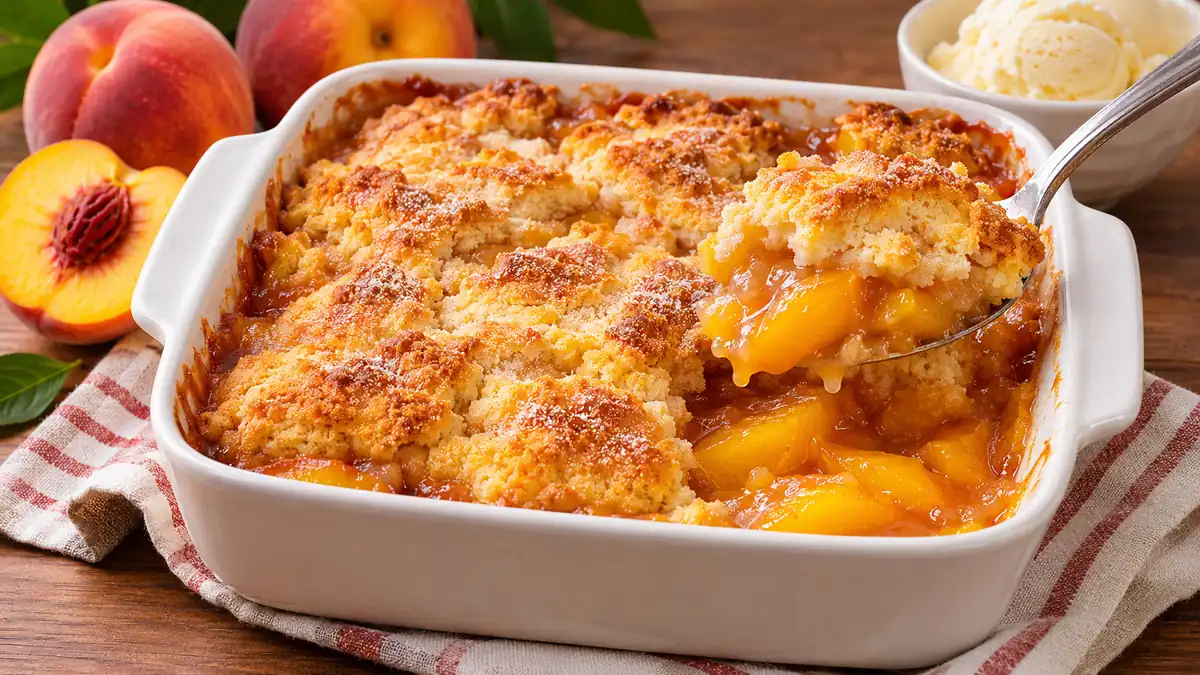
Few desserts capture the taste of summer quite like a warm peach cobbler. Sweet, juicy peaches bubbling beneath a golden, buttery topping create a comforting dessert that’s surprisingly easy to make. The best part? You don’t need complicated equipment or professional baking skills to get excellent results.
Peach cobbler is a classic baked fruit dessert made with fresh, frozen, or canned peaches and a biscuit-like, cake-like, or batter-based topping. As it bakes, the fruit softens and releases its juices while the topping turns golden brown. Serve it warm on its own or with vanilla ice cream.
This guide explains how to make peach cobbler from scratch, choose the right peaches, prevent a soggy topping, adjust the sweetness, and store leftovers safely.
What Is peach cobbler?
Peach cobbler is a traditional American dessert consisting of sweetened peaches baked beneath or alongside a soft dough or batter topping. Unlike a pie, it generally doesn’t require a bottom crust. Its rustic appearance and simple preparation make it a favorite for family dinners, summer gatherings, and holiday meals.
The name cobbler is often associated with the uneven, cobblestone-like appearance of spooned biscuit dough after baking. However, cobblers vary considerably by region and family tradition.
Some recipes use fluffy biscuits, while others feature a tender cake-like layer or a pourable batter that rises around the peaches.
Peach Cobbler vs. Peach Crisp vs. Peach Pie
Although these desserts share similar fruit fillings, their toppings and textures differ.
| Dessert | Topping | Texture |
|---|---|---|
| Peach cobbler | Biscuit dough or cake-like batter | Soft, fluffy, and golden |
| Peach crisp | Oats, flour, butter, and sugar | Crunchy and crumbly |
| Peach crumble | Flour, sugar, and butter crumbs | Tender and crumbly |
| Peach pie | Rolled pastry crust | Flaky and structured |
Cobbler is particularly convenient because it doesn’t require rolling pastry, chilling dough, or creating decorative crusts.
Ingredients for Homemade peach cobbler
A good cobbler balances the natural sweetness and acidity of peaches with a rich, tender topping. You can prepare this version with everyday pantry ingredients.
Recipe at a glance
Easy
15 minPrep
40–45 minBake
8 servingsYield
For the Peach Filling
- 6 cups sliced peaches (approximately 7–8 medium peaches)
- ⅓ cup granulated sugar, adjusted for fruit sweetness
- 1 tablespoon fresh lemon juice
- 1 tablespoon cornstarch
- ½ teaspoon ground cinnamon
- ¼ teaspoon ground nutmeg (optional)
- 1 teaspoon vanilla extract
For the Cobbler Topping
- 1½ cups all-purpose flour
- ⅓ cup granulated sugar
- 2 teaspoons baking powder
- ¼ teaspoon salt
- 6 tablespoons cold unsalted butter, cubed
- ½ cup whole milk, plus a little extra if needed
- 1 teaspoon vanilla extract
- 1 tablespoon coarse sugar for sprinkling (optional)
Equipment You’ll Need
A 9-inch square baking dish or similarly sized 2-quart baking dish works well. You’ll also need mixing bowls, measuring cups and spoons, a knife, a cutting board, and a pastry cutter or fork.
A glass, ceramic, or metal baking dish can be used, although baking times may vary slightly depending on the material.
How to Make peach cobbler Step by Step
This recipe uses a biscuit-style topping that becomes lightly crisp on the surface while remaining soft underneath.
Best Peach Cobbler Recipe – How To Make Peach Cobbler
Step 1: Prepare the peaches
Preheat your oven to 375°F (190°C). Wash, pit, and slice the peaches into pieces about ½ inch thick. Peeling is optional.
Best Peach Cobbler – Sweet Peaches & Buttermilk Biscuit Topping
Step 2: Mix the filling
Combine peaches, sugar, lemon juice, cornstarch, cinnamon, nutmeg, and vanilla. Spread evenly in a lightly greased baking dish.
Flaky Buttermilk Biscuits – Easy Homemade Southern Recipe
Step 3: Prepare the topping
Whisk flour, sugar, baking powder, and salt. Cut in the cold butter until the mixture resembles coarse crumbs. Stir in milk and vanilla just until a soft dough forms.
Pfirsich-Cobbler – saftig, knusprig & in 15 Min. ofenfertig | Einfach Backen
Step 4: Assemble the cobbler
Drop spoonfuls of dough over the peaches, leaving small gaps for steam to escape. Sprinkle with coarse sugar if desired.
Traditional Southern Peach Cobbler Recipe | ItsOnly.Recipes
Step 5: Bake until golden
Bake for approximately 40–45 minutes, until the topping is golden and the filling bubbles in the center. If the topping browns too quickly, cover loosely with foil.
Step 6: Let the Cobbler Rest
Remove the baking dish from the oven and allow the dessert to cool for 15–20 minutes before serving.
This resting period helps the peach juices thicken, making the cobbler easier to spoon into bowls without losing its texture.
Serve warm with a scoop of vanilla ice cream or a spoonful of lightly sweetened whipped cream.
Choosing the Best Peaches for Cobbler
The quality and ripeness of your peaches significantly influence the final flavor and consistency.
Fresh Peaches
Fresh, ripe peaches provide a fragrant, naturally sweet filling with a pleasant balance of acidity.
Choose peaches that:
- Yield slightly to gentle pressure.
- Smell sweet and fragrant near the stem.
- Have smooth skin without large bruises.
- Feel heavy for their size.
Yellow peaches are commonly preferred because their tangy sweetness balances the buttery topping. White peaches can also work, although their lower acidity may produce a milder flavor.
Frozen Peaches
Frozen peaches are a practical alternative when fresh fruit is unavailable.
Thaw them first and drain excess liquid. If they release considerable juice, you may need a little additional cornstarch.
Avoid adding a large quantity of frozen fruit directly to the baking dish without adjusting the cooking time, as the topping may brown before the filling heats through.
Canned Peaches
Canned peaches make cobbler accessible throughout the year.
Choose peaches packed in juice rather than heavy syrup when possible. Drain them thoroughly and reduce the added sugar to account for their existing sweetness.
| Peach type | Preparation | Best feature |
|---|---|---|
| Fresh | Slice and optionally peel | Bright flavor and firmer texture |
| Frozen | Thaw and drain | Convenient year-round |
| Canned | Drain well | Quick preparation |
Do You Need to Peel Peaches?
No. Peach skins soften during baking and contribute color and some fiber to the filling.
However, peeling produces a smoother texture. If you prefer peeled peaches, briefly blanch them in boiling water for approximately 30–60 seconds, transfer them to ice water, and gently remove the loosened skins.
Very firm or underripe peaches may not peel easily using this method.
Tips for Making the Best peach cobbler
A successful cobbler depends on more than following the ingredient measurements. Fruit moisture, dough consistency, and baking temperature all affect the finished dessert.
Balance the Sweetness
Peaches vary considerably in sweetness depending on their variety and ripeness.
Taste a small piece before adding sugar. Very ripe peaches may require less sweetener, while slightly tart peaches benefit from the full amount.
Lemon juice brightens the fruit flavor and prevents the dessert from tasting excessively sweet.
Keep the Butter Cold
Cold butter helps create a tender biscuit topping.
As the butter melts during baking, it contributes to the topping’s delicate texture. Warm, overworked dough can become dense instead of light.
Avoid Overmixing
Stir the dough only until the dry ingredients are moistened.
Excessive mixing develops gluten in the flour, which can make the topping tougher. A slightly rough, uneven dough is perfectly acceptable for a rustic cobbler.
Prevent a Watery Filling
Peaches release moisture during baking, especially when very ripe or previously frozen.
Cornstarch thickens these juices as the filling heats. For particularly juicy fruit, increase the cornstarch from 1 tablespoon to approximately 1½ tablespoons.
Allow the filling to bubble thoroughly before removing the dessert from the oven. Cornstarch needs sufficient heat to thicken effectively.
Make Sure the Topping Is Fully Cooked
A golden surface doesn’t always mean the center is finished.
Insert a toothpick into a thick section of biscuit topping. It should come out without wet, uncooked dough, although moisture from the fruit underneath is normal.
If the top is browning before the center finishes, loosely cover the dish with aluminum foil and continue baking.
These techniques are consistent with established biscuit-topped cobbler methods described by King Arthur Baking and Sally’s Baking. Sally’s Baking+1
Popular peach cobbler Variations
One reason cobbler remains popular is its flexibility. The basic combination of fruit and topping can be adapted to different preferences, ingredients, and seasons.
Old-Fashioned Southern Peach Cobbler
Southern-style cobbler often features a rich, buttery topping with warm spices such as cinnamon and nutmeg.
Some traditional family versions use a rolled pastry-like crust, while others use a simple batter poured over melted butter.
These variations can produce a more pudding-like texture than a biscuit-topped cobbler.
Easy Peach Cobbler With Cake Mix
Cake mix cobbler is a convenient shortcut that typically combines canned or prepared peaches with dry cake mix and butter.
The ingredients bake into a sweet, cake-like topping.
For an even result, distribute the butter carefully so that dry patches of cake mix do not remain on the surface. Follow the specific proportions and layering instructions of the chosen recipe.
Peach Cobbler With Oats
For a heartier topping, replace a portion of the flour with rolled oats.
Oats add chewiness and a mildly nutty flavor. However, using too many can shift the dessert toward a peach crisp rather than a traditional cobbler.
Gluten-Free Peach Cobbler
A gluten-free version can be prepared with a suitable 1:1 gluten-free baking flour blend.
Choose a blend intended for biscuits or general baking and verify that the baking powder and other packaged ingredients meet your dietary requirements.
Because gluten-free blends absorb liquid differently, small adjustments to the milk may be necessary.
Dairy-Free Peach Cobbler
Replace butter with a suitable dairy-free baking alternative and use unsweetened plant-based milk.
Oat milk, soy milk, and almond milk can work, although flavor and texture will vary.
A firm plant-based butter designed for baking generally performs better in biscuit dough than liquid oil.
Peach and Blueberry Cobbler
Blueberries pair particularly well with peaches because their mild tartness complements the sweet fruit.
Replace approximately 1–2 cups of the peaches with blueberries while keeping the total fruit quantity similar.
Other possible combinations include peaches with raspberries, blackberries, nectarines, or plums.
Common Peach Cobbler Problems and How to Fix Them
Even a straightforward dessert can occasionally turn out differently than expected. Most problems come from excess moisture, inaccurate measurements, or uneven baking.
| Problem | Likely cause | Solution |
|---|---|---|
| Watery filling | Very juicy peaches or insufficient thickener | Add a little more cornstarch and bake until bubbling |
| Soggy topping | Excess fruit moisture or underbaking | Bake longer and check the center |
| Tough biscuit topping | Overmixed dough | Mix only until combined |
| Dry topping | Too much flour or insufficient milk | Measure flour carefully and adjust liquid |
| Overly sweet filling | Sweet canned fruit or excess sugar | Reduce sugar and add lemon juice |
| Burned surface | Oven too hot or dish positioned too high | Cover with foil and use the middle rack |
| Undercooked peaches | Firm fruit or thick pieces | Cut smaller pieces or pre-bake the filling |
Why Is My Peach Cobbler Runny?
A little syrup is normal. In fact, the juicy filling is part of what makes cobbler appealing.
However, if the fruit is swimming in thin liquid, it may not have cooked long enough for the thickener to activate.
For very juicy peaches, pre-baking the filling for approximately 10 minutes before adding the topping can help soften the fruit and start the thickening process.
Why Is My Cobbler Topping Gummy?
A gummy topping usually indicates underbaking or excessive moisture beneath a thick layer of dough.
Spread the dough in separate spoonfuls rather than creating one completely sealed layer. Small openings allow steam to escape and help the topping bake more evenly.
Can You Use Hard Peaches?
Slightly firm peaches are suitable, but very hard, underripe peaches may remain unpleasantly firm after baking.
If your peaches are particularly firm, cook them briefly with the filling ingredients before assembling the cobbler.
How to Store, Freeze, and Reheat Peach Cobbler
Proper storage helps maintain the dessert’s flavor and reduces food-safety risks.
Refrigerating Leftover Cobbler
Allow the cobbler to cool briefly, then transfer leftovers to a covered container or cover the baking dish.
Refrigerate within two hours of baking, or within one hour if the surrounding temperature exceeds 90°F (32°C).
For best quality, consume refrigerated leftovers within 3–4 days.
Can You Freeze Peach Cobbler?
Yes. Baked peach cobbler can be frozen, although the topping may soften after thawing.
For convenient portions, divide the cooled dessert into freezer-safe containers.
For best quality, aim to use frozen cobbler within approximately 2–3 months.
Thaw overnight in the refrigerator before reheating.
How to Reheat Peach Cobbler
For a crispier topping, reheating in the oven is preferable to using a microwave.
Preheat the oven to 350°F (175°C), place the cobbler in an oven-safe dish, and heat until thoroughly warmed.
Individual portions may take approximately 10–15 minutes, while a larger refrigerated portion can require 20–30 minutes or longer.
Cover loosely with foil if the topping begins browning too much.
A microwave works for smaller portions, but it generally produces a softer topping.
Serving Ideas and Flavor Pairings
Peach cobbler tastes wonderful on its own, but a few simple additions can make it feel especially indulgent.
Easy Peach Cobbler: No Soggy Crust!
Vanilla ice cream
The cold, creamy texture contrasts beautifully with warm peaches.
Delicious Peach Cobbler with Whipped Cream and Fresh Peaches on Plate.
Whipped cream
A lighter topping that complements the fruit without overpowering it.
Cinnamon sugar
Adds warmth and a delicate sweetness to the biscuit topping.
Rustic Peach Pecan Cobbler – Texan Heartland
Toasted pecans
Bring a crunchy texture and subtle nutty flavor.
For a less sweet serving option, try plain Greek yogurt. Its tanginess provides contrast to the sweet filling.
Peach cobbler is especially enjoyable during late-summer gatherings, but frozen or canned peaches make it possible to prepare this comforting dessert throughout the year.
Can You Make Peach Cobbler Ahead of Time?
Yes, although preparing the components separately usually produces the best texture.
You can slice the peaches and combine the dry topping ingredients in advance. Keep the fruit refrigerated and the cold butter separate until you’re ready to prepare the dough.
If assembling ahead, avoid leaving the raw biscuit topping directly on the wet fruit for an extended period. The dough may absorb moisture and lose some of its light texture.
For gatherings, baking the cobbler earlier in the day and gently reheating it before serving is often more convenient.
Can You Make Individual Peach Cobblers?
Small oven-safe ramekins work well for individual portions.
Divide the fruit filling among the ramekins, add small spoonfuls of topping, and place them on a rimmed baking sheet to catch bubbling juices.
Begin checking earlier than you would for a full-sized cobbler. The exact baking time depends on the ramekin size, filling depth, and oven.
Individual cobblers are ready when the fruit bubbles and the biscuit topping is fully baked. Sally’s Baking+1
Is Peach Cobbler Healthy?
Peaches naturally provide dietary fiber, vitamin C, and other nutrients. However, traditional cobbler also contains added sugar, flour, and butter.
Its overall nutritional profile depends on portion size, ingredients, and any accompanying toppings.
For a lighter version, consider reducing the sugar when using naturally sweet peaches, serving smaller portions, and choosing plain yogurt instead of ice cream.
Whole-grain flour can replace part of the all-purpose flour, although it may produce a denser topping.
There is no need to eliminate the ingredients that make cobbler enjoyable. A moderate portion can fit into a varied, balanced diet.
Final Thoughts on Homemade peach cobbler
Homemade peach cobbler combines juicy fruit, warm spices, and a tender golden topping in a dessert that requires relatively little effort.
Fresh peaches offer wonderful seasonal flavor, while frozen and canned options provide flexibility. The most reliable results come from choosing flavorful fruit, controlling excess moisture, keeping biscuit dough tender, and baking until the filling bubbles and the topping is cooked through.
Start with the classic biscuit-topped recipe, then experiment with different peach varieties, spices, or fruit combinations to find the version you enjoy most.