Most people planning a first trip to Spain make the same mistake: they try to see the whole country in a week. Spain is roughly the size of Texas, and its regions — Catalonia, Madrid’s central plateau, Andalucía, the Basque north — feel like different countries stitched together. The itinerary that works isn’t the one that covers the most ground. It’s the one that matches your route to your actual number of days.
A good Spain itinerary for first-timers runs Barcelona → Madrid → Andalucía (Seville, Granada, and often Córdoba), connected by Spain’s high-speed AVE trains. Seven days covers two stops, ten covers three, and two weeks lets you add a fourth region like San Sebastián or the Costa Brava without rushing.
How Many Days Do You Actually Need in Spain?
There’s no single right answer here, but there is a pattern in how experienced Spain travelers size their trips.
- 4–5 days: Enough for one city, done properly — usually Barcelona or Madrid, with maybe a single day trip.
- 7 days: Enough for two regions. Most commonly Barcelona and Madrid, or Madrid paired with a chunk of Andalucía.
- 10 days: The sweet spot for first-timers. You can realistically do Barcelona, Madrid, and Andalucía without feeling like you’re sprinting.
- 14 days: Add a fourth region — northern Spain (Basque Country), the Costa Brava, or a slower pace through Andalucía with day trips folded in.
- 21 days: This is when you can stop compressing and actually explore — side trips to Toledo, Segovia, Santiago de Compostela, or Cantabria become realistic rather than aspirational.
Quick Takeaway: If you’re choosing between “see more” and “move less,” choose less. Spending at least two nights (ideally three) in each stop beats a string of one-night stays — packing and checkout logistics quietly eat hours out of every short stop.
When to Go: Timing Your Itinerary Around the Weather
Spain’s climate isn’t uniform, and this matters more for itinerary planning than most guides admit. Central and southern Spain — Madrid, Seville, Córdoba, Granada — can hit well over 100°F (40°C) for stretches of July and August. That’s not an exaggeration used for effect; it’s a real logistical problem if your itinerary has you walking around Seville at 2 p.m. in mid-summer.
The shoulder seasons — April–May and September–October — give you mild weather across nearly every stop on a classic route, fewer crowds at the Alhambra and Sagrada Família, and lower accommodation prices than peak summer. Northern Spain (San Sebastián, Bilbao, the Basque coast) runs cooler and wetter, so if that’s on your route, September is often the better bet than May.
Winter is workable too, especially in Andalucía, though some coastal or hiking-focused add-ons lose their appeal.
The Classic First-Timer Route (Barcelona → Madrid → Andalucía)
This route recurs across nearly every well-regarded Spain itinerary because the geography works: Barcelona sits in the northeast, Madrid is roughly central, and Andalucía anchors the south. Traveling in a straight line — instead of zigzagging back and forth — is what keeps travel days short.
7 Days
Two stops, no compression required: Barcelona (3–4 nights) for Gaudí’s Sagrada Família, Park Güell, and Casa Batlló, then Madrid (3–4 nights) for the Prado Museum, Retiro Park, and a day trip to Toledo. If Andalucía matters more to you than Barcelona, swap Barcelona for Seville and Granada instead — most people can’t comfortably fit all three regions into a week.
10 Days
The version most first-time visitors end up building: Barcelona (3 nights) → Madrid (2–3 nights) → Seville (2 nights) → Granada (2 nights), ideally flying into Barcelona and out of Granada or Seville (an open-jaw ticket) to avoid backtracking. Add Córdoba as a half-day stop between Seville and Granada using the AVE train — the Mezquita alone justifies the detour.
14 Days
Same core route, but slower, plus one additional region. The two most common extensions: a few extra days on the Costa Brava/Girona side-trip from Barcelona, or a swing north to San Sebastián and Bilbao for Basque food and the Guggenheim Museum. Two weeks is genuinely the minimum for feeling like you’ve seen more than the highlight reel.
Day-by-Day Breakdown (10-Day Version)
| Day | Location | Focus |
|---|---|---|
| 1–3 | Barcelona | Sagrada Família, Park Güell, Casa Batlló/Casa Milà, Gothic Quarter, tapas |
| 4 | Travel + Madrid | AVE train Barcelona→Madrid (~2.5 hrs); evening in Madrid |
| 5–6 | Madrid | Prado Museum, Retiro Park, Mercado de San Miguel; optional Toledo day trip |
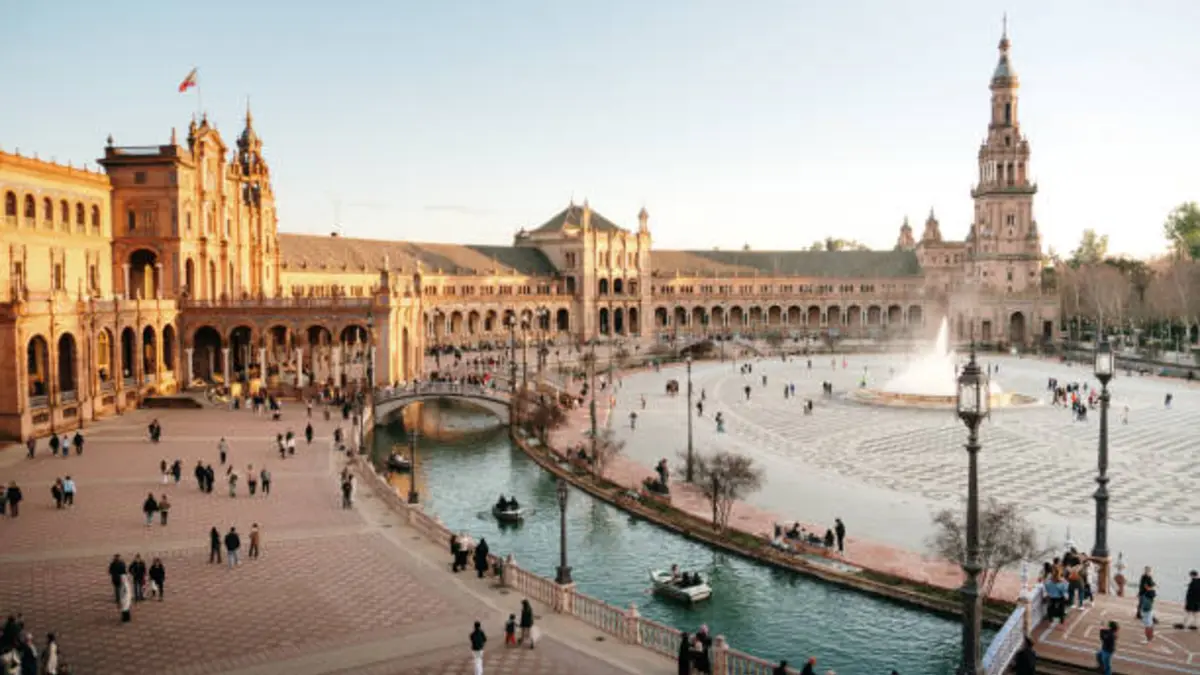
| 7 | Travel + Seville | AVE train Madrid→Seville (~2.5 hrs); Royal Alcázar, Plaza de España |
| 8 | Córdoba (day trip) or Seville | Mezquita, or extra Seville exploration |
| 9–10 | Granada | Alhambra and Generalife (book tickets weeks ahead), Albaicín neighborhood, flamenco in the Sacromonte caves |
Quick Takeaway: Book Alhambra tickets and any high-demand AVE routes at least a month out — both sell out during shoulder and peak season, and last-minute train fares can run two to three times higher than advance fares.
Getting Around: Train, Plane, or Rental Car?
For the classic Barcelona–Madrid–Andalucía route, you don’t need a car. Spain’s AVE high-speed rail network (operated by Renfe) connects all the major stops in this itinerary in 2.5 to 3.5 hours, city center to city center — often faster door-to-door than flying once you factor in airport transfers and security.
A rental car earns its place in a few specific scenarios instead:
- Andalucía’s white hill towns (Ronda, Arcos) and smaller villages with thin bus service
- The Camino de Santiago route across northern Spain
- Cantabria’s coastline and rural areas
If your route touches any of those, plan a hybrid trip: train between major cities, car for a defined regional loop.
Advance AVE tickets bought a couple of months out can run as low as €20–€30 for popular routes; same-day tickets on the same route can climb past €60–€100. That gap alone is worth planning around.
What a Spain Trip Actually Costs
Costs vary widely by season and travel style, but a rough framework for a 10-day trip covering the classic route:
- Budget: Hostels/budget hotels, self-catering some meals, advance train tickets — roughly €80–€120/day per person
- Mid-range: 3-star hotels, restaurant meals, some paid attractions — roughly €150–€220/day per person
- Comfortable: Boutique hotels, guided tours, first-class rail — €250+/day per person
Attraction tickets (Alhambra, Sagrada Família, Prado) typically run €10–€25 each and should be booked online in advance regardless of budget tier — several sell out entirely on-site during peak months.
Beyond the Classic Route: Regional Add-Ons
If you have extra days or a second trip in mind, these are the regions that come up repeatedly as natural extensions rather than replacements for the core route:
- Basque Country (San Sebastián, Bilbao): Pintxos-hopping, the Guggenheim Museum, and a very different culinary identity from the rest of Spain.
- Costa Brava/Girona: An easy add-on from Barcelona — medieval towns, coastline, and Dalí’s legacy in Figueres.
- Balearic Islands (Mallorca, Ibiza): Beach-focused, best reached by short flight from Barcelona or Madrid.
- Canary Islands: A separate trip in most cases — volcanic landscapes and a subtropical climate that has little in common with mainland Spain.
Mistakes First-Timers Make When Building Their Itinerary
- Trying to fit four regions into seven days. This is the single most common planning error — it turns every stop into a layover instead of a visit.
- Booking one-night stays at every stop. Checkout, luggage, and check-in logistics quietly cost hours you’d rather spend sightseeing.
- Flying in and out of the same city when your route runs in a line (Barcelona to Andalucía, for instance) — an open-jaw ticket usually costs about the same and saves a half-day of backtracking.
- Not booking the Alhambra or peak-season AVE tickets in advance — both routinely sell out weeks ahead.
- Assuming one “best time to visit” applies to the whole country — Andalucía in October and the Basque coast in October are not the same trip weather-wise.
Final Thoughts
The best Spain itinerary isn’t the most ambitious one — it’s the one where your travel days don’t outnumber your sightseeing days. Start with how many days you actually have, pick the regions that matter most to you, and let the AVE train network do the connecting. If you’re still deciding between routes, the 10-day Barcelona–Madrid–Andalucía loop is the safest first-trip bet: it hits the highlights without turning your vacation into a transit schedule.
For more destination guides and trip-planning tips, explore our full travel guide collection.
FAQ Section
How many days do you need for a Spain itinerary?
Ten days is the sweet spot for first-timers, covering Barcelona, Madrid, and Andalucía without rushing. Seven days works for two regions, and two weeks lets you add a fourth like the Basque Country.
Is 7 days enough to see Spain?
Seven days is enough for two regions done well — commonly Barcelona and Madrid — but not enough to comfortably add Andalucía on top without turning it into a sprint.
What’s the best time of year for a Spain itinerary?
April–May and September–October offer mild weather across most of the classic route and lower prices than peak summer, when central and southern Spain can exceed 100°F (40°C).
Should I rent a car for a Spain itinerary or take the train?
For the classic Barcelona–Madrid–Andalucía route, the AVE high-speed train is faster and simpler. A car only helps for specific regions like Andalucía’s hill towns or the Camino de Santiago.
Can you do Barcelona, Madrid, and Andalucía in 10 days?
Yes — this is the most common 10-day itinerary, typically 3 nights in Barcelona, 2–3 in Madrid, and the rest split between Seville and Granada, with an optional Córdoba day trip.
Do I need to fly into and out of the same city?
No — an open-jaw ticket (flying into Barcelona and out of Seville or Granada, for example) usually costs about the same as a round trip and avoids backtracking on a linear route.
How far in advance should I book Alhambra tickets?
At least a month ahead during shoulder and peak season. Alhambra tickets are capped daily and sell out well before most travelers expect.
What does a 10-day Spain trip cost?
Roughly €80–€120/day per person on a budget itinerary, €150–€220/day mid-range, and €250+/day for a more comfortable, guided-tour style trip.