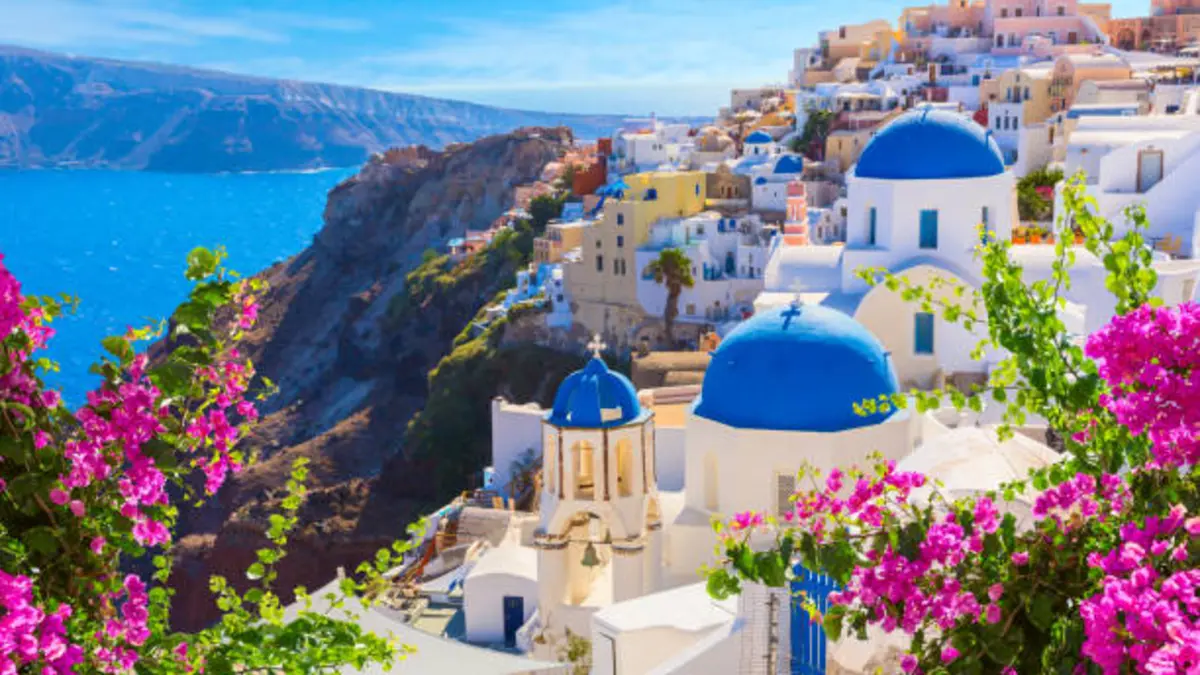
This Santorini travel guide covers everything you need to plan the trip properly, because everyone shows you the same photo of Santorini — white houses, blue domes, a sun dropping into the sea. What that photo doesn’t show you is the taxi queue at the port, the €800-a-night caldera room in August, or the fact that the best sunset spot isn’t actually the one everyone’s standing at. This guide covers what actually matters for planning: timing, transport, where to base yourself, and what’s worth your limited days on the island.
Santorini is a volcanic island in the Cyclades known for caldera-edge villages like Oia and Fira, black and red volcanic beaches, and Assyrtiko wine grown in low, basket-shaped vines. The best time to visit is April–May or September–October, when weather is warm, prices drop from peak summer, and crowds thin out considerably.
Santorini Travel Guide: Best Time to Visit
Santorini’s tourist season runs roughly from late March through early November, and when you go changes the trip more than almost any other decision.
Peak season (June–August) is when the island is at its busiest and most expensive. Hotel prices <cite index=”6-1″>average between 27°-30°C (80°-85°F)</cite> and it’s genuinely the best window for swimming, but daily cruise ships and packed sunset crowds are part of the deal. Travelers who’ve spent years on the island describe it bluntly: locals warn <cite index=”11-1″>it’s so busy “you can’t move”</cite> during July and August.
Shoulder season (April–May and September–early November) is where most experienced travelers land. <cite index=”6-1″>Santorini’s shoulder seasons (April-May and September-November) are the best times to visit the island — the weather is still pleasant, tourist crowds are much less oppressive, and prices are less inflated</cite>. Late September in particular has become a favorite: the sea is at its warmest after a full summer of heating, hotel prices <cite index=”7-1″>that were €800 in August may drop to around €400 by late September</cite>, and the harvest for Assyrtiko grapes is underway.
Winter (December–March) is the quiet, cheap, slightly melancholy option. Many hotels and restaurants close for the season, and you won’t be swimming, but the caldera views and empty streets have their own appeal for photographers and slow travelers.
Quick Takeaway: If you want beach weather and don’t mind crowds, go June–August. If you want the best overall balance, aim for late April–May or mid-September–mid-October. If you want the island (almost) to yourself and don’t need it to be warm, winter works.
One thing almost no guide mentions with any specificity: cruise ship timing. Large ships typically dock and release passengers by mid-morning, meaning the caldera viewpoints and the Oia pedestrian lane are at their most congested roughly between 10am and 4pm. Visiting these spots before 9am or after 5pm — regardless of season — makes a measurable difference in how the island actually feels, cruise-day or not.
Getting to Santorini (and Getting Around Once You’re There)
There are two ways in: fly or take the ferry.
Flying into Santorini Airport (JTR) from Athens takes about 50 minutes and is the faster option, with direct summer connections to several other European cities as well.
Ferry from Piraeus (Athens’ main port) to Athinios Port on Santorini is slower — anywhere from about 5 to 8 hours depending on the vessel — but it’s scenic, often cheaper, and lets you route through other Cycladic islands like Ios or Naxos on the way.
Once you’ve landed or docked, here’s how to get around:
- Taxi: A ride from Athinios port or the airport to Oia runs roughly €35–€40 during the day, more at night. Taxis are limited in number, so expect waits during peak arrival times.
- KTEL public buses: The main bus network runs out of Fira and covers the major towns, with frequency of roughly every 30 minutes to an hour depending on the route. It’s the cheapest way to get around but can be crowded in summer.
- Rental car, ATV, or scooter: Gives you the most flexibility, especially for reaching beaches and villages the bus network skips. Santorini’s roads are narrow and hilly, so this suits confident drivers more than nervous ones.
- Walking: For the caldera-edge towns specifically, walking is often the best way to actually experience them — the famous Fira-to-Oia hike is a roughly six-mile, three-hour trail along the clifftop with near-constant views.
Where to Stay — Oia, Fira, Imerovigli, and the Quiet Alternatives
Where you base yourself shapes the whole trip more than people expect.
| Village | Best for | Vibe | Price level |
|---|---|---|---|
| Oia | First-time visitors wanting the classic sunset experience | Postcard-perfect, romantic, very crowded at sunset | Highest |
| Fira | Convenience, nightlife, transport hub | Central, busiest during the day, widest range of budgets | Mid-to-high |
| Imerovigli | Caldera views without Oia’s crowds | Quiet, perched on the highest cliff point | High |
| Firostefani | A calmer alternative between Fira and Oia | Quaint, walkable to Fira | Mid |
| Pyrgos | Travelers who want an authentic, non-touristy base | Medieval hilltop village, around forty small churches, far fewer visitors | Lower-to-mid |
| Megalochori / Emporio | Wine-country charm, day-trip base | Traditional, low-key, near several wineries | Lower |
Fira works best as a first-timer’s base because of its central location and easy access to attractions, dining, and transport. Oia is worth at least one night if the sunset is a priority — day-tripping in just for sunset means fighting the exact crowds you’re trying to avoid. If you’ve been to Santorini before or simply want quiet, Pyrgos or Imerovigli deliver caldera character with a fraction of the foot traffic.
The Best Things to Do in Santorini
Watch the sunset from Oia’s Castle of Agios Nikolaos — the classic, most-photographed vantage point on the island. Arrive at least 45–60 minutes early in peak season if you want anywhere near a clear view.
Walk the Fira-to-Oia caldera trail. Roughly six miles, about three hours, and consistently rated one of the best free things to do on the island. Go early morning to beat both the heat and the crowds.
Visit Akrotiri, the so-called “Pompeii of Greece” — a Bronze Age Minoan settlement buried and remarkably preserved by the same volcanic eruption that shaped Santorini’s caldera roughly 3,600 years ago. It’s one of the most significant archaeological sites in the Aegean and gives real context to everything else you’re seeing on the island.
Take a boat tour to Nea Kameni, the volcanic islet in the middle of the caldera, where you can hike up to the crater and then swim in the warm, mineral-rich (and sulfur-yellow) waters near Palea Kameni. Wear a dark swimsuit — the water stains light fabric — and sturdy shoes for the crater hike.
Do a wine tour. Santorini’s volcanic soil produces Assyrtiko, a crisp white grape trained low to the ground in basket-shaped vines to protect it from the island’s strong Meltemi winds. Harvest happens earlier than most of Europe — typically August into September — because the volcanic soil retains heat.
Photograph the Three Bells of Firostefani, one of the most recognizable small church-and-caldera shots on the island, and a quick stop if you’re already walking the caldera trail.
Quick Takeaway: If you only have one full day, prioritize the caldera walk (or a portion of it), Akrotiri, and sunset in Oia — done as three separate stops rather than crammed into one afternoon.
Santorini’s Best Beaches
Santorini’s beaches are volcanic, which means dramatic colors but rockier footing than a typical sand beach.
- Red Beach — the most photographed beach on the island, near Akrotiri, with cliffs colored by volcanic minerals. Access is via a short but genuinely steep and uneven path; wear real shoes, not sandals, and bring your own water and sun protection since there’s no beach bar.
- Kamari — a well-organized black-sand beach on the southeast coast, backed by the dramatic Mesa Vouno mountain, with plenty of tavernas and sunbeds.
- Perissa — another long black-sand stretch, more built-up and popular with a younger crowd.
- Vlychada — known for its otherworldly white cliff formations; quieter and less crowded than Kamari or Perissa.
- Amoudi Bay — technically a small harbor rather than a beach, but it’s one of the best swimming spots near Oia and doubles as a seafood-taverna stop after the climb down from the village.
Santorini Travel Guide: Itinerary Length and Budget
Three days is the minimum to get a real feel for the island: one day for the caldera towns and sunset, one for Akrotiri and the beaches, one for a boat tour or wine tasting.
Five to seven days lets you slow down, split your stay between two bases (say, Fira for the first half, Imerovigli or Pyrgos for the second), and add day trips to nearby islands like Thirasia.
Budget expectations shift enormously by season. In peak summer, expect caldera-view rooms from roughly €300–€800+ a night, with meals and tours priced accordingly. In shoulder season, the same rooms can drop by 40–50%, and by winter, prices bottom out — though many businesses close entirely. Booking accommodation 6–8 weeks ahead is a reasonable rule of thumb outside deep winter, and 4–8 months ahead for June–August travel.
Santorini isn’t a budget destination compared to other Greek islands, but shoulder-season travel, staying slightly outside Oia, and eating where locals eat (rather than at the caldera-view restaurants) all bring the cost down meaningfully without giving up much of the experience.
Plan around timing, pick a base that matches what you actually want from the trip, and treat the crowds as a schedule problem rather than an unavoidable one — that’s most of what separates a good Santorini trip from a frustrating one. If you’re still deciding between seasons or villages, start with the shoulder-season window and a Fira or Imerovigli base — it’s the safest combination for a first visit.
For more in-depth itineraries and travel advice, see our full travel guide library.
FAQ Section
How many days do you need in Santorini?
Three days covers the highlights — caldera towns, Akrotiri, and one boat tour or beach day. Five to seven days lets you split your stay between two villages and add a day trip to a nearby island without feeling rushed.
What is the best month to visit Santorini?
Late September is often considered the best overall month: warm sea temperatures, thinning crowds, and dropping hotel prices. April–May is the best alternative if you prefer spring wildflowers and Easter celebrations over harvest season.
Should I stay in Oia or Fira?
Oia has the famous sunset and postcard views but is pricier and more crowded. Fira is more central, better connected by bus, and has a wider range of budgets — a good default for first-time visitors who want easy access to everything.
Is Santorini expensive?
It’s one of the pricier Greek islands, especially for caldera-view accommodation in peak summer. Shoulder-season travel and staying slightly away from Oia can cut costs by 40–50%.
How do you get around Santorini without renting a car?
KTEL public buses connect the main towns from a central station in Fira, running every 30–60 minutes depending on the route. Taxis are available but limited in number, and a ride from the port or airport to Oia typically runs €35–€40.
Is Santorini worth visiting despite the crowds?
Yes, for most travelers — the crowds are real but concentrated in a few spots (Oia at sunset, cruise-ship hours at the main viewpoints) and easy to route around with early mornings or shoulder-season timing.
What is Santorini known for?
Its caldera views, whitewashed Cycladic architecture with blue-domed churches, dramatic sunsets, volcanic beaches, and Assyrtiko wine grown on the island’s volcanic soil.
Do you need a car in Santorini?
Not strictly — buses and taxis cover the main towns — but a rental car or ATV gives far more flexibility for reaching quieter beaches and villages like Pyrgos or Megalochori that the bus network doesn’t serve as well.