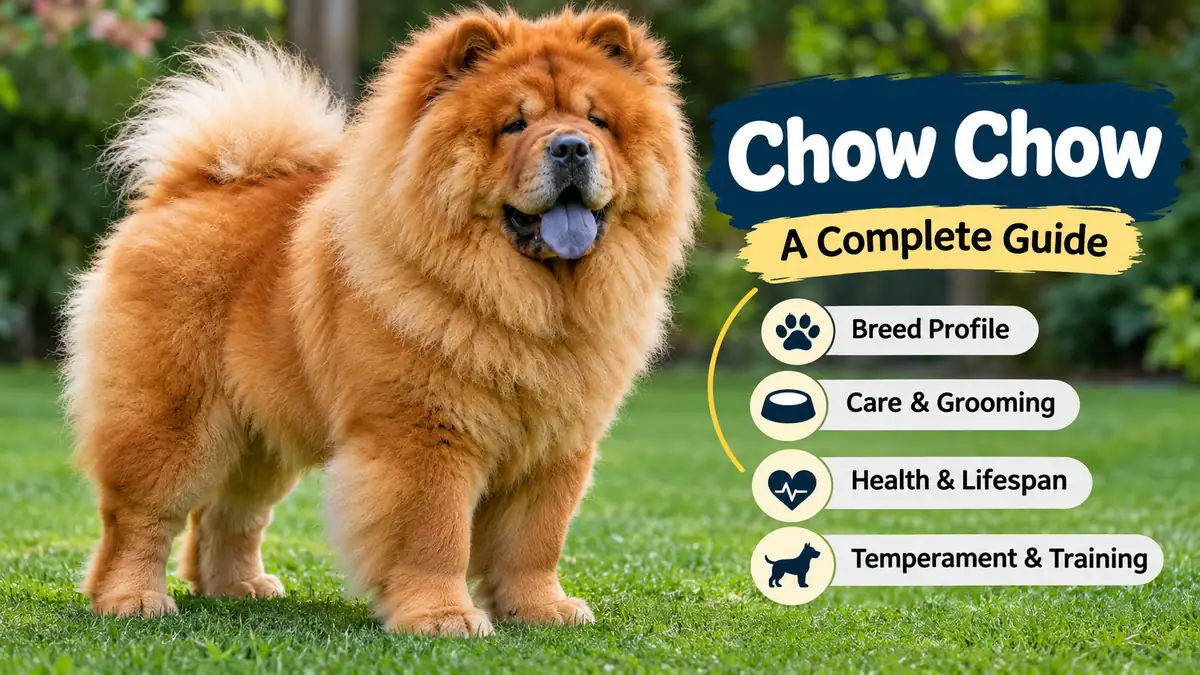
With its lion-like mane, teddy bear appearance, and distinctive blue-black tongue, the chow chow is one of the most recognizable dog breeds in the world. But beneath that fluffy exterior is an independent, dignified dog with a personality quite different from many other family companions.
Originally developed in China, this ancient breed is admired for its loyalty, protective instincts, and calm nature. Understanding its temperament, grooming requirements, exercise needs, and potential health problems is essential for anyone interested in the breed.
The chow chow is a medium-sized, ancient Chinese dog breed known for its dense double coat, blue-black tongue, and reserved temperament. Adults typically weigh 45–70 pounds and live around 8–12 years. Although loyal and relatively quiet, these dogs require consistent socialization, regular grooming, moderate exercise, and experienced handling.
chow chow Breed Overview and Key Characteristics
The Chow Chow belongs to the Non-Sporting Group recognized by the American Kennel Club (AKC). Despite its thick, imposing appearance, it is a compact, muscular dog rather than a giant breed.
| Characteristic | Details |
|---|---|
| Breed name | Chow Chow |
| Origin | China |
| Breed group | Non-Sporting (AKC) |
| Height | Approximately 17–20 inches |
| Weight | Approximately 45–70 pounds |
| Lifespan | Typically 8–12 years |
| Temperament | Loyal, independent, dignified, reserved |
| Coat | Thick double coat, rough or smooth |
| Coat colors | Red, black, blue, cinnamon, cream |
| Exercise | Moderate daily activity |
| Grooming | Moderate to high maintenance |
| Trainability | Intelligent but independent |
| Shedding | Moderate to heavy, especially seasonally |
| Best suited for | Experienced owners and calm households |
These figures are general breed guidelines rather than guarantees for individual dogs. American Kennel Club+2
What Makes This Breed Unique?
Several characteristics distinguish this breed from other dogs:
- A naturally blue-black tongue, unusual among domestic dog breeds.
- A dense mane of fur around the head and shoulders.
- Small, triangular, upright ears.
- A broad head and compact, square body.
- A distinctive short-striding, sometimes described as stilted, gait.
- A reserved personality and strong attachment to familiar people.
Their serious facial expression can make them appear unfriendly, even when they are relaxed. Facial appearance alone is not a reliable indicator of mood, so understanding canine body language is particularly valuable.
History and Origin of the chow chow
Chow Chow Dog Breed Guide: Temperament, Care & Facts.
10
The Chow Chow is widely considered one of the oldest recognizable dog breeds, with a history extending back thousands of years in China.
Historical evidence associates Chow-like dogs with the Han Dynasty, which lasted from 206 BCE to 220 CE. However, the exact development of the modern breed remains uncertain.
Ancient Chinese Working Dogs
Unlike many modern breeds developed for a single specialized task, early Chow Chows served several purposes.
They were historically associated with:
- Guarding homes and property.
- Hunting and assisting with other working activities.
- Pulling carts and transporting goods.
- Providing companionship.
Their strong build, alertness, and natural reserve made them suitable for a variety of roles.
The breed is commonly classified among spitz-type dogs, which often share features such as upright ears, dense coats, and tails carried over the back.
How the Breed Reached Europe and America
Chow Chows became known in Britain during the eighteenth and nineteenth centuries, eventually attracting attention for their unusual appearance.
The breed later developed a following in Europe and North America.
The American Kennel Club officially recognized the Chow Chow in 1903.
Today, it is primarily kept as a companion animal, although its historical guarding instincts remain an important influence on its behavior. PetMD+2
chow chow Appearance, Size, and Coat Colors
The breed’s striking appearance combines a powerful body with exceptionally thick fur.
Although often described as looking like a miniature lion or fluffy bear, its physical structure is distinctly canine.
How Big Does a Chow Chow Get?
Adult males are generally somewhat larger and heavier than females, although individual variation is considerable.
| Measurement | Typical adult range |
|---|---|
| Height | 17–20 inches (43–51 cm) |
| Weight | 45–70 pounds (20–32 kg) |
| Body type | Compact, sturdy, muscular |
| Physical maturity | Often around 12–18 months, with some continuing to fill out |
A thick coat can make a dog appear heavier than it actually is.
For accurate weight assessment, owners should feel the ribs beneath the fur and discuss body condition with their veterinarian.
Rough-Coated vs. Smooth-Coated Chow Chows
The breed has two recognized coat varieties.
Der Chow Chow im Rasseportrait | HUNTER Magazin
Rough-coated Chow Chow
Dense, abundant outer fur with a prominent mane and feathered tail.
Razas de perros: todo lo que necesitas saber sobre el Chow Chow de pelo suave – Infobae
Smooth-coated Chow Chow
Shorter, dense outer fur with a plush appearance and less pronounced mane.
Both varieties have a protective double coat consisting of an outer layer and a softer undercoat.
The rough variety generally needs more frequent brushing because its longer fur is more prone to tangling.
The smooth variety is easier to maintain but still sheds and requires regular coat care.
Common Chow Chow Colors
Tout savoir sur la race Chow Chow
Red
Black Chinese dog Chow Chow with blue tongue against red background
Black
Генетика окрасов собак, часть №8 – 14.02.17 22:37 | Пикабу
Blue
Chow Chow: Get To Know the Royal Teddy Bear of Dogs
Cinnamon
Adoptable Chow Chow Dogs | Chewy.com
Cream
These five colors are recognized by major breed standards. Shades within each color can vary considerably.
A very light cream dog may appear almost white, while blue coats generally have a diluted grayish-black appearance.
Color does not reliably predict temperament, intelligence, or health.
Why Do Chow Chows Have Blue Tongues?
One of the breed’s most distinctive characteristics is its blue-black tongue.
The pigmentation is associated with melanin, the pigment responsible for coloration in skin, hair, and other tissues.
Chow Chow puppies may initially have pink tongues that darken as they develop.
The Chinese Shar-Pei is another breed known for similar tongue pigmentation.
However, a blue-black tongue does not mean a dog has more wolf ancestry, special abilities, or superior health.
A sudden change in tongue color accompanied by breathing difficulty, weakness, or collapse is different from normal pigmentation and requires emergency veterinary attention.
chow chow Temperament and Personality
A Chow Chow’s personality is often compared with that of a cat: independent, selective with affection, and comfortable spending time quietly.
This comparison is useful for understanding the breed’s reserve, but individual dogs vary considerably.
Are Chow Chows Friendly?
Chow Chows can be affectionate and devoted toward people they trust.
However, they are generally less socially enthusiastic than breeds such as the Golden Retriever or Labrador Retriever.
Many prefer calm interactions rather than constant physical attention.
Typical personality traits include:
- Loyalty: Strong bonds with familiar household members.
- Independence: Comfort spending time without continuous attention.
- Alertness: Awareness of unfamiliar people and changes in surroundings.
- Reserve: Cautious or indifferent behavior toward strangers.
- Calmness: Relatively quiet behavior indoors when their needs are met.
- Strong preferences: Some dislike unfamiliar handling or intrusive interactions.
Their independent nature should not be confused with an inability to form close relationships.
Are Chow Chows Aggressive?
Chow Chows are not automatically aggressive, but their natural reserve, guarding tendencies, and sensitivity to handling can create challenges when socialization and training are inadequate.
Fear, pain, previous experiences, and environmental stress can also contribute to defensive behavior.
Warning signs may include a stiff body, freezing, growling, avoidance, or showing the whites of the eyes.
Punishing growling can suppress a valuable warning signal without resolving the underlying discomfort.
Instead, owners should identify the trigger, increase distance when necessary, and seek qualified behavioral support if concerning reactions continue.
The breed standard emphasizes that excessive aggression and extreme timidity are undesirable characteristics. The Kennel Club+1
Are Chow Chows Good Family Dogs?
They can be suitable family companions in households that understand their temperament and respect their boundaries.
They are often better matched with adults or older children who can interact calmly and recognize when a dog wants space.
Very young children may unintentionally pull fur, hug tightly, or disturb a resting dog.
These interactions can make any dog uncomfortable.
Children and dogs should always be supervised together, regardless of breed or previous behavior.
Can Chow Chows Live With Other Dogs and Cats?
Successful relationships with other pets depend on individual temperament, early experiences, introductions, and management.
Some Chow Chows coexist peacefully with other dogs and cats, particularly when raised together.
Others may be selective around unfamiliar dogs or display prey-chasing behavior toward smaller animals.
Introduce animals gradually, use controlled environments, and avoid forcing interactions.
A peaceful relationship is more important than expecting every dog to become socially outgoing.
Training and Socialization for chow chow Puppies
Training this breed requires patience, consistency, and an understanding of independent behavior.
Chow Chows are intelligent, but they may not respond to commands with the immediate enthusiasm seen in some highly cooperative working breeds.
Are Chow Chows Easy to Train?
They are generally considered more challenging for inexperienced owners.
Their independent temperament can make repetitive exercises less motivating, especially when training relies on pressure or punishment.
Reward-based training is the preferred approach.
Useful rewards include food, toys, praise, and access to activities the dog enjoys.
Essential Puppy Training Steps
- Teach name recognition. Reward the puppy for turning toward you when its name is spoken.
- Introduce basic cues. Practice sit, stay, come, and leave it in short sessions.
- Build leash skills. Reward walking near you without pulling.
- Practice cooperative handling. Gradually introduce brushing, paw touching, and veterinary-style examinations.
- Encourage calm greetings. Reward relaxed behavior around unfamiliar people without requiring physical contact.
- Develop recall. Practice returning when called in secure environments before increasing distractions.
- Provide enrichment. Use food puzzles, scent games, and short training exercises to encourage mental engagement.
Short, successful sessions are usually more productive than long periods of repetitive drilling.
Why Early Socialization Matters
The early puppy socialization period is particularly influential in shaping future responses to unfamiliar situations.
Controlled exposure to different people, sounds, surfaces, environments, and appropriate animals helps puppies build confidence.
Socialization should be positive rather than overwhelming.
For example, a puppy can learn that strangers are safe by calmly observing them from a comfortable distance. It does not need to be touched by every person it meets.
Puppy classes should use humane methods and appropriate disease-prevention measures.
Vaccination schedules and safe socialization opportunities should be discussed with a veterinarian.
Common Training Mistakes
Owners sometimes create unnecessary problems by:
- Using harsh corrections or intimidation.
- Forcing interactions with strangers.
- Ignoring early signs of discomfort.
- Allowing unwanted behaviors during puppyhood.
- Failing to establish predictable routines.
- Expecting immediate obedience in distracting environments.
The most effective approach combines clear expectations, positive reinforcement, and realistic goals.
chow chow Grooming, Shedding, and Daily Care
The breed’s luxurious coat is one of its greatest attractions, but it also creates substantial maintenance responsibilities.
Even smooth-coated dogs need regular grooming.
How Often Should You Brush a Chow Chow?
Rough-coated dogs often benefit from brushing every other day, with additional attention during heavy shedding periods.
Smooth-coated dogs may need thorough brushing once or twice weekly.
The American Kennel Club recommends brushing at least twice per week as a general baseline. American Kennel Club+1
A practical grooming routine includes:
| Grooming task | Suggested frequency |
|---|---|
| Brushing | 2–4 times weekly or more as needed |
| Bathing | Approximately every 4–8 weeks, depending on coat condition |
| Nail trimming | Usually every 3–4 weeks, as needed |
| Ear inspection | Weekly |
| Dental brushing | Ideally daily |
| Eye inspection | Regularly, especially if irritation is present |
| Professional grooming | As needed for thorough coat maintenance |
These intervals should be adjusted to the individual dog’s coat, lifestyle, and veterinary needs.
Best Grooming Techniques
Why Do Chow Chows Shed So Much? Understanding Their Grooming Needs | Hero Pet Health
A slicker brush and a suitable metal comb can help remove loose fur and identify tangles.
For thick coats, line brushing is particularly useful.
This technique involves separating the fur into small sections and brushing toward the skin without scraping or irritating it.
Pay attention to areas behind the ears, under the collar, around the legs, and near the tail.
Never pull forcefully through tight mats. Severe matting may require professional assistance.
After bathing, the dense undercoat must be dried thoroughly to reduce prolonged moisture against the skin.
Do Chow Chows Shed a Lot?
Yes. Both coat varieties shed throughout the year, with heavier seasonal shedding as the undercoat changes.
Regular brushing helps remove loose fur before it accumulates indoors.
However, grooming does not eliminate shedding completely.
The breed is not considered hypoallergenic, and people with dog allergies may react to proteins found in dander, saliva, and other secretions.
Should You Shave a Chow Chow in Summer?
Routine shaving is generally not recommended.
The double coat helps protect the skin and plays a role in temperature regulation.
Removing it can increase exposure to sunlight and may affect how the coat regrows.
Shaving also does not eliminate the risk of overheating.
If extensive clipping is medically necessary because of severe matting or a skin condition, it should be discussed with a veterinarian or experienced groomer.
Keeping the coat clean, free of mats, and properly maintained is usually the better approach.
Exercise, Diet, and Living Requirements
Chow Chows need daily physical activity and mental stimulation, but they are not generally suited to prolonged strenuous exercise.
Their moderate activity requirements make them different from high-energy breeds developed for endurance work.
How Much Exercise Does a Chow Chow Need?
Many adults benefit from approximately 45–60 minutes of daily activity, divided into manageable sessions.
The PDSA recommends around one hour of exercise per day as a general guide. PDSA
Suitable activities include:
- Comfortable leash walks.
- Gentle play sessions.
- Scent-based games.
- Short obedience exercises.
- Food puzzles and interactive enrichment.
Exercise should be adjusted for age, health, fitness, and weather conditions.
Puppies should avoid excessive repetitive impact and strenuous forced exercise while developing.
Older dogs with arthritis or mobility limitations may need shorter, more frequent outings.
Can Chow Chows Live in Apartments?
Yes, some can adapt well to apartment living.
Their relatively quiet temperament and moderate exercise requirements can make smaller homes manageable.
However, apartment suitability depends on behavior, access to exercise, temperature control, and the owner’s ability to manage encounters with neighbors and other dogs.
A large garden does not replace daily walks, training, and social interaction.
Are Chow Chows Good in Hot Weather?
They are particularly vulnerable to heat because of their dense coats and, in some individuals, respiratory anatomy that can reduce heat tolerance.
Warm, humid climates require careful management.
Helpful precautions include:
- Walking during cooler morning and evening hours.
- Providing constant access to fresh drinking water.
- Using shaded, well-ventilated or air-conditioned indoor areas.
- Avoiding strenuous exercise during hot weather.
- Never leaving a dog inside a parked vehicle.
- Monitoring for excessive panting, weakness, drooling, vomiting, or collapse.
Heatstroke is a veterinary emergency.
Move an overheated dog to a cool location, begin cooling with cool water and airflow, and seek urgent veterinary care. Do not delay treatment while waiting for symptoms to improve.
VCA Animal Hospitals specifically identifies poor heat tolerance as an important consideration for the breed. VCA Animal Hospitals
What Should a Chow Chow Eat?
A balanced diet appropriate for the dog’s life stage, body condition, and medical needs is essential.
Puppies require nutrition designed to support healthy growth, while adults need sufficient nutrients without excessive calories.
Look for a complete and balanced diet formulated according to recognized nutritional standards, such as those established by the Association of American Feed Control Officials (AAFCO) or guidance from the European Pet Food Industry Federation (FEDIAF).
Feeding amounts depend on factors including:
- Age and body weight.
- Activity level.
- Neutering status.
- Metabolism.
- Calorie density of the food.
- Existing medical conditions.
Because thick fur can conceal weight gain, owners should regularly assess body condition rather than relying only on appearance.
Avoid excessive treats and sudden dietary changes.
Fresh water should always be available.
chow chow Health Problems and Lifespan
Like many purebred dogs, Chow Chows have inherited predispositions to certain medical conditions.
Awareness of these risks allows owners to recognize symptoms earlier and discuss appropriate screening with a veterinarian.
How Long Do Chow Chows Live?
The commonly reported lifespan is approximately 8–12 years.
Individual longevity depends on genetics, preventive healthcare, nutrition, body condition, exercise, and the presence of disease.
Some dogs live longer than the typical range, while others develop serious conditions earlier.
Common Health Conditions
| Health condition | What owners should know |
|---|---|
| Hip dysplasia | Abnormal hip development can cause pain, stiffness, and arthritis |
| Elbow dysplasia | Joint abnormalities may produce forelimb lameness |
| Entropion | Eyelids roll inward, allowing eyelashes or fur to irritate the eye |
| Hypothyroidism | Reduced thyroid function may cause lethargy, weight gain, and coat changes |
| Patellar luxation | The kneecap moves out of its normal position |
| Cruciate ligament disease | Knee ligament injury can cause pain and instability |
| Progressive retinal atrophy | Inherited retinal disease that may lead to vision loss |
| Cataracts | Lens clouding that can interfere with vision |
| Gastric dilatation-volvulus | Potentially life-threatening stomach distension and twisting |
| Skin problems | Dense fur and skin folds can contribute to irritation or infections |
These conditions are documented in veterinary and breed-health resources, but not every Chow Chow will develop them. PDSA+2
Hip and Elbow Dysplasia
Hip dysplasia develops when the hip joint does not form or fit normally.
Elbow dysplasia involves developmental abnormalities of the elbow joint.
Both conditions can contribute to pain and degenerative joint disease.
Possible signs include limping, reluctance to jump, stiffness after rest, and difficulty rising.
Diagnosis may involve physical examination and radiographs.
Maintaining an appropriate body weight helps reduce unnecessary stress on affected joints.
Entropion and Eye Problems
Entropion occurs when the eyelid turns inward.
This can cause eyelashes or surrounding hair to rub against the cornea.
Symptoms may include:
- Excessive tearing.
- Squinting.
- Redness.
- Pawing at the face.
- Eye discharge.
- Sensitivity to light.
Persistent squinting or eye pain requires prompt veterinary assessment because corneal damage can develop.
The breed’s deep-set eyes and facial structure also make routine eye inspection important.
Thyroid Disorders
Hypothyroidism occurs when the thyroid gland produces insufficient thyroid hormone.
Affected dogs may develop weight gain, lethargy, skin changes, hair loss, or reduced activity.
Diagnosis requires appropriate veterinary evaluation and blood testing.
Treatment commonly involves prescribed thyroid hormone replacement.
Bloat and Gastric Dilatation-Volvulus
Gastric dilatation-volvulus, commonly called GDV, is an emergency in which the stomach expands and may twist.
Warning signs include unsuccessful attempts to vomit, abdominal swelling, restlessness, drooling, and sudden weakness.
A dog showing these symptoms needs immediate emergency veterinary treatment.
Recommended Health Screening
The American Kennel Club identifies several evaluations recommended by the national breed club:
- Hip evaluation.
- Elbow evaluation.
- Patella evaluation.
- Ophthalmologist evaluation.
- Thyroid evaluation.
Screening may involve programs operated through the Orthopedic Foundation for Animals (OFA), PennHIP, and recognized veterinary eye examination schemes.
Responsible breeding practices also consider temperament, mobility, respiratory function, and overall physical soundness.
Health tests reduce uncertainty but cannot guarantee that offspring will remain free of disease. American Kennel Club+1
Preventive Veterinary Care
Routine examinations are essential even when a dog appears healthy.
Preventive care typically includes vaccinations, parasite prevention, dental assessment, weight monitoring, and age-appropriate health checks.
Owners should also monitor changes in mobility, breathing, appetite, thirst, skin condition, and behavior.
Early assessment is particularly useful for eye disorders and orthopedic problems.
Chow Chow Puppies: Growth and Development
Chow Chow Dog Price in India – Puppy Cost, Monthly Expense & Care Guid – Wrapinfur
Tout savoir sur la race Chow Chow
pinkqwerty: Creamy the Cream Chow Chow Puppy
9
Chow Chow puppies are famous for their round faces and fluffy coats.
Their appearance can resemble a small teddy bear, but their behavior and development require the same careful attention as other growing dogs.
Puppy Growth Stages
| Age | Typical developmental changes |
|---|---|
| Birth–8 weeks | Early physical development and social learning with mother and littermates |
| 8–12 weeks | Adjustment to a new home, gentle handling, and foundational training |
| 3–6 months | Rapid growth, teething, and expanding environmental confidence |
| 6–12 months | Adolescence, increased independence, and continued physical growth |
| 12–18 months | Many approach adult size and continue developing maturity |
| 18–24 months | Some continue filling out physically and developing behavioral maturity |
These stages are approximate, and growth rates vary between individual dogs.
Caring for a Chow Chow Puppy
A consistent routine helps puppies feel secure.
Provide an appropriate sleeping area, age-suitable food, safe enrichment, and frequent opportunities for toileting.
Introduce grooming tools gradually.
This is particularly important because adult dogs require extensive coat maintenance.
Puppies should learn to tolerate gentle brushing, nail handling, and brief physical examinations through positive experiences.
Early training should focus on confidence, communication, and cooperative behavior rather than strict obedience.
When Does a Chow Chow’s Tongue Turn Blue?
Puppies may be born with pink tongues that progressively darken.
Much of the characteristic pigmentation generally develops during the first several weeks of life.
However, pigmentation can vary, and tongue color alone should not be used to judge a puppy’s health or pedigree.
A veterinarian can evaluate unusual oral changes when necessary.
Is a chow chow the Right Dog for Your Lifestyle?
Understanding the breed’s advantages and challenges is more useful than judging it by appearance alone.
A beautiful coat and calm expression do not automatically make a dog easy to care for.
Advantages of Living With a Chow Chow
Many owners appreciate the breed’s distinctive combination of loyalty and independence.
Potential advantages include:
- Strong attachment to familiar people.
- Relatively quiet indoor behavior.
- Moderate exercise requirements.
- An alert, observant personality.
- Comfort with predictable routines.
- A distinctive appearance and rich history.
Some individuals are affectionate and playful with family members, even if they appear reserved around strangers.
Challenges to Consider
The breed also has characteristics that require preparation.
Potential difficulties include:
- Significant grooming and seasonal shedding.
- Sensitivity to heat.
- Independent responses during training.
- Caution around unfamiliar people and animals.
- Possible inherited orthopedic and eye conditions.
- A preference for personal space.
- The need for early, ongoing socialization.
These are tendencies, not fixed rules for every individual dog.
Chow Chow vs. Pomeranian vs. Samoyed
All three breeds share some spitz-related physical characteristics, but their size, activity levels, and typical social behavior differ.
| Feature | Chow Chow | Pomeranian | Samoyed |
|---|---|---|---|
| Size | Medium | Toy | Medium to large |
| Typical temperament | Reserved, independent | Alert, lively | Sociable, energetic |
| Coat | Dense double coat | Long double coat | Thick double coat |
| Exercise needs | Moderate | Low to moderate | Moderate to high |
| Grooming | High | Moderate to high | High |
| Typical sociability | Selective | Often outgoing | Generally friendly |
| Training approach | Patient, consistent | Positive, engaging | Positive, active |
The Pomeranian is considerably smaller and often more vocal.
The Samoyed is generally more socially outgoing and has greater exercise requirements.
For households seeking a quieter, more reserved companion, the Chow Chow may be appealing. However, its temperament requires more careful management than its relaxed appearance might suggest.
Are Chow Chows Good for First-Time Owners?
They are generally better suited to people with previous dog-handling experience.
First-time owners can sometimes succeed with the breed, but they should be prepared to learn about canine behavior, invest in reward-based training, and obtain professional guidance when necessary.
A calm household, consistent routines, and respect for the dog’s boundaries are especially valuable.
The most suitable home is one that can meet the individual dog’s physical and behavioral needs throughout its life.
Interesting Facts About the chow chow
Beyond its appearance and temperament, this ancient breed has several unusual characteristics.
1. Its Tongue Is Naturally Dark
The blue-black tongue is a normal inherited feature of the breed, rather than a sign of illness.
2. It Has Two Recognized Coat Types
Both rough-coated and smooth-coated dogs belong to the same breed.
The difference lies mainly in the outer coat’s length and texture.
3. Its Gait Is Distinctive
Chow Chows are known for a characteristic short-striding gait associated with their rear-leg structure.
However, a healthy dog should still move freely and comfortably.
Extreme stiffness or difficulty walking should never be dismissed as normal breed behavior.
4. It Has a Long Working History
The breed’s ancestors were associated with guarding, hunting, and other practical roles in China.
This helps explain the combination of alertness, independence, and physical strength seen today.
5. Its Facial Expression Can Be Misleading
The breed’s small upright ears, deep-set eyes, and broad head can create a naturally serious expression.
A seemingly stern face does not necessarily indicate anger or aggression.
6. It Usually Prefers Cooler Conditions
The dense coat makes the breed better adapted to cooler weather than extreme heat.
Careful temperature management is essential in warm climates.
7. It Is Not Typically a Highly Vocal Breed
Many Chow Chows are relatively quiet, although individuals may bark when alerting their household to unfamiliar activity.
Training, environment, and personality all influence vocal behavior.
8. Its Independence Does Not Mean It Dislikes People
A reserved dog may still form deep attachments to its family.
Affection can appear through quiet companionship, following a familiar person, or choosing to rest nearby rather than seeking constant physical contact.
Final Thoughts on the chow chow
The chow chow is an ancient, distinctive dog breed known for its lion-like appearance, blue-black tongue, independent temperament, and loyalty to familiar people.
Its moderate exercise needs and calm indoor behavior can make it a rewarding companion, but regular grooming, early socialization, heat protection, and preventive veterinary care are essential.
The breed is generally best suited to patient, knowledgeable owners who appreciate a dog with a reserved personality and clear boundaries.
For anyone learning about this remarkable Chinese breed, the most useful next step is to understand its individual temperament and long-term care requirements rather than focusing only on its beautiful appearance. A healthy, well-socialized Chow Chow can develop into a devoted companion when its physical and behavioral needs are consistently respected.