Most people plan their Greek island hopping itinerary backward. They pick five islands off a “best of” list, then try to stitch them together with ferries — and end up losing entire days to transit instead of beach time. The trip works when you plan the route first and the islands second.
A good Greek island hopping itinerary sticks to one island group — usually the Cyclades — and spends 3 to 4 nights per stop. Popular routes combine Athens, Santorini, Paros or Naxos, and Milos or Mykonos over 7 to 14 days, using ferries booked through Ferryhopper or Ferryscanner. Flying into one island and out of another (open-jaw) saves a full day of backtracking.
What Island Hopping in Greece Actually Means
Island hopping is simply moving between islands by ferry (occasionally by short flight) instead of flying in and out of one destination. Greece has more than 6,000 islands and islets, though only around 200 to 230 are inhabited, and a much smaller number have regular ferry service worth building a trip around.
The trap most first-timers fall into is treating the map like a checklist. Greece’s ferry network is built around island groups, not the country as a whole, and jumping between groups usually means routing back through Athens, which eats a travel day you could have spent on a beach.
Quick takeaway: Fewer islands, more nights each, one island group. That’s the entire strategy in one sentence.
Choosing Your Island Group First
Before you name a single island, pick the region. This decision does more to shape your trip than any individual stop will.
| Island Group | Best For | Key Islands | Ferry Connectivity |
|---|---|---|---|
| Cyclades | First-timers, classic Greece look | Santorini, Mykonos, Paros, Naxos, Milos, Ios | Excellent, frequent |
| Dodecanese | History, quieter pace | Rhodes, Kos, Patmos | Good within group, weak to Cyclades |
| Ionian Islands | Greenery, sailing, fewer crowds | Corfu, Kefalonia, Lefkada, Zakynthos, Paxos | Patchy — often needs buses/mainland legs |
| Saronic Gulf | Short trips, winter travel | Hydra, Poros, Aegina | Frequent, close to Athens |
| Sporades | Off-radar, Mamma Mia fans | Skiathos, Skopelos, Alonissos | Moderate, seasonal |
Cyclades: the default choice, and for good reason
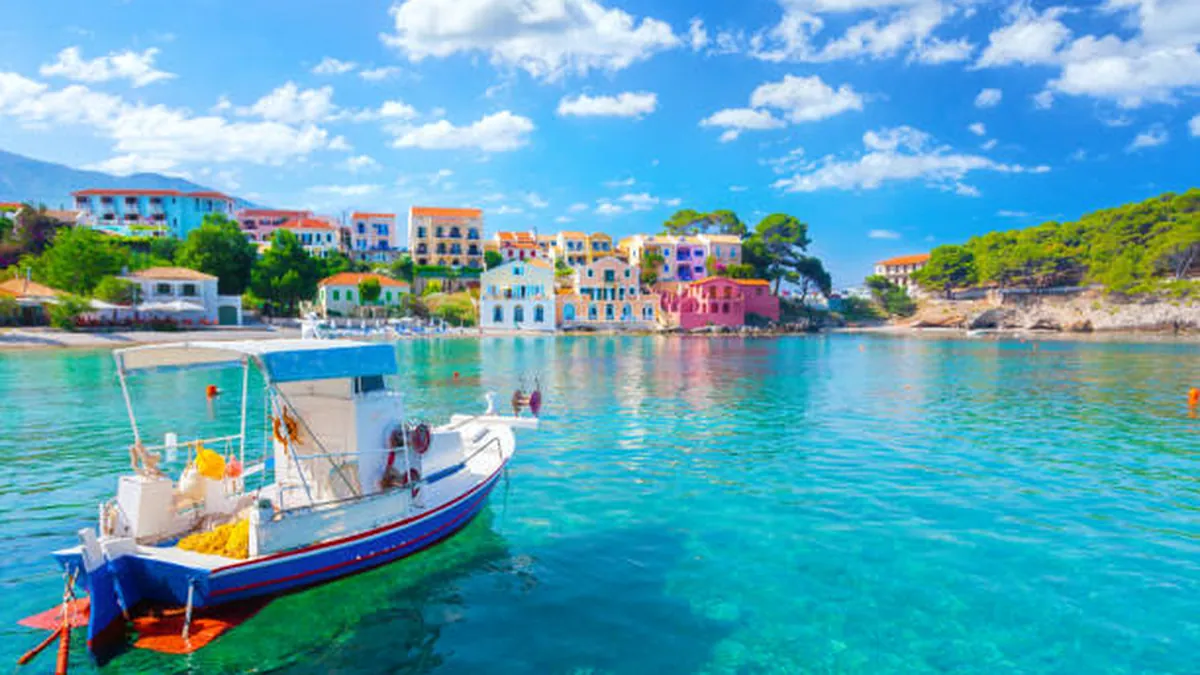
The Cyclades are the whitewashed-villages-and-blue-domes image most people have of Greece, and they’re also the easiest group to island hop within. Ferries run frequently between Santorini, Mykonos, Paros, Naxos, Milos, and Ios in high season, which is exactly why nearly every competing guide builds its main itinerary here.
Dodecanese: for a different kind of Greece
Rhodes’ medieval old town and Patmos’s monastery draw a different crowd than the Cyclades — older, quieter, more history-focused. The catch: connections back to the Cyclades are weak, so this is better treated as its own trip than tacked onto a Santorini-Mykonos route.
Ionian Islands: greener, harder to link
Corfu, Kefalonia, Lefkada, and Paxos sit in a different sea entirely, with a ferry network that leans on mainland bus connections rather than direct island-to-island routes. It’s a rewarding region, but expect more logistics.
Saronic Gulf and Sporades: the quieter alternatives
Hydra, Poros, and Aegina are close enough to Athens for weekend trips and one of the only regions that stays reasonably connected through winter. The Sporades — Skiathos, Skopelos, Alonissos — reward Mamma Mia fans and anyone chasing a slower pace, though service outside summer thins out fast.
Three Sample Itineraries
Pick the length that matches your time off, not the other way around. Each of these treats one island group as the backbone and layers in day trips where it makes sense.
7 Days: Athens, Santorini, Naxos
- Days 1–2: Athens. See the Acropolis, wander Plaka, and treat this as your adjustment period, not a rushed checklist.
- Days 3–4: Ferry to Santorini. Base yourself in a caldera town like Imerovigli for the view, and don’t skip a boat trip around the volcano.
- Days 5–7: Ferry to Naxos for a calmer, more local finish — better beaches, better prices, fewer crowds. Fly or ferry back to Athens for departure.
10 Days: Athens, Paros, Naxos, Milos, Santorini
- Days 1–2: Athens
- Days 3–4: Paros — base in Parikia or Naoussa, day trip to Antiparos
- Days 5–6: Naxos — best beaches in the Cyclades and genuinely great food
- Days 7–8: Milos — dramatic coastline, colorful fishing villages, boat tour around the island
- Days 9–10: Santorini for the finale, then fly out (Santorini’s airport connects well to Athens and the rest of Europe)
14 Days: Athens, Mykonos, Paros, Naxos, Ios, Santorini
- Days 1–2: Athens
- Days 3–5: Mykonos — beaches by day, Mykonos Town by night
- Days 6–7: Paros
- Days 8–9: Naxos
- Days 10–11: Ios — beaches and nightlife, a good midpoint between quiet and lively
- Days 12–14: Santorini to close out, flying home from there rather than backtracking to Athens
Quick takeaway: In every version, the pattern is the same — arrive Athens, move through 3 to 5 islands at 2–4 nights each, end somewhere with strong onward flight connections (Santorini, Mykonos, or Crete).
How to Book Ferries (and Get Out of Athens the Right Way)
Athens has three ports that serve the islands, and which one you use depends entirely on your route: Piraeus (the big one, serving most Cyclades and Dodecanese routes), Rafina (closer to the airport, serves Mykonos, Andros, and some Cyclades routes with shorter crossing times), and Lavrio (smaller, mostly Cycladic and Evia routes). Guides that only mention Piraeus are missing a genuinely useful shortcut — Rafina can shave real time off a Mykonos-bound trip.
Greece has no island-wide ferry pass. Every leg is booked individually, and platforms like Ferryhopper and Ferryscanner let you compare operators, speeds, and prices in one search rather than checking each ferry company’s own site. Ferry schedules are released in phases — some routes appear 6 to 8 months ahead, others only 3 to 4 months out — so don’t panic if your dates aren’t bookable yet in the depths of winter.
A few practical notes that matter more than most guides let on:
- High-speed ferries and catamarans cost more but cut crossing times significantly — worth it on longer legs like Athens to Santorini.
- Slow conventional ferries are cheaper, more scenic, and barely affected by weather — a reasonable trade if you’re not in a hurry.
- Meltemi winds, which pick up in July and August, can cancel or delay sailings with little notice. Build a buffer day before any flight home, and consider travel insurance that covers missed connections.
- Mixing island groups — say, Cyclades and Dodecanese in one trip — is technically possible but usually means routing back through Athens by air, which can cost more than just picking one region and going deeper.
- Student ISIC cardholders can often get ferry discounts of up to 50% with participating companies — worth checking before you book if you qualify.
What a Greek Island Hopping Trip Actually Costs
Budgets vary enormously by travel style, but here’s a realistic range based on actual traveler spending:
| Category | Budget Traveler | Mid-Range Traveler |
|---|---|---|
| Daily spend (all-in) | €50–€90/day | €100–€200/day |
| Ferry ticket (per leg) | €7–€40 | €40–€100 (high-speed) |
| Accommodation | Hostel/budget room | 3-star hotel or apartment |
A realistic 10-day trip for two people, ferries included, tends to land somewhere between €800 and €2,000 total depending on season and island choice — Santorini and Mykonos push costs up noticeably compared to Naxos, Paros, or Milos. Booking ferries 3–4 months ahead for peak season, traveling in the shoulder months, and eating at inland tavernas rather than waterfront restaurants are the three levers that move the needle most.
Best Time of Year to Go
May through September is peak ferry season with the most frequent sailings and warmest seas, but also the biggest crowds and highest prices. Late September through October, and April to mid-May, offer a genuine sweet spot — warm days, thinner crowds, and sea temperatures around 22°C in the Aegean, though schedules thin out and some smaller-island routes drop off entirely.
Winter island hopping (November–March) is possible but limited — most ferry companies scale back drastically, flights between islands often route through Athens, and routes to and from Santorini or Crete can disappear entirely. If you’re set on a winter trip, the Saronic Gulf (Hydra, Poros, Aegina) stays connected year-round and is the most realistic option.
Mistakes Almost Everyone Makes on Their First Trip
- Cramming in too many islands. Ten days across five islands sounds efficient; in practice it means two ferry-transit half-days for every one full day of actual vacation.
- Booking ferries too far in advance. Unlike flights, Greek ferry tickets don’t reward early booking the way people assume — schedules aren’t even released that far out, and plans change.
- Assuming all ferry routes connect directly. Many “direct” routes actually stop at several islands along the way, so check total journey time, not just the endpoints.
- Ignoring the return trip. Build in a buffer day before any international flight home in case a ferry gets delayed by weather.
- Skipping travel insurance. Ferry cancellations from Meltemi winds are common enough in July and August that unplanned overnight stays happen more than people expect.
Conclusion
A Greek island hopping itinerary doesn’t need to cover the whole country to feel like the trip of a lifetime. Pick one island group, give each stop enough nights to actually relax, book your ferries through a comparison platform rather than piecing it together manually, and leave a buffer day near the end of the trip. Start with the 7, 10, or 14-day route above, adjust it to your own pace, and book that first ferry leg once schedules for your travel window go live.
Find more trip-planning inspiration in our library of travel guides.
FAQ Section
How many islands should I visit when island hopping in Greece?
For a 7–10 day trip, 3 islands is the sweet spot; for 14 days, 4–5 works well. Fewer islands with more nights each nearly always beats a longer list, since transit days eat into actual vacation time.
What is the best Greek island hopping route for first-timers?
The Cyclades — Santorini, Paros, Naxos, and Mykonos — offer the most frequent ferry connections and the classic whitewashed-village scenery most travelers picture when they think of Greece.
How do you get around when island hopping in Greece?
Ferries are the primary transport, booked through platforms like Ferryhopper or Ferryscanner. Occasional short flights (usually via Athens) connect islands without direct ferry links.
Is it cheaper to fly or ferry between Greek islands?
Ferries are almost always cheaper, with tickets ranging from around €7 to €100 depending on distance and speed. Flights make sense mainly for long hops or tight schedules.
What is the best month for Greek island hopping?
Late May, June, and September offer warm weather with fewer crowds than July and August, plus more reliable ferry schedules than the shoulder or off-season months.
Do you need to book ferries in advance?
For peak summer travel to popular islands like Santorini and Mykonos, book a few weeks to a couple of months ahead. Off-season, you can often book just days before departure.
Can you island hop in Greece without a car?
Yes — most Cyclades islands are easily walkable or accessible by local bus, taxi, or ATV rental, especially if you’re staying in or near the main town (Chora).
How much does a week of Greek island hopping cost?
Budget travelers can manage on roughly €50–€90 per day per person; mid-range travelers should plan for €100–€200 per day including accommodation, food, and ferries.