Yes — Bari is absolutely worth visiting. It’s one of Southern Italy’s most underrated cities, offering medieval architecture, world-class street food, and an authentic local atmosphere that places like Rome and Florence can no longer deliver. Whether you’re planning a full Puglia road trip or looking for a culturally rich Italian base, Bari punches well above its weight.
If you’ve been scrolling through Puglia itineraries and keep asking yourself whether Bari deserves a spot on your list — or whether you should spend that time in nearby Polignano a Mare or Alberobello instead — this guide is for you.
Bari is the kind of city that surprises people. It’s not postcard-perfect or manicured for Instagram. It’s loud, lived-in, and wonderfully real. Grandmothers make fresh orecchiette pasta in doorways on Via dell’Arco Basso. Fishermen still unload catches near the old port. Locals argue loudly over espresso at corner bars. That energy — messy and magnetic — is exactly what many Americans traveling Italy say they came here to find but couldn’t locate in Rome’s tourist-packed piazzas.
The question isn’t really is Bari worth visiting. The real question is: are you the kind of traveler who’ll appreciate what Bari actually offers? This guide will help you answer that honestly.
Where Is Bari, and Why Does It Matter?
Bari is the capital of Apulia (Puglia), Italy’s southeastern region, sitting right on the Adriatic coast. Think of it as the heel of Italy’s boot. It’s a major port city of around 300,000 people — large enough to have a vibrant cultural scene, small enough to feel human.
For American travelers, getting here is easier than you might expect. Bari’s Karol Wojtyła International Airport (BRI) connects to many European hubs, and direct or one-stop flights from major U.S. cities (New York, Chicago, Miami) are available via Rome Fiumicino or London Heathrow. It’s also a primary Adriatic ferry port with connections to Greece and Croatia, making it a practical gateway for multi-country trips.
Within Italy, Bari is well connected by high-speed Frecciarossa trains from Rome (about 3.5–4 hours) and Naples (around 3 hours). If you’re already doing a Southern Italy loop, Bari slots in naturally.
Why Bari is relevant right now: Tourism in Puglia has surged in recent years, but Bari itself still hasn’t been overrun. That window won’t stay open forever. If authentic Italy is what you’re after, 2026 is a great time to visit.
Top Things to Do in Bari: What’s Actually Worth Your Time
Bari Vecchia (Old Town): The Real Reason to Come
If you only have one day in Bari, spend most of it here.
Bari Vecchia is the medieval heart of the city — a dense, labyrinthine grid of limestone alleyways, crumbling archways, and sun-bleached piazzas that has been continuously inhabited for over a thousand years. It sits on a small peninsula jutting into the Adriatic, bordered by the old port on one side and the sea on the other.
What makes Bari Vecchia genuinely special isn’t any single monument. It’s the layering. You’ll pass a Byzantine-era church tucked between a modern barbershop and a woman hanging laundry from a second-floor window. Kids kick footballs in alleyways that were medieval trade routes. Over 40 churches are scattered within the old town’s few square kilometers — you’ll stumble across them by accident, which is the best way to find them.
The street food situation alone is worth the visit. Along Via dell’Arco Basso and the surrounding alleys, local women (and increasingly their daughters and granddaughters) sit in doorways and shape orecchiette by hand. You can buy a bag to take home, or stop at one of the nearby stands for a plate of orecchiette alle cime di rapa — the pasta tossed with bitter broccoli rabe, anchovies, garlic, and olive oil. It’s simple, sharp, and deeply satisfying.
Two must-visit squares in Bari Vecchia:
- Piazza Mercantile — the old town’s social hub, lined with cafés and anchored by a baroque column. It comes alive in the evenings.
- Piazza del Ferrarese — sits at the edge where old town meets the modern city; great for people-watching over an Aperol spritz.
Basilica di San Nicola: More Significant Than You Might Realize
This church deserves more than a quick photo stop.
The Basilica di San Nicola, built beginning in 1087, holds the relics of Saint Nicholas — yes, the historical figure behind Santa Claus. After his remains were brought from Myra (in modern-day Turkey) by Bari sailors, this basilica was constructed to house them. It became one of the most important pilgrimage sites in medieval Christianity, drawing worshippers from across Europe for centuries.
The architecture is textbook Apulian Romanesque: a restrained, powerful facade with two solid bell towers flanking an ornate central portal. Inside, the crypt beneath the main altar is where the saint’s tomb lies — and it’s genuinely atmospheric, illuminated by candles and still used for daily worship.
The Feast of St. Nicholas in early May (typically May 7–9) is one of Southern Italy’s most important religious festivals. If your trip overlaps, it’s worth altering your schedule to witness the procession.
Practical tip: The basilica is free to enter. Go early morning or late afternoon to avoid tour groups. Photography is permitted in the main hall but restricted in the crypt.
Cattedrale di San Sabino (Bari Cathedral): The Overlooked Gem
Standing in Piazza dell’Odegitria a short walk from San Nicola, Bari’s Cathedral of San Sabino (San Sabino) is frequently overshadowed by its more famous neighbor — which is a shame, because it’s arguably more architecturally pure.
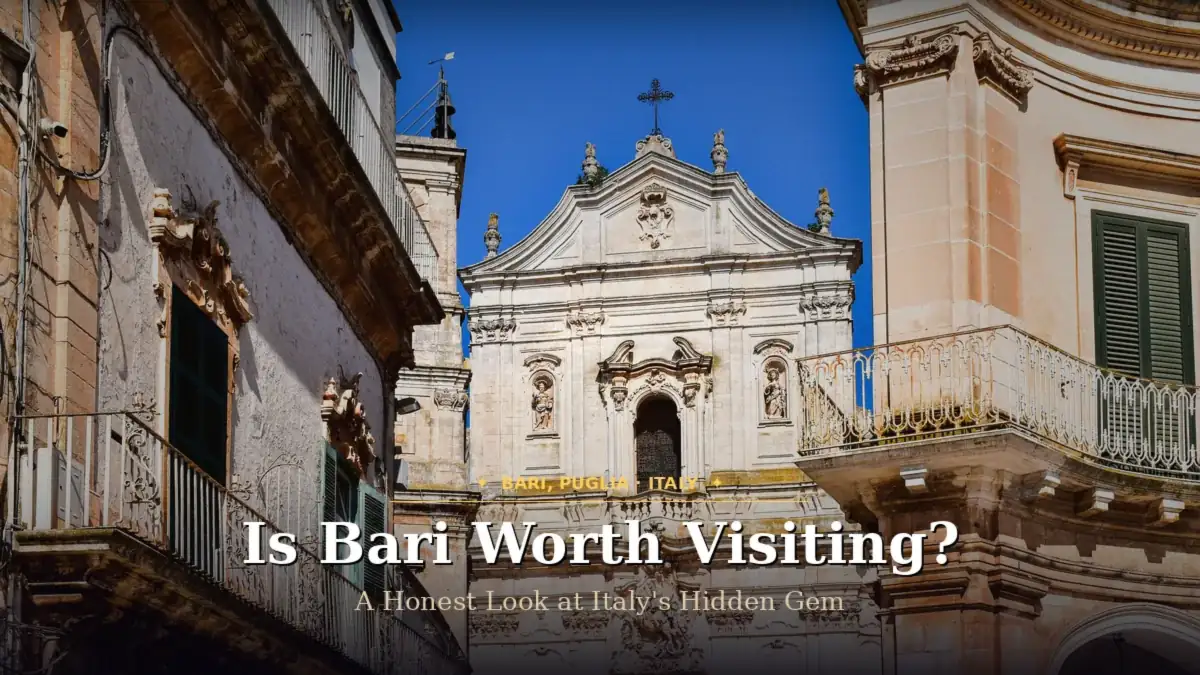
The current cathedral dates to the late 11th and 12th centuries, built over the site of an earlier Byzantine church. Its Romanesque facade is beautifully unadorned, almost severe, with a large rose window that catches afternoon light brilliantly. The interior houses a famous icon, the Madonna Odegitria, which is paraded through Bari’s streets every year in mid-February.
First-time visitors often end up preferring San Sabino to San Nicola. It feels more intimate, less traveled.
Castello Normanno-Svevo (Swabian Castle): Bari’s Waterfront Landmark
The Norman-Swabian Castle — locally called Castello Svevo — anchors the northwestern edge of Bari Vecchia, sitting directly at the water’s edge. What you see today is largely the fortress redesigned by Holy Roman Emperor Frederick II in the 13th century, built on foundations that go back to Byzantine and Norman fortifications.
It’s a proper medieval castle: thick defensive walls, a surrounding moat (now dry), and towers at each corner. The interior houses rotating exhibitions of Apulian art and history, as well as a permanent collection of plaster casts from Puglia’s architectural heritage — an unusual exhibit that’s more interesting than it sounds.
Worth the entrance fee? Yes, especially for the views from the ramparts. On a clear day you can see along the Adriatic coast in both directions.
Hours and fees (2026): The castle is typically open Tuesday–Sunday, 8:30 AM–7:30 PM. Admission runs approximately €5–8 for adults; free for EU citizens under 18. Always verify current hours at the official Italian Ministry of Culture website before your visit, as schedules change seasonally.
The Lungomare Promenade: Bari at Its Most Relaxed
Stretching for several kilometers along the coast, Bari’s Lungomare is one of Southern Italy’s finest seafront promenades. It’s not a beach resort strip — it’s a wide, palm-lined boulevard built for slow walking, conversation, and watching the Adriatic do its thing.
In the evenings, the passeggiata tradition plays out here in full force. Families, couples, and groups of teenagers all converge on the Lungomare as the sun drops, dressed in their best, in no particular hurry. For Americans accustomed to purpose-driven movement, it’s a genuinely pleasant culture shock.
The waterfront connects to Pane e Pomodoro Beach, a free public beach just south of the old town that’s popular with locals. It’s a pebbly city beach — nothing like the white-sand beaches further along the Puglia coast — but it’s clean, accessible, and a great spot to cool down in summer without going far.
Bari Food Guide: What to Eat and Where
Bari’s culinary identity is one of the strongest reasons to visit. Apulian cuisine is built on simplicity and quality — fresh vegetables, legumes, good olive oil, and the freshest seafood in Italy. Here’s what to prioritize:
Must-Try Foods in Bari
| Dish | What It Is | Where to Find It |
|---|---|---|
| Focaccia barese | Thick, airy flatbread topped with tomatoes, olives, and oregano | Bakeries throughout Bari Vecchia; Panificio Fiore is a local institution |
| Orecchiette alle cime di rapa | Ear-shaped pasta with broccoli rabe, garlic, anchovies | Any traditional trattoria; or straight from street vendors in Bari Vecchia |
| Crudo di mare | Raw seafood platter — sea urchin, oysters, shrimp, octopus | Seafood restaurants near the old port |
| Tiella barese | Baked casserole of rice, potatoes, and mussels | Traditional restaurants, especially on weekends |
| Taralli | Crunchy ring-shaped snack, savory or slightly sweet | Every bar and bakery in the city |
| Sgagliozze | Fried polenta squares sold hot from street stalls | Evening street food stalls in Bari Vecchia |
Where to eat: For a sit-down meal, the area around Corso Vittorio Emanuele II and the streets off Piazza del Ferrarese has a range of options from trattorias to modern wine bars. Expect to pay €20–35 per person for a full meal with wine at a good trattoria — significantly less than you’d spend for comparable quality in Rome or Florence.
Note for American travelers: Dinner in Bari typically starts between 8:00–9:00 PM. Showing up at 6:30 PM will get you the stare of polite confusion. Adjust your expectations accordingly, and the evenings become much more enjoyable.
When Is the Best Time to Visit Bari?
Bari has a classic Mediterranean climate — hot, dry summers and mild, occasionally wet winters. Here’s how each season breaks down for visitors:
| Season | Months | Temp (°F) | Crowd Level | Best For |
|---|---|---|---|---|
| Spring | April–June | 65–80°F | Low–Moderate | Ideal weather, festivals, fewer tourists |
| Summer | July–August | 85–95°F | High | Beach time, long evenings; book ahead |
| Early Fall | September–October | 70–82°F | Moderate | Best overall; warm but not scorching |
| Winter | November–March | 48–58°F | Very Low | Budget travel, fewer crowds, off-season rates |
The verdict: Late May through June and September through early October are the sweet spots. You get reliably warm weather, the city is lively without being packed, and accommodation prices are noticeably lower than August.
Avoid mid-August if you can. Ferragosto (August 15) is Italy’s major national holiday, and many local restaurants and shops close for the week. The city gets crowded with domestic Italian tourists, and prices spike.
Key events to plan around:
- Feast of St. Nicholas (May 7–9): Major religious festival, processions, and cultural events. Worth planning your trip around.
- Bari International Film Festival (typically November): Draws films from across the Mediterranean region.
- Carnival (February/March, date varies): Colorful street celebrations in the weeks before Lent.
Is Bari Safe for American Tourists?
This is one of the most common questions, and the honest answer is: yes, Bari is safe for tourists in 2026.
The city had a rougher reputation decades ago, tied to organized crime activity that has since been significantly reduced. Today Bari is a busy port city and university town, accustomed to visitors and with a strong local police presence in tourist areas.
Practical safety tips:
- Standard urban precautions apply: keep your bag in front of you in crowded areas, use a money belt for passports and large amounts of cash, and stay aware of your surroundings near the train station and market areas.
- Bari Vecchia is safe to walk in the evenings — the old town’s squares are busy until late and well-lit.
- Avoid walking alone in poorly lit side streets late at night, as you would in any unfamiliar city.
- The Lungomare is busy and safe at all hours during summer.
The U.S. Department of State currently rates Italy at Level 1: Exercise Normal Precautions — the lowest advisory level. No special concerns apply to Bari specifically.
Practical Travel Tips for Visiting Bari
Getting There from the U.S.
There are no nonstop flights from the U.S. to Bari (BRI). Typical routing is through Rome (FCO), London (LHR/LGW), Amsterdam (AMS), or Frankfurt (FRA). Total travel time from the East Coast is generally 11–14 hours including connection. Check Google Flights or Kayak for current fares — positioning flights from Rome to Bari can be as low as $40–80 when booked in advance.
Alternatively, take the Frecciarossa or Intercity train from Rome Termini to Bari Centrale (3.5–4.5 hours, €25–60 depending on class and booking timing). Trenitalia’s website handles bookings easily.
Getting Around Bari
The good news: Bari’s main attractions are all walkable from each other. Bari Vecchia, the castle, the Lungomare, and the train station are within a 20–30 minute walk in a compact central area.
For getting to beaches south of the city or exploring the greater Bari province, renting a car is the most flexible option. Rental agencies operate at both the airport and near Bari Centrale station.
Public buses (operated by AMTAB) cover the city and cost around €1.50 per ride.
Budget Expectations (USD, 2026)
| Expense | Budget | Mid-Range | Splurge |
|---|---|---|---|
| Accommodation (per night) | $55–80 (B&B) | $90–150 (3-star hotel) | $180–300+ (boutique) |
| Meal (per person, dinner) | $15–20 (trattoria) | $25–45 (restaurant) | $60+ (fine dining) |
| Coffee/breakfast | $2–4 | $4–6 | — |
| Museum entry | $0–9 | $9–15 | — |
| Day trip (train to Polignano) | $10–15 roundtrip | — | — |
Note: Prices are approximate and based on average 2025–2026 rates. Exchange rates fluctuate — check current EUR/USD rates before budgeting.
Language
Italian is spoken universally. English is understood in hotels, many restaurants, and tourist-facing businesses, but less so in local bars, markets, and smaller shops. Learning a few basic Italian phrases goes a long way and will earn you visible goodwill from locals.
Day Trips from Bari: Making the Most of Your Visit
Bari’s location makes it an excellent base for exploring Puglia. These destinations are all doable in a day:
- Polignano a Mare (35 min by train): Dramatic cliffside village with sea caves and a gorgeous old town. Non-negotiable if you’re in the area.
- Alberobello (1.5 hours by regional train): UNESCO-listed trulli village — the round stone buildings with conical roofs that define Puglia’s visual identity.
- Matera (1.5 hours by bus or car): One of the world’s oldest continuously inhabited cities; the cave dwellings (sassi) are extraordinary and a UNESCO World Heritage Site. Worth an overnight.
- Trani (45 min by train): A handsome port city with a remarkable cathedral that literally sits at the water’s edge. Often overlooked and all the better for it.
- Ostuni (1 hour by train): The “White City” — a whitewashed hilltop town with excellent restaurants and panoramic views of the Itria Valley.
How Many Days Do You Need in Bari?
One day is enough to hit the highlights: Bari Vecchia, the Basilica di San Nicola, Castello Svevo, and the Lungomare, with time for a proper lunch and evening passeggiata. It’s tight but doable.
Two days gives you breathing room. You can explore more slowly, take a morning day trip to Polignano a Mare, and experience Bari’s evening food and bar scene properly.
Three or more days makes Bari your Puglia base, with day trips fanning out across the region. This is the ideal setup for first-time Puglia visitors.
Final Verdict: Is Bari Worth Visiting?
Here’s the honest answer: Bari is worth visiting if you value authenticity over polish, local culture over tourist infrastructure, and real Italian life over curated experiences.
It’s not the place to come if your Italy trip is built around Michelin-starred dining, luxury boutique shopping, or perfectly Instagram-filtered piazzas. But if you want to eat the best focaccia of your life for €1.50, watch a 75-year-old woman shape pasta in a medieval alleyway, and sit by the Adriatic as the sun sets over a city that genuinely doesn’t care whether you’re impressed — Bari is exceptional.
Many travelers who visit Puglia say Bari was the unexpected highlight. The city has a confidence and identity that’s all its own, untouched by the self-consciousness that comes with heavy tourism. Go now, while it’s still like this.
Frequently Asked Questions About Visiting Bari, Italy
Is Bari, Italy worth visiting for American tourists?
Yes. Bari offers a genuinely authentic Southern Italian experience that’s increasingly hard to find in more famous destinations. It’s affordable, walkable, safe, and culinarily excellent. Americans who enjoy off-the-beaten-path travel consistently rate it highly.
How many days should I spend in Bari?
One day covers the essentials, but two days lets you explore at a comfortable pace and experience Bari’s evening atmosphere. If you’re using it as a base for Puglia day trips, plan three or more nights.
Is Bari expensive compared to other Italian cities?
No — Bari is noticeably more affordable than Rome, Florence, or the Amalfi Coast. Budget around $60–100/night for a good hotel, $15–25 per person for a trattoria dinner, and just a few dollars for exceptional street food.
Is Bari safe for solo travelers and tourists?
Yes. Bari’s safety has improved significantly and it’s now a welcoming city for tourists. Take the same precautions you would in any urban area: watch your belongings in busy markets and around the train station.
What is Bari, Italy best known for?
Bari is famous for the Basilica di San Nicola (holding the relics of St. Nicholas), its medieval old town (Bari Vecchia), the Norman-Swabian Castle, and its outstanding Apulian cuisine — particularly focaccia barese, orecchiette pasta, and fresh seafood.
When is the best time to visit Bari?
Late spring (May–June) and early autumn (September–October) offer the best combination of weather, manageable crowds, and competitive prices. Summer is hot but perfect for beach lovers; winter is quiet and budget-friendly.
Can I visit Bari as a day trip from Rome or Naples?
It’s possible by high-speed train (3.5–4.5 hours from Rome), but a day trip is exhausting and doesn’t do Bari justice. At minimum, plan an overnight stay.
What should I eat in Bari?
Don’t leave without trying focaccia barese, orecchiette alle cime di rapa, fresh crudo di mare (raw seafood), tiella (the rice, potato, and mussel bake), and sgagliozze (fried polenta street food).