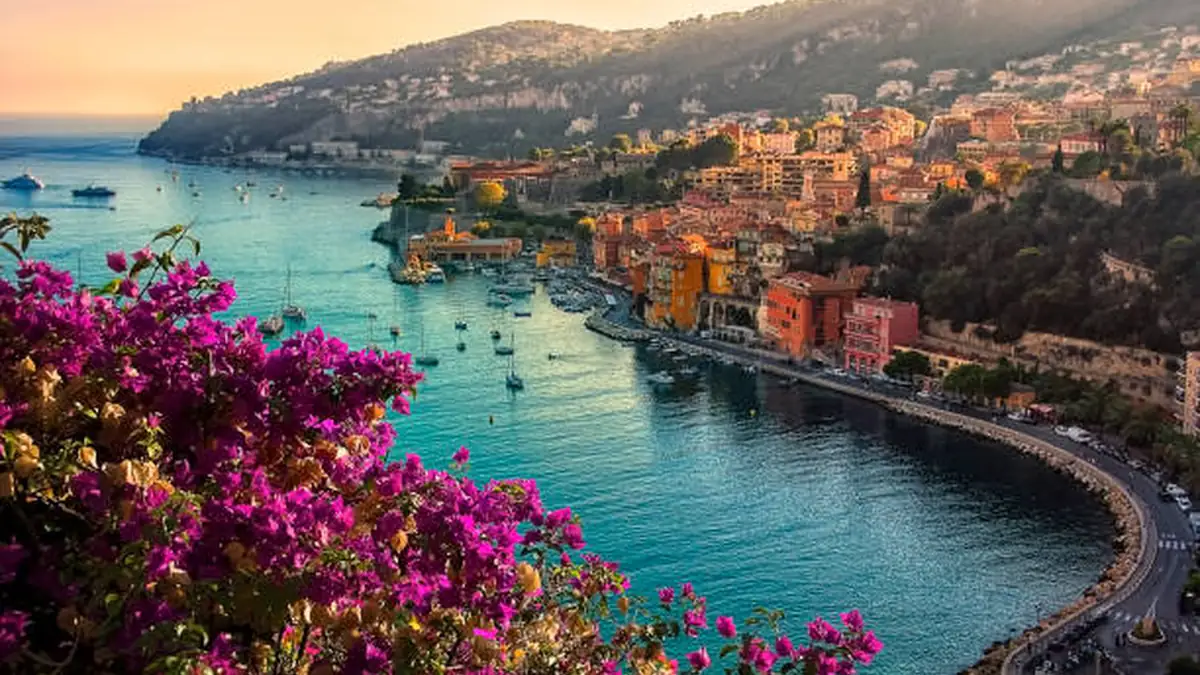
This Nice travel guide exists because the first time you see the Baie des Anges from Castle Hill, camera-ready sunset and all, you understand why people keep coming back to Nice year after year. It’s not a one-and-done city. It’s the kind of place you circle back to for a long weekend, and this guide covers exactly what you need to make that trip work — no filler, just what actually matters.
Nice is the capital of the French Riviera, a coastal city in southeast France known for the Promenade des Anglais, the pastel streets of Vieux Nice, and its role as a launch pad for day trips to Monaco, Èze, and Antibes. Most first-time visitors need 2–4 days to see the highlights, with May–June and September–October offering the best mix of good weather and manageable crowds. This Nice travel guide walks through the timing, transport, neighborhoods, and day trips that make a trip here actually work.
Nice Travel Guide: Why This City Deserves a Spot on Your Europe List
Nice became French territory in 1860, but its identity was shaped a century earlier, when British and Russian aristocrats began wintering here for the mild climate. That history is still visible today — in the Russian Orthodox cathedral tucked a few streets back from the sea, and in the wide, palm-lined promenade originally built (with English money) for winter strolls, not summer crowds.
Today Nice is France’s fifth-largest city, home to roughly 340,000 people, which puts it in a sweet spot: big enough to have real culture and nightlife, small enough to walk end to end in an afternoon. Unlike Cannes, which leans heavily on luxury and film-festival glamour, or Monaco, which is essentially a glittering city-state, Nice feels lived-in. Locals actually shop at the markets you’re photographing.
Quick Takeaway: If you want beaches, culture, and a base for exploring the whole Riviera without paying Monaco prices, Nice is the right call.
Best Time to Visit Nice
Nice gets around 300 sunny days a year, which is part of why it became a resort town in the first place. But “sunny” doesn’t mean “always the right time to go.”
- May–June and September–October (best overall): Warm enough to swim, cool enough to walk around at midday, and noticeably fewer tourists than peak summer. This is the shoulder season locals themselves prefer.
- July–August (peak season): Hot, crowded, and the most expensive time for hotels. Beaches fill up early. Worth it only if your dates are fixed around summer.
- November–March (off-season): Mild by northern European standards but many beach clubs close and some tour operators reduce schedules. Good for a cheap culture-and-food trip, less good for swimming.
One event worth timing around: Nice Carnival, typically held in February, is one of the oldest carnivals in France and turns Place Masséna into a parade route for two weeks. If you’re not into crowds, avoid those dates; if you love festivals, build your trip around them.
Getting to Nice — and Getting Around Once You’re There
From the Airport to the City
Nice Côte d’Azur Airport sits right on the coast, only a few kilometers from downtown, which makes it one of the easiest major airports in Europe to reach a city center from. The tram connects the airport to the city in under 30 minutes, and it’s cheap — cheaper than a taxi and just as fast once you account for traffic. Buses and taxis are also available if you’re arriving with a lot of luggage or landing late at night.
Trams, Buses, and the Multi-Day Pass
Nice’s public transport network (trams plus Lignes d’Azur buses) covers the city well enough that most visitors never need a car. A multi-day transport pass is worth buying if you’re staying more than a day or two — it covers unlimited rides and usually pays for itself after 3–4 trips.
Insider tip: Validate your ticket the moment you board. Inspections happen regularly, and fines for an unvalidated ticket are steep enough to ruin a good afternoon.
For getting around the city center itself, walking is genuinely the best option — Vieux Nice, the Promenade, and Place Masséna are all within a 15-minute walk of each other. For longer stretches, or a scenic ride along the coast, Nice’s bike-share scheme (Vélo Bleu) is worth using for an hour or two.
Should You Rent a Car?
Honestly, for the city itself — no. Parking in Nice is a genuine headache: street parking is scarce, many streets are one-way, and underground garages often have height restrictions (some cap out around 1.9 meters, which rules out larger vehicles and vans). A car becomes useful only if you’re planning to explore hill towns off the main train and bus routes, or you want full flexibility for a multi-stop Riviera road trip.
Nice Travel Guide: Where to Stay (By Neighborhood and Budget)
| Neighborhood | Best For | Vibe |
|---|---|---|
| Vieux Nice (Old Town) | First-timers, foodies | Narrow lanes, markets, walkable to everything, can be noisy at night |
| Carré d’Or / near Promenade des Anglais | Beach access, classic Riviera feel | Higher-end hotels, walking distance to the sea |
| Near Place Masséna / Jean Médecin | Shopping, transit access | Central, well-connected by tram, good value |
| Near Nice-Ville train station | Day-trippers, budget stays | Practical rather than scenic, easy access to trains |
Budget travelers can find solid 2–3 star options near the train station or a short tram ride from the center. Mid-range travelers do well in the Carré d’Or or Old Town. If you want a splurge, look at properties near the base of Castle Hill for a design-forward stay with garden settings and easy access to both the Old Town and the sea.
Top Things to Do in Nice
Promenade des Anglais
This four-mile stretch along the Baie des Anges is Nice’s signature image — palm trees, blue chairs, cyclists, and a nearly unbroken sea view. It’s at its best early morning before the heat sets in, or at sunset when the light turns the water gold. Renting a bike for part of it is worth the small cost; walking the whole thing in midsummer heat is not recommended.
Vieux Nice (Old Town)
Vieux Nice is where you actually feel the city’s Italian-influenced history — the streets here were shaped more by Genoa and Turin than Paris. Wander without a fixed plan; the highlights (small chapels, family-run bakeries, tucked-away squares) tend to reveal themselves. This is also where most of the best casual food is, which matters more than any single landmark.
Castle Hill (Colline du Château)
Despite the name, there’s no château left standing — it was destroyed centuries ago — but the hilltop park delivers the best panoramic view in the city, looking down over the Old Town on one side and the Promenade on the other. You can walk up (roughly 15–20 minutes of stairs) or take the elevator if you’d rather save your legs for later in the day. Go for sunset if you only get one shot at it.
Place Masséna and Cours Saleya Market
Place Masséna is the city’s literal and figurative center point, where the Promenade des Anglais, the main shopping street, and the green corridor of the Promenade du Paillon all intersect. A few minutes’ walk away, Cours Saleya hosts a flower and produce market most mornings and an antiques market on Mondays — worth timing your visit around if markets are part of why you travel.
Quick Takeaway: If you only have one day, prioritize Vieux Nice in the morning, Cours Saleya before it packs up, Castle Hill in the late afternoon, and the Promenade at sunset.
Beaches, Museums, and Culture
Nice’s beaches are mostly pebble, not sand — worth knowing before you pack, since sand shoes or water sandals make a real difference. Public sections are free; beach clubs charge for loungers and umbrellas but add showers, snack service, and sometimes swimming platforms.
For culture, two museums stand out. The Marc Chagall National Museum houses a major cycle of the artist’s biblical-themed paintings and is one of the few museums built and curated during an artist’s own lifetime with his direct input. The Matisse Museum, up in the Cimiez neighborhood, sits on the site of the old Roman city of Cemenelum and traces Matisse’s decades living in Nice — he spent much of his later life here. Both are manageable in under two hours each, making them realistic additions to a packed day rather than a whole-day commitment.
What to Eat in Nice
Niçoise cuisine (cuisine Nissarde) is distinct from the rest of French food — shaped by Italian and Mediterranean influences as much as French ones.
- Socca — a thin chickpea-flour pancake cooked on a griddle, sold in market stalls and hole-in-the-wall spots. Cheap, filling, and genuinely local.
- Salade niçoise — the original version (with tuna, olives, and hard-boiled egg, no potatoes or green beans in the traditional recipe) is worth comparing to whatever version you’ve had at home.
- Pissaladière — an onion tart topped with anchovies and olives, closer to a flatbread than a pizza.
- Bellet wine — grown in the hills just west of the city, Bellet is a small appellation using two grape varieties grown nowhere else in the world. Worth seeking out over a generic Provence rosé if you want something specific to Nice itself.
Cours Saleya market is the easiest place to sample several of these at once, especially at breakfast or lunch.
Best Day Trips from Nice
Nice’s biggest practical advantage is location — most of the Riviera’s best-known towns are a short train or bus ride away.
| Destination | Travel Time | Best For |
|---|---|---|
| Èze | ~25 min | Medieval hilltop village, sea views |
| Monaco / Monte Carlo | ~20–35 min | Casino, glamour, Prince’s Palace |
| Villefranche-sur-Mer | ~10–15 min | Quiet bay, less crowded beaches |
| Antibes | ~25–30 min | Old town, Picasso Museum |
| Saint-Paul-de-Vence | ~30–40 min (bus) | Art galleries, medieval walls |
| Cannes | ~30–40 min | Film festival history, upscale shopping |
Most of these are doable by train or bus without a car, and several can be combined into a single day if you start early. Villefranche-sur-Mer, in particular, is close enough that some travelers base themselves there and treat Nice as their day trip in reverse.
Budget, Safety, and Practical Tips
Rough daily budget guide (per person):
| Style | Daily Cost (lodging + food + local transport) |
|---|---|
| Budget | €70–100 |
| Mid-range | €150–220 |
| Comfortable/luxury | €300+ |
Prices climb noticeably in July and August, and drop in the shoulder and off-seasons — often the single biggest lever for keeping a trip affordable.
Nice is generally safe for tourists. The main risks are pickpocketing in crowded tourist areas (the Promenade, markets, tram stations) rather than anything more serious — standard city precautions apply.
For accessibility, the Promenade des Anglais is flat and ramp-friendly, and the city has designated beach areas with accessible entry points and adapted equipment for wheelchair users, though not every beach section offers the same level of water access. Public transport is largely accessible, but narrow aisles on some buses can be a challenge — contacting the local transport authority ahead of time is worth it if you have specific needs.
Traveling with kids or solo both work well here: the city’s compact, walkable layout and steady stream of activity make it comfortable to explore alone, while calmer beach areas and shorter museum visits suit families with young children.
Nice Travel Guide Itineraries: How Many Days Do You Need?
1 Day: Promenade des Anglais walk → Cours Saleya market → Vieux Nice wander and lunch → Castle Hill at sunset.
2 Days: Day 1 as above. Day 2: Chagall or Matisse Museum in the morning, then a half-day trip to Èze or Villefranche-sur-Mer.
3+ Days: Add a full day trip to Monaco or Antibes, plus a slower second morning in Vieux Nice for shopping and a second market visit, since Cours Saleya changes character by day of the week.
If you’re deciding between a quick stopover and a full stay, three to four days is the point where Nice stops feeling rushed and starts feeling like an actual trip — enough time for the city itself plus one or two day trips, without the itinerary running you rather than the other way around.
Nice rewards a bit of slowness. The landmarks are worth seeing, but the market stalls, the pebble beaches, and the hill towns just outside the city are where the trip actually sticks with you. Start with the transport pass and a loose plan, leave room to wander Vieux Nice without a map, and build the rest of your Riviera trip around it.
Want more travel inspiration? Browse our collection of destination guides.
FAQ Section
How many days do you need in Nice?
Two to four days covers the city’s highlights comfortably, including one day trip. A single day works for a quick stopover, but you’ll be moving fast and skipping most museums.
Is Nice, France expensive to visit?
It’s mid-range by French standards — cheaper than Paris or Monaco, pricier than smaller Riviera towns. Budget travelers can manage on roughly €70–100 a day; costs rise sharply in July and August.
Do you need a car in Nice?
No. Public transport, walking, and short train or bus rides to nearby towns cover almost everything. Parking is difficult, with narrow streets and height-restricted garages.
What is Nice, France known for?
The Promenade des Anglais, the historic Old Town (Vieux Nice), its role as a base for French Riviera day trips, and its distinct Niçoise cuisine, including socca and salade niçoise.
What’s the best time to visit Nice?
May–June and September–October offer the best balance of warm weather, swimmable sea, and smaller crowds than peak summer.
Is Nice better than Cannes?
They serve different purposes. Nice has more attractions, museums, and day-trip options; Cannes leans more toward luxury and film-festival prestige. Many travelers base themselves in Nice and visit Cannes as a day trip.
How do you get from Nice airport to the city center?
The tram is the fastest and cheapest option, taking under 30 minutes. Buses and taxis are also available.
Are Nice’s beaches sandy?
No, most are pebble beaches. Water shoes or sandals make a noticeable difference in comfort.