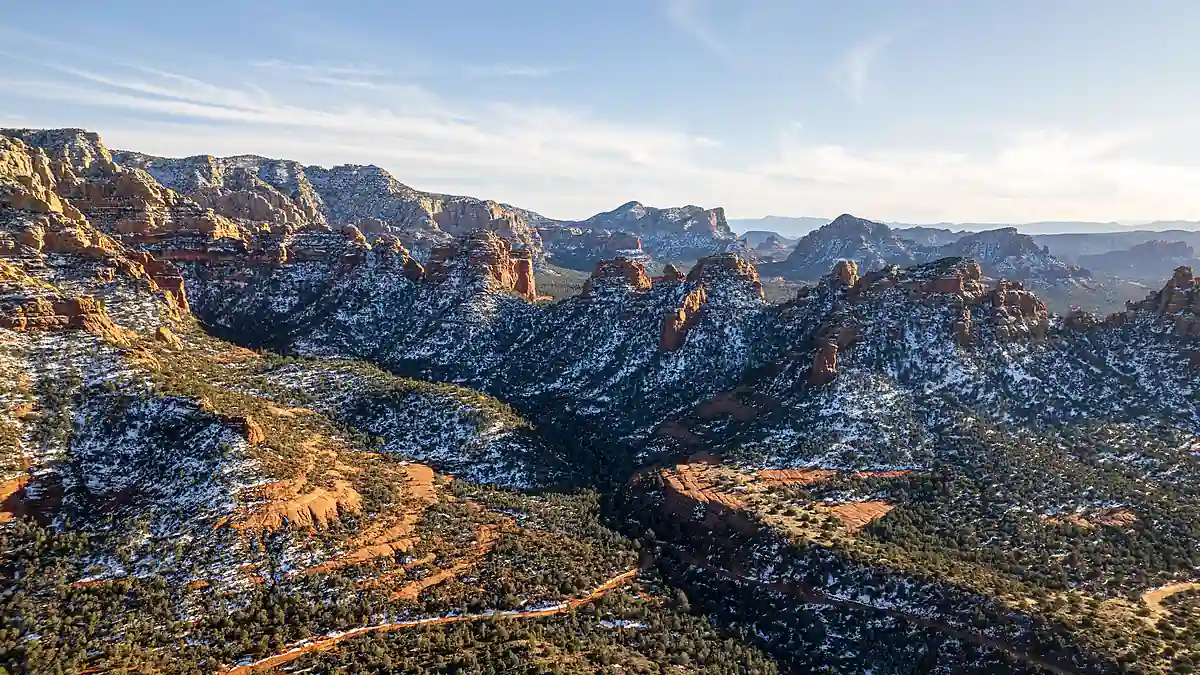
Most people discover Sedona in the golden light of spring or fall. But visit between December and February and you’ll find something the crowds never get to see: the same iconic red rock formations — Bell Rock, Cathedral Rock, Courthouse Butte — wearing a light frosting of snow, with trails nearly empty and the whole canyon feeling like it belongs to you alone.
Sedona in winter isn’t a compromise. It’s a different experience entirely. Daytime temperatures regularly climb into the mid-50s to low 60s °F, making it genuinely comfortable for hiking and sightseeing. Nights dip near or below freezing, so you’ll want layers. But that crisp morning air, the low winter sun painting the sandstone in deep amber, and the near-total absence of tour bus crowds? That’s the payoff.
This guide covers everything you need to plan a winter trip to Sedona — from trail conditions and gear to holiday events, scenic drives, and where to find the best winter deals on accommodation. If you’ve been waiting for the “right time” to visit, this might be it.
Sedona Winter Weather: What to Realistically Expect
Sedona sits at roughly 4,500 feet elevation in Arizona’s Verde Valley — high enough to feel noticeably cooler than Phoenix, but much milder than nearby Flagstaff, which sits at 7,000 feet and regularly gets buried in snow.
Here’s what a typical Sedona winter actually looks like:
| Month | Avg High (°F) | Avg Low (°F) | Precipitation |
| December | 57°F | 32°F | Light/Occasional Snow |
| January | 55°F | 30°F | Coldest Month; Rare Snow |
| February | 59°F | 33°F | Mild; Spring Approaches |
Snow happens, but not often. On average, Sedona sees light snowfall around five times per winter. When it does snow, it’s usually a dusting that melts by early afternoon — enough to coat the red rocks in white for a few stunning hours, not enough to shut down your trip. Heavy, multi-day snowstorms are rare.
The bigger weather concern is road closures. Highway 89A through Oak Creek Canyon — one of the most scenic routes into Sedona — occasionally closes during heavy snow events. Always check Arizona DOT’s AZ511 system before you travel, especially if arriving from Flagstaff.
Quick Weather Prep Checklist
- Layer up: Mornings near the trailhead can hover around freezing even when the afternoon hits 60°F.
- Sun protection: The high-desert sun in winter is deceptive. SPF 30+ and a brimmed hat are non-negotiable.
- Trail footwear: Shaded trail sections can hold ice or mud well into mid-morning. Waterproof hiking boots grip far better than trail runners in January.
- Road awareness: Bookmark AZ511.gov and check it the morning of any canyon drive.
- Microspikes: Optional but worth throwing in your bag if you plan early-morning hikes on Devil’s Bridge or Cathedral Rock.
Why Winter Is Actually One of the Best Times to Visit Sedona
Sedona’s peak seasons — spring wildflower season and fall foliage — are genuinely beautiful. They’re also genuinely crowded. Parking lots at Bell Rock and Cathedral Rock fill by 7 a.m. on weekends. Popular overlooks become photo queues. Trail fees and lodging rates spike.
Winter changes all of that. Here’s the honest case for visiting between December and February:
- Trails to yourself: You can hike Airport Mesa Loop on a Tuesday morning and count other hikers on one hand. That kind of solitude is hard to put a price on.
- Lower hotel rates: Many Sedona resorts drop rates significantly during the off-season and offer package deals that include spa credits, breakfast, or tour discounts. January is typically the softest month for pricing.
- Better photography: Low-angle winter light creates longer golden hours. The red rocks glow more intensely in early morning and late afternoon when the sun sits lower on the horizon. Occasional snow creates contrast that summer shots simply can’t match.
- Holiday atmosphere: If you’re visiting in December, Sedona’s Uptown district lights up with decorations, seasonal events, and a festive energy that’s worth timing your trip around.
- Wildlife is more visible: Mule deer, javelinas, and raptors are easier to spot in winter when desert vegetation thins out. Verde Canyon Railroad passengers often see bald eagles along the river corridor in January and February.
Top Things to Do in Sedona in Winter
1. Hiking — The Trails That Shine in Cold Weather
Sedona has over 200 miles of trails, and most remain open and hikeable throughout winter. The cooler temperatures actually make ambitious routes more manageable than they’d be in summer. Here are the standouts:
- West Fork of Oak Creek Trail: This easy, flat creekside trail is one of Sedona’s most beloved in any season. In winter, the canyon walls trap cold air and occasional moisture, creating delicate ice formations and frost on the ferns. It’s 3.5 miles one-way with minimal elevation gain — an ideal winter morning walk.
- Bell Rock Pathway: A 1.5-mile loop around one of Sedona’s most iconic formations. The trail stays open year-round and looks extraordinary after a light snow. Start at the Bell Rock trailhead off SR-179 and go at your own pace.
- Airport Mesa Loop: At 3.5 miles with 400 feet of elevation gain, this trail offers 360-degree views of the entire red rock country. On a clear winter morning you’ll see snow-capped peaks to the north over Flagstaff. Go before 9 a.m. to beat even the modest winter crowds.
- Devil’s Bridge Trail: Sedona’s largest natural arch is a 4.2-mile out-and-back. In winter, the access road may be gated (requiring a longer approach on foot), and icy rocks near the arch demand caution. That said, the arch against a deep blue winter sky is a genuinely special sight. Microspikes recommended.
- Cathedral Rock Trail: Short but steep (1.5 miles round trip, 700 feet gain), this trail is best tackled mid-morning once the sun has warmed the rock faces and cleared any frost. The views from the saddle are unforgettable at any time of year.
A practical note: several informal “social trails” become muddy and eroded after winter precipitation. Stick to marked paths to protect both the ecosystem and your footing.
2. Scenic Drives — Sedona’s Roads Are as Good as the Trails
Not every great Sedona experience requires hiking boots. The region’s paved roads deliver some of the most dramatic scenery in the American Southwest, and winter’s quiet means you can actually pull over and breathe it in.
- Red Rock Scenic Byway (SR-179): This 7.5-mile designated scenic byway runs from the I-17 junction to Uptown Sedona. Named a “All-American Road” by the Federal Highway Administration, it passes Bell Rock, Courthouse Butte, and Cathedral Rock with multiple signed pullouts. In winter, the light and lack of traffic make it even more photogenic. Pack a thermos, park at a pullout, and stay a while.
- Oak Creek Canyon Drive (SR-89A): The 16-mile drive from Flagstaff into Sedona through Oak Creek Canyon is one of the most stunning road descents in Arizona — a narrow, cliff-hugging route through ponderosa pines and red-rock walls. It can close during snowstorms, so check conditions. On a clear day in winter it’s extraordinary.
- Schnebly Hill Road: Unpaved and not recommended after heavy rain or snow, but if conditions are dry, this dirt road east of Sedona climbs above the canyon and delivers panoramic red-rock views that rival anything in the park. High-clearance vehicle preferred.
3. Jeep, ATV & Outdoor Adventure Tours
Sedona’s off-road touring industry runs year-round, and winter is one of the better seasons for it — the air is cool, dust is minimal, and the canyon light is dramatic. Most major tour operators run daily Jeep and UTV tours on routes like Broken Arrow and Schnebly Hill, with knowledgeable guides who know where the light hits best in different seasons.
Horseback riding is another overlooked winter option. Several Sedona stables offer guided rides through the red rocks, and the cooler temperatures make it far more comfortable for both riders and horses than the summer heat.
Mountain biking enthusiasts will find Sedona’s trail network is equally excellent in winter. Trails like Slim Shady and Mescal are less technical but beautiful, while Highline and Cockscomb offer more challenge. Local bike shops can advise on current trail conditions after any precipitation.
4. Verde Canyon Railroad — A Winter Highlight
About 30 minutes south of Sedona in Clarkdale, the Verde Canyon Railroad offers a four-hour round-trip excursion through a remote section of the Verde River canyon that you simply cannot access by road. The train winds through towering red and green canyon walls alongside the river, passing ancient Sinagua ruins along the way.
In winter, the enclosed, heated cars make this a particularly enjoyable outing. January and February are prime months for spotting bald eagles nesting along the river — the railroad crew will often slow down or pause near active nests. The Verde Canyon Railroad runs a special Magical Christmas Journey in December with holiday lights and carolers. Reservations are essential for that run.
5. Hot-Air Balloon Rides & Aerial Views
Sedona’s hot-air balloon operators run year-round, and winter mornings — when the air is stable and the light is extraordinary — actually produce some of the most spectacular flights. You’ll typically launch around sunrise, drift over the canyon for 60–90 minutes, and land before mid-morning. Dress warmly; the temperature in the basket feels colder than ground level.
Flights are weather-dependent and may cancel on windy days. Book in advance and confirm the morning of your flight. Helicopter tours are a reliable alternative if winds ground the balloons — several operators depart from Sedona Airport Mesa.
6. Stargazing — Sedona’s Best-Kept Winter Secret
Sedona was designated an International Dark Sky Community in 2014, meaning its outdoor lighting is carefully managed to minimize light pollution. In winter, when humidity is low and vegetation is sparse, the skies are particularly clear.
The best stargazing spots are away from Uptown: Airport Mesa at the far end of the loop, the pullouts along SR-179 near Bell Rock, or the Red Rock State Park picnic areas after closing time (stay in the parking lot). Bring a red-light headlamp, a blanket, and hot coffee. The Milky Way is visible from dark-sky sites on moonless nights in winter — a surreal sight above the silhouetted rock formations.
7. Holiday Events & Seasonal Experiences (December–January)
Sedona leans into the holiday season in ways that feel genuine rather than touristy. Uptown Sedona decorates with lights and wreaths through January, local restaurants run seasonal menus, and several annual events are worth timing your trip around:
- Verde Canyon Railroad’s Magical Christmas Journey: The railroad’s holiday-themed evening trains are a local tradition. The route is lit with thousands of lights, carolers perform in the cars, and the whole experience has an old-fashioned charm. Book these early — they sell out weeks in advance.
- Sedona’s tree lighting and holiday market: Uptown hosts community tree lighting events and seasonal pop-up markets in late November and December. Worth an evening stroll even if you’re not shopping.
- New Year’s in Sedona: The town doesn’t do a massive public celebration, but several resorts host New Year’s Eve dinners and events. The canyon is extraordinarily quiet on New Year’s Day — one of the best days of the year for an uncrowded hike.
8. Spas, Wine & Indoor Experiences
No Sedona winter guide would be complete without acknowledging that some of the best things to do here involve very little movement. After a cold morning hike, a hot-stone massage or outdoor heated pool session at one of Sedona’s resort spas is close to perfection.
Arizona’s wine country is more developed than most visitors expect. Several local and regional tasting rooms operate in and around Sedona, some with fireplaces and vineyard views. Tlaquepaque Arts & Shopping Village, the Spanish colonial-style shopping and gallery complex on SR-179, has tasting rooms worth an hour of your afternoon.
Tlaquepaque itself is worth a wander in winter — the open-air courtyards are quieter than in peak season, the galleries are well-lit and warm, and the artisan shops carry genuinely good local work. It’s also beautifully decorated through the holidays.
How to Plan Your Sedona Winter Trip: Practical Advice
When to Book and Where to Stay
January is the sweet spot for the lowest prices and fewest crowds. If you can’t do January, early December (before the holiday rush) and late February (as the weather begins to warm) are solid alternatives.
Holiday weekends — Christmas Eve through New Year’s Day — book out early and rates spike. If you’re planning a holiday visit, secure accommodation at least six to eight weeks in advance.
For proximity to the main hiking trailheads and the Red Rock Scenic Byway, the Village of Oak Creek (just south of Sedona proper) puts you within five minutes of Bell Rock and Cathedral Rock without the Uptown price premium. For holiday atmosphere and walkable restaurants, Uptown Sedona is worth the extra cost.
What to Pack for a Sedona Winter Trip
- Base layer: Lightweight merino wool or synthetic moisture-wicking top and leggings.
- Mid layer: Fleece or a light down jacket — essential for pre-dawn departures and evenings.
- Outer layer: A windproof shell. Snow is rare but wind through the canyon can cut through a fleece alone.
- Hiking boots: Waterproof, with solid ankle support and good traction. Sedona’s slickrock can ice over.
- Traction devices: Microspikes for anyone planning Devil’s Bridge or Cathedral Rock early in the morning.
- Sun protection: SPF 30+ sunscreen, polarized sunglasses, a brimmed hat. Snow glare intensifies UV exposure.
- Hydration: A 32-oz insulated water bottle. The dry desert air causes dehydration faster than you’d expect.
- Offline maps: Download AllTrails Pro maps for your key trails before you leave your hotel. Cell signal is unreliable on many Sedona backcountry trails.
Getting Around Sedona in Winter
A rental car with reasonable ground clearance is the most practical option. Sedona has no major public transit system, and many of the best viewpoints and trailheads require driving 5–10 minutes from the main strip.
Day-use parking at major trailheads (Bell Rock, Cathedral Rock, West Fork) requires a Red Rock Pass ($5/day or $20/year) or an America the Beautiful annual pass. Have it ready — rangers do check. Parking areas are much easier to access in winter than peak season, but popular trailheads can still fill on weekend mornings by 9 a.m.
If you’re flying in, Phoenix Sky Harbor (PHX) is the most convenient major airport, about 2 hours from Sedona. Flagstaff Pulliam Airport (FLG) is 45 minutes away but has limited commercial service. The drive from Phoenix via I-17 and SR-179 is one of the more scenic airport-to-destination commutes in the country.
Safety on Winter Trails
Most winter hiking in Sedona is genuinely low-risk, but a few precautions are worth taking seriously:
- Start hikes by 8–9 a.m. to maximize daylight and warmth. Trails get icy when the temperature drops after sunset.
- Tell someone your plan or drop a pin with your trailhead location before heading out on longer routes.
- Carry a paper map or offline map app. GPS signal can drop in canyon sections.
- Turn back if afternoon clouds build quickly or temperatures drop unexpectedly — storms in Northern Arizona can move fast.
- Respect temporary trail closures. Rangers occasionally gate off specific sections after freezing rain. Signs will be posted at the trailhead.
The Bottom Line: Why Sedona’s Off-Season Delivers
There’s a version of Sedona that most visitors never experience — the quiet one. The one where you can sit at Airport Mesa at sunrise and hear nothing but wind through the canyon. Where hotel rates are reasonable, parking is easy, and the trails feel less like an attraction and more like a landscape.
That’s Sedona in winter. It’s not a destination you visit despite the cold. It’s a destination that rewards you for showing up when everyone else has written it off. Pack your layers, download your trail maps, check the AZ511 before you drive the canyon — and go.
The red rocks will be waiting.
Frequently Asked Questions About Sedona in Winter
Is Sedona worth visiting in winter?
Yes — arguably more so than any other season if you value quiet trails and lower costs. Daytime temperatures are comfortable for hiking (mid-50s to low 60s °F), crowds are minimal, lodging rates are at their lowest, and a rare dusting of snow on the red rocks creates scenery you won’t see any other time of year.
Does it actually snow in Sedona in winter?
Occasionally, but not heavily. Sedona typically sees light snow around five times per year, usually melting by early afternoon. You’re unlikely to get a trip-disrupting blizzard — Sedona is 2,500 feet lower in elevation than nearby Flagstaff, which gets significant winter snowfall. What you might see is a beautiful, brief dusting that turns the canyon into something genuinely magical.
What is the coldest month in Sedona?
January is Sedona’s coldest month, with average lows around 30°F and daytime highs around 55°F. Occasional cold snaps can push nighttime temperatures into the low 20s °F, so pack accordingly if you’re visiting mid-January.
Are Sedona’s trails open in winter?
Yes, the vast majority of Sedona’s trail network stays open year-round. Occasional temporary closures after freezing rain or significant snowfall may affect specific steep sections. Check with the Coconino National Forest or Red Rock Ranger District before heading out if there has been recent precipitation.
What should I wear hiking in Sedona in winter?
Layer a moisture-wicking base layer with a fleece mid-layer and a windproof outer shell. Wear waterproof hiking boots with good traction. Bring a hat, gloves, sunglasses, and sunscreen — the winter sun at elevation is stronger than it looks. Microspikes are worth carrying for shaded trail sections in January.
Are restaurants and attractions open in Sedona during winter?
Most businesses stay open year-round. A handful of smaller galleries or seasonal operators may close in January, but the main restaurants, spas, tour operators, and shops are fully operational. Expect reduced hours on Christmas Day and New Year’s Day. Book dinner reservations in advance during the holiday week — popular spots fill up despite the off-season.
Is there skiing near Sedona in winter?
Not in Sedona itself, but Arizona Snowbowl near Flagstaff is about 45 miles north and typically open from mid-December through April, snow conditions permitting. It’s a reasonable day trip from Sedona if you’re a skier and want to combine both experiences.