Most people fly into Japan chasing Tokyo and Kyoto, then treat Osaka as a layover with good food. That’s a mistake. Osaka rewards you fast — within a day you’ll understand why locals call it Japan’s kitchen, and why the energy here feels looser and louder than anywhere else in the country.
A solid osaka itinerary for first-timers runs three days: one for Osaka Castle and the old town, one for Namba and Dotonbori’s food scene, and one for either a day trip to Kyoto or Nara, or Universal Studios Japan. Base yourself near Namba or Umeda so everything stays a short train ride away.
That’s the short version. Here’s how to actually build it.
How Many Days Do You Actually Need in Osaka?
Three days is the sweet spot for a first visit. Two days works if Osaka is a side trip from Kyoto, but you’ll be rushing between the castle and Dotonbori without much breathing room. Five days starts to feel generous unless you’re adding Universal Studios Japan, a Kobe day trip, or slower neighborhood exploration in places like Tennoji or Sumiyoshi-Taisha.
The honest answer: three days lets you see the major sights, eat properly, and still wander. That’s the itinerary below.
Quick Takeaway: 2 days = highlights only. 3 days = highlights + real food time + one day trip. 5 days = add USJ, Kobe, or a slower pace.
Where to Stay in Osaka (By Neighborhood)
Three areas come up again and again among people who’ve actually spent time here, and each suits a different traveler.
| Neighborhood | Best For | Trade-off |
|---|---|---|
| Namba/Shinsaibashi | First-timers, nightlife, walkable to Dotonbori | Can be noisy at night |
| Umeda/Kita | Business travelers, easy airport/shinkansen access | Slightly less atmospheric |
| Honmachi | Quieter stays, still central | Fewer restaurants right outside your door |
If you only remember one thing: staying within a 10-minute walk of Namba Station or Osaka/Umeda Station will save you more time over three days than any attraction you could squeeze in.
Day 1 — Osaka Castle, Kuromon Market, and Dotonbori at Night
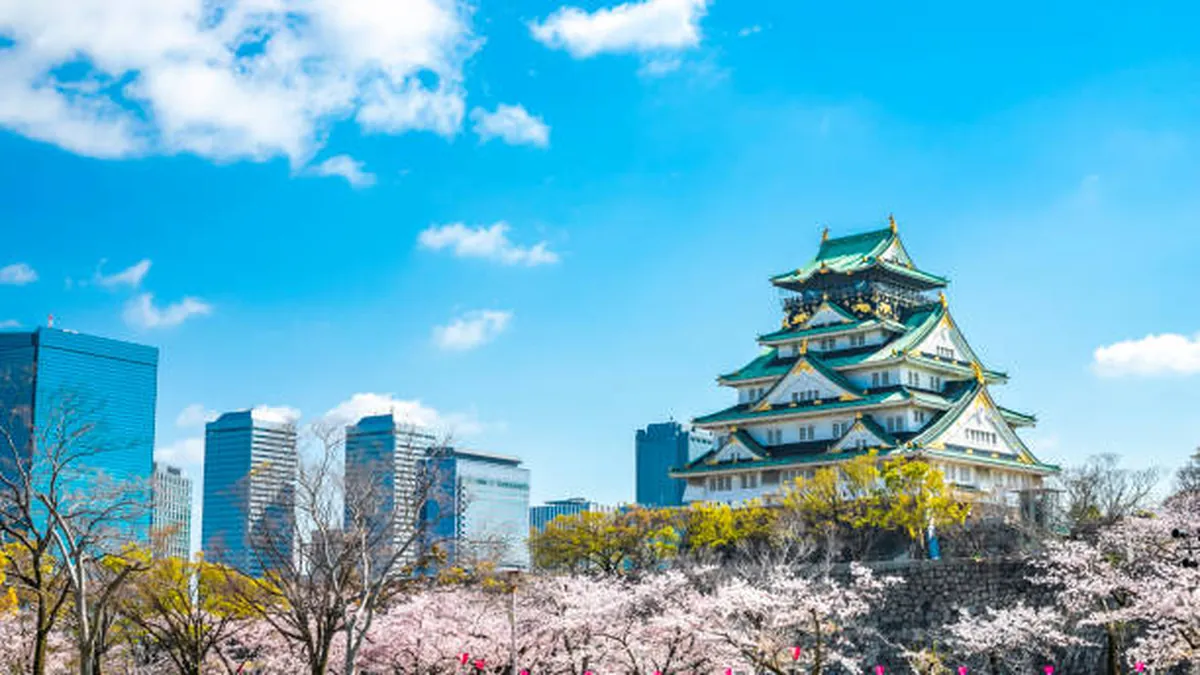
Start at Osaka Castle. It’s genuinely one of Japan’s most photographed buildings, built in the late 16th century under the warlord Toyotomi Hideyoshi and rebuilt more than once since — including after wartime damage. Here’s the honest part travel blogs rarely say outright: the castle itself can feel crowded and, inside, more museum than historical artifact, since it was substantially reconstructed. What’s worth the visit is the park around it — roughly 15 acres of moat, stone walls, and green space that locals actually use for picnics and, in spring, hanami. If your time is tight, walk the grounds and skip the paid interior; if you love history museums, the ¥600 entry gets you exhibits on the unification period and an observation deck view.
From there, head to Kuromon Ichiba Market for lunch. It’s a covered market street, not a sit-down restaurant, so the etiquette matters: buy from a stall, eat standing right there or just outside it, and don’t wander the aisles with food from a different vendor. Try grilled scallops, a skewer of wagyu, or fresh sashimi cut to order.
End the day in Dotonbori. This is the neon canal-side district everyone’s seen in photos — the Glico Running Man sign, the crab restaurant with the giant moving crab. Go hungry. This is where you eat takoyaki (fried octopus balls) and okonomiyaki (savory cabbage pancake) properly, ideally at a hole-in-the-wall rather than the flashiest storefront.
Day 2 — Namba, Shinsaibashi, and the Real Food Crawl
Spend the morning in Shinsaibashi, a covered shopping arcade stretching close to a mile, good for anything from a kimono to skincare at one of the large drugstores locals swear by. If you want a quieter contrast, Orange Street (Tachibana-dori) nearby has a different vibe — smaller boutiques and cafés instead of chain stores.
In the afternoon, go south to Shinsekai and Tsutenkaku Tower. It’s retro Osaka — a 130-meter tower that was once one of Asia’s tallest buildings, now surrounded by kushikatsu (deep-fried skewer) restaurants with a strict, slightly funny house rule: no double-dipping the sauce.
Evening is for a proper food crawl. Osaka’s food culture even has a name for it — kuidaore, roughly “eat until you drop.” A guided bar-hopping or food tour is genuinely worth it on this trip specifically, since a lot of the best spots don’t have English menus or obvious signage from outside.
Day 3 — Umeda, a Day Trip, or Universal Studios Japan
This is the flexible day. Three good options:
- Stay in Osaka: Visit the Umeda Sky Building, two connected towers with a rooftop “Floating Garden Observatory.” The design looks accidental until you learn it was meant to be part of a larger multi-tower vision scaled back after an economic downturn.
- Day trip to Kyoto or Nara (see comparison below).
- Universal Studios Japan if you’re traveling with kids or want a full theme-park day — Super Nintendo World alone can eat a full day if you arrive at opening.
If You Add a 4th or 5th Day
A fourth day is the right time for Kobe (beef, Nunobiki Herb Gardens, roughly 30–45 minutes by train) or a slower loop through southern Osaka, including Sumiyoshi-Taisha, one of Japan’s oldest and most architecturally distinct shrines. A fifth day is best spent simply repeating whatever you liked most on days 1–3 — Osaka rewards a second pass more than it rewards forcing in new sights.
Getting Around Osaka (Passes Compared)
Most first-timers overthink this. Here’s what actually matters:
| Option | Best For | Note |
|---|---|---|
| ICOCA card (tap-to-pay) | Almost everyone | Works on subway, JR, and most convenience stores |
| Osaka Amazing Pass | Attraction-heavy days | Includes castle entry + some transport; only pays off if you hit 3+ paid sights in a day |
| JR Pass | Multi-city trips (Tokyo–Osaka–Kyoto) | Order before arrival; not worth it for Osaka alone |
For a straightforward 3-day osaka itinerary that isn’t combined with other cities, an ICOCA card covers almost everything you need — individual tickets end up more flexible than a pass built around theoretical maximum usage.
Day Trips from Osaka: Kyoto vs. Nara vs. Kobe
| Destination | Travel Time | Best For | Skip If |
|---|---|---|---|
| Kyoto | ~15 min by shinkansen, ~30 min by JR train | Temples, geisha districts, UNESCO sites | You’re already doing Kyoto as its own multi-day stop |
| Nara | ~45 min by train | Deer park, Todai-ji Temple, slower pace | You want city energy, not nature/temples |
| Kobe | ~30–45 min by train | Wagyu beef, Mt. Rokko views | Time is genuinely tight |
Budget Breakdown for 3 Days
Rough per-person daily costs, mid-range travel style (not luxury, not backpacker):
- Accommodation: ¥8,000–18,000/night depending on neighborhood and season
- Food: ¥4,000–7,000/day if you’re eating well at markets and casual restaurants
- Local transport: ¥800–1,200/day on an ICOCA card
- Attractions: ¥600 (castle) to ¥9,400+ (Universal Studios Japan single-day ticket) depending on what you add
A realistic 3-day total, excluding flights and hotel, lands somewhere around ¥25,000–35,000 per person for food, transport, and entry fees.
Common Mistakes First-Timers Make
- Booking a hotel far from Namba or Umeda to save money, then losing that savings in train time
- Treating Osaka Castle’s interior as unmissable when the park around it is the actual highlight for most visitors
- Skipping the JR Pass math entirely — it’s rarely worth it for an Osaka-only trip, but can be worth it if you’re also hitting Tokyo and Kyoto
- Not checking rainy-day backups: Umeda Sky Building, Kuromon Ichiba Market, and most kushikatsu restaurants are indoor-friendly if weather turns
Want to plan your next adventure? Browse more travel guides and itineraries.
FAQ Section
Is 3 days in Osaka enough?
Yes, for a first visit. Three days covers Osaka Castle, Dotonbori’s food scene, Namba/Shinsaibashi shopping, and one extra day for either a day trip or Universal Studios Japan without feeling rushed.
How many days do you need for Osaka?
Two days covers the highlights if Osaka is a side trip. Three is ideal for a proper visit. Four to five suits travelers adding Kobe, Universal Studios Japan, or a slower pace.
Is Osaka cheaper than Tokyo?
Generally, yes — accommodation and casual dining tend to run somewhat lower in Osaka, though prices vary a lot by neighborhood and season in both cities.
Do you need a car in Osaka?
No. The subway and JR train network covers the whole city and connects easily to Kyoto, Nara, and Kobe. Most visitors never need a car.
Can you day trip to Kyoto from Osaka?
Yes, easily. Kyoto is about 15 minutes away by shinkansen or roughly 30 minutes by regular JR train, making it a very manageable day trip from an Osaka base.
Is Osaka Castle worth visiting?
The surrounding park is worth it for almost everyone. The paid interior museum is worth it if you’re specifically interested in the unification period and Toyotomi Hideyoshi’s history; otherwise it can feel crowded relative to the experience.
What is Osaka known for?
Street food (especially takoyaki and okonomiyaki), the Dotonbori canal district, Osaka Castle, and a livelier, more informal culture than Tokyo or Kyoto — often summarized locally as “Japan’s kitchen.”
Should I buy the Osaka Amazing Pass?
Only if you’re planning to hit three or more paid attractions in a single day, since the pass bundles transport with entry fees. For a typical food-and-sightseeing itinerary, an ICOCA card alone is usually cheaper.