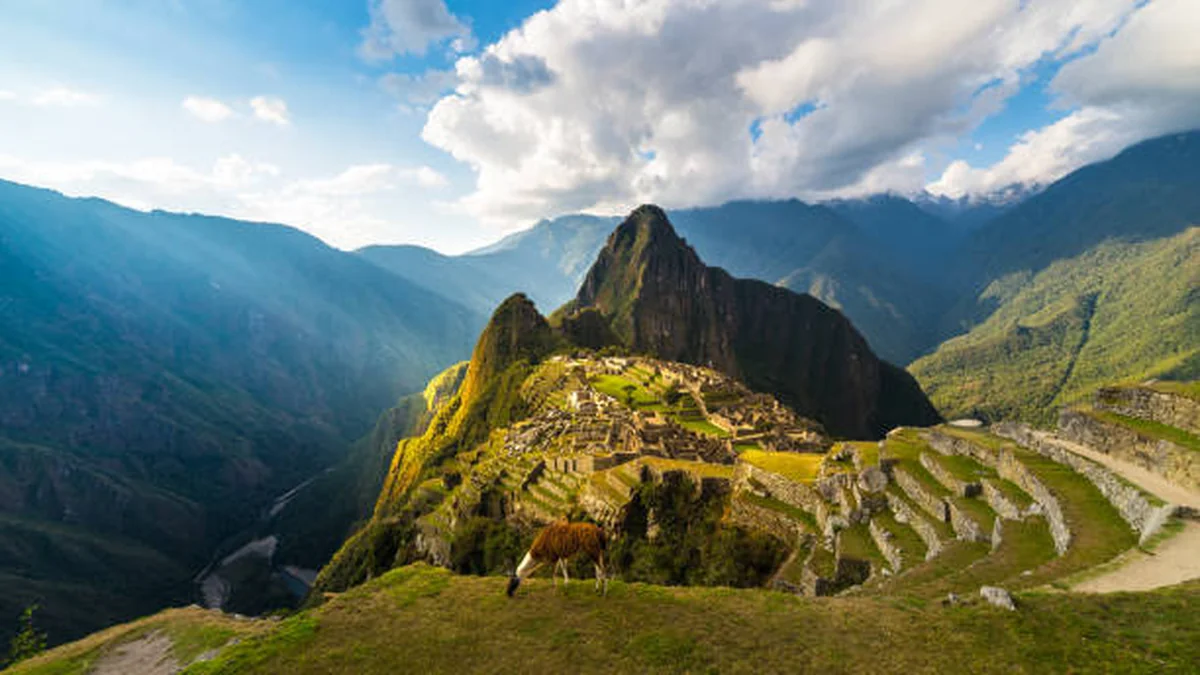
Places to visit in Peru go far beyond one photo: Machu Picchu at sunrise. That’s a fine starting point, but it’s also why so many travelers land in Cusco, do the citadel, and fly home having seen maybe 10% of what the country actually offers.
The best places to visit in Peru span four distinct regions: the Andean highlands (Machu Picchu, Cusco, Sacred Valley, Lake Titicaca), the desert coast (Lima, Nazca, Paracas), the southern volcanic region (Arequipa, Colca Canyon), and the Amazon basin. Each rewards a different kind of traveler, and a smart itinerary usually combines at least three.
Places to Visit in Peru: Machu Picchu and the Sacred Valley
Machu Picchu sits at roughly 2,430 meters above sea level, built into a saddle between two peaks so precisely that even now, engineers study how Inca stonemasons managed it without mortar or iron tools. It’s genuinely one of the few “bucket list” sites that lives up to the hype in person — the scale, the setting, and the fog rolling through the ruins at dawn are hard to overstate.
You have three main ways in:
- Train from Ollantaytambo or Poroy (2–3.5 hours), the easiest option
- Classic Inca Trail, a 4-day trek ending at the Sun Gate, requiring permits booked months ahead
- Alternative treks like Salkantay or the Lares route, which skip the permit bottleneck
The Sacred Valley deserves more time than most itineraries give it. Pisac has an Inca hilltop citadel and one of the best artisan markets in the region, busiest on Sundays. Ollantaytambo combines a still-functioning Inca town with a fortress that repelled a Spanish assault — one of the few places the Incas actually won a battle. Nearby, the agricultural terraces at Moray and the salt pans at Maras are worth half a day if you have it.
Quick takeaway: Base yourself in the Sacred Valley rather than Cusco the night before Machu Picchu — it’s lower in altitude, quieter, and cuts your morning transit time.
Cusco
Cusco was the capital of the Inca Empire and is genuinely one of the oldest continuously inhabited cities in the Americas, with roots that predate Inca rule by centuries. Walk the streets around San Blas and you’ll see Inca stone foundations holding up Spanish colonial buildings — a literal layering of two empires.
Beyond being a Machu Picchu gateway, Cusco has real depth: the Coricancha temple, the Museo de Arte Precolombino, and the San Pedro Market for local food and crafts. Plan to spend at least a full day or two acclimatizing here before any trek — the city sits above 3,400 meters, and altitude sickness is common in the first 24–48 hours.
Places to Visit in Peru: Lima
Lima gets skipped or rushed by travelers eager to reach the mountains, which is a mistake. It’s the culinary capital of South America — several of the world’s 50 Best Restaurants are here — and the coastal neighborhoods of Miraflores and Barranco offer clifftop views, street art, and a completely different pace from the Andes.
Give Lima at least two days: one for the historic center (Plaza Mayor, colonial churches), one for Miraflores and Barranco, with a ceviche lunch and a pisco sour non-negotiable on both.
Lake Titicaca and Puno
At over 3,800 meters, Lake Titicaca is the highest navigable lake in the world, shared with Bolivia. The main draw near Puno is the Uros people’s floating reed islands — genuinely unusual, though increasingly tourist-oriented, so pair it with a stay on Taquile or Amantani island for a more grounded cultural experience with local host families.
Puno itself is Peru’s folkloric capital, home to some of the country’s biggest traditional festivals. It’s a long bus ride or short flight from Cusco or Arequipa, so budget a full travel day either direction.
Arequipa and Colca Canyon
Arequipa is Peru’s second city and, in our opinion, one of its most underrated. It’s built almost entirely from sillar, a white volcanic stone that gives the historic center a distinct glow in the afternoon light — hence the nickname “the White City.” The Santa Catalina Monastery, a walled city-within-a-city, is worth a half-day alone.
From Arequipa, Colca Canyon is a common add-on — twice as deep as the Grand Canyon in places, and one of the best spots in Peru to see Andean condors gliding on thermals in the early morning.
The Southern Desert Coast
South of Lima, the coastline turns to desert, and three stops cluster together well:
- Paracas, a gateway to the Ballestas Islands (sea lions, penguins, and seabird colonies) and the Paracas National Reserve, where desert meets ocean along dramatic cliffs
- Huacachina, a genuine oasis town surrounded by sand dunes, popular for sandboarding and dune-buggy rides
- Nazca, home to the Nazca Lines — enormous geoglyphs of animals and shapes carved into the desert floor, best seen from a small overflight plane
This stretch is easy to combine into a 2–3 day loop and works well as a stop between Lima and Arequipa.
Northern Peru — The Country’s Best-Kept Secret
Nearly every “top places in Peru” list is weighted toward the south, which means northern Peru gets overlooked despite having some of the country’s most interesting sites and the fewest crowds.
Chachapoyas is the gateway to Kuelap, a walled pre-Inca fortress city built by the Chachapoya culture and now reachable by cable car — often called the “Machu Picchu of the north,” minus the lines. Nearby, Gocta is one of the tallest waterfalls in the world, discovered by outsiders only in 2005 despite locals knowing it for generations.
Further along the coast, Trujillo makes a good base for Chan Chan, the largest adobe city in the Americas and once the capital of the Chimú kingdom, plus the Moche-era Huacas del Sol y de la Luna pyramids. Round it out with a day at Huanchaco beach, known for its traditional reed fishing boats.
The Peruvian Amazon
The Amazon makes up more than half of Peru’s territory, but most visitors never see it — which is a shame, since it’s one of the most biodiverse places on the planet. Puerto Maldonado is the easiest access point, a short flight from Cusco, with jungle lodges offering canopy towers, night hikes, and wildlife spotting (macaws, caimans, monkeys). Iquitos, deeper in the Amazon basin and only reachable by air or river, suits travelers wanting a more remote, immersive jungle experience.
Rainbow Mountain
Vinicunca, better known as Rainbow Mountain, has exploded in popularity over the past decade thanks to its naturally striped mineral bands. It’s a demanding day hike from Cusco, reaching around 5,000 meters — tougher on the lungs than Machu Picchu — so it’s worth acclimatizing for a few days first. Go early; by midday the summit gets crowded and clouds often roll in.
Places to Visit in Peru: How to Plan Your Trip
| Question | Quick Answer |
|---|---|
| Best time to visit | May–September (dry season, best for the highlands and Machu Picchu); December–March for Lima and the coast |
| How many days | 10–14 days covers the highlights well; 7 days is workable if you focus on Cusco, Sacred Valley, and Machu Picchu only |
| Altitude sickness | Spend 1–2 nights in Cusco or the Sacred Valley before any trek; drink coca tea, hydrate, avoid alcohol the first night |
| Safety | Generally safe for tourists in main destinations; use registered taxis in Lima, watch belongings in markets and bus stations |
| Booking ahead | Inca Trail permits sell out months in advance; Machu Picchu entry tickets should be booked at least a few weeks ahead in peak season |
Honest downside to flag: Machu Picchu ticket limits and Inca Trail permits mean spontaneous last-minute visits often aren’t possible in high season (June–August). If your dates are fixed, book that piece first and build the rest of the trip around it.
Peru rewards travelers who go beyond the postcard. Machu Picchu is worth every bit of its reputation, but pairing it with Lima’s food scene, Arequipa’s colonial architecture, or a few days in the Amazon turns a checklist trip into something much harder to forget. Start with your fixed dates — Machu Picchu tickets and Inca Trail permits — and build the rest of the route around them.
Want to plan your next adventure? Browse more travel guides and itineraries.
FAQ Section
What are the best places to visit in Peru? Machu Picchu, Cusco, the Sacred Valley, Lima, Lake Titicaca, and Arequipa cover the highlights. Northern Peru (Chachapoyas, Kuelap) and the Amazon are excellent additions for travelers with more time.
How many days do you need in Peru? Ten to fourteen days lets you cover the Andes highlands and Lima comfortably. A focused one-week trip can still work if you limit yourself to Cusco, the Sacred Valley, and Machu Picchu.
Is Machu Picchu worth visiting? Yes — it’s one of the rare famous sites that matches its reputation in person, especially early morning before the biggest crowds arrive.
What is the best time of year to visit Peru? May through September is dry season and best for the highlands and Machu Picchu. December through March suits Lima and the coast better, though it’s wetter in the Andes.
Do you need a permit for Machu Picchu? Entry tickets are required and should be booked in advance, especially June–August. The classic Inca Trail requires a separate permit that sells out months ahead.
Is Peru safe for tourists? Peru’s main tourist areas are generally safe. Standard precautions apply: use registered taxis, watch belongings in crowded markets, and stay aware in bus terminals.
Can you see Machu Picchu without hiking the Inca Trail? Yes — most visitors reach it by train from Ollantaytambo or Poroy, no trekking required.
What should first-time visitors to Peru not skip? Beyond Machu Picchu: at least two days in Lima for the food scene, and one extra day in the Sacred Valley rather than rushing straight through.