Most people spend more time deciding whether Oman is “worth it” than they do actually planning the trip. It is worth it — and the planning part is easier than it looks once you see the route laid out day by day.
Oman rewards a week of driving more than a week of lying on one beach. A well-paced Oman itinerary loops from Muscat’s mosques and souqs to the Wahiba Sands desert, the mountain fort town of Nizwa, and the cliffs of Jebel Shams, covering roughly 1,200–1,500 km in 7 days, or a more relaxed 10 if you can spare it.
How Many Days Do You Actually Need in Oman
Seven days is the realistic minimum for a first Oman itinerary that hits Muscat, the desert, and the mountains without feeling rushed on every single stop. Ten days is where the trip stops feeling like a checklist. The extra three days let you add a second night in the desert, a proper hike around Misfat Al Abriyyin instead of a drive-by photo, and — if you’re willing to fly one leg — a few days in Salalah, which has a completely different, greener landscape thanks to the summer monsoon (khareef).
If you only have five days, cut the mountains, not the desert. Wahiba Sands and Nizwa are worth more per day than a rushed Jebel Shams detour.
Quick Takeaway: 5 days = Muscat, coast, one desert night. 7 days = add Nizwa and the mountains. 10 days = add a second desert night, deeper village time, or Salalah.
Getting Around — Car Rental, 4WD Reality, and Alternatives
Most Oman itineraries assume you need a 4WD SUV. That’s only half true. The paved highway network connecting Muscat, Nizwa, Sur, and the Wahiba Sands access roads is in excellent condition, and a standard sedan handles it fine. Where a 4WD actually matters is the final unpaved stretch into Jebel Shams and driving directly onto the desert dunes rather than being driven in by a camp’s own vehicle.
A practical rule: rent a 2WD if your route sticks to towns, forts, and wadis, and let your desert camp pick you up in their own 4WD along the sand track — most camps offer this anyway. Only rent a 4WD yourself if you’re set on self-driving into Jebel Shams or want full flexibility on the dunes.
If driving in the Gulf doesn’t appeal to you, private drivers and multi-day guided tours cover the same route, and Mwasalat’s bus network connects the bigger towns cheaply, though it won’t reach wadis, castles, or desert camps directly.
| Option | Best for | Rough cost (7 days) |
|---|---|---|
| Self-drive 2WD | Towns, forts, wadis | ~$150–250 rental |
| Self-drive 4WD | Full flexibility, Jebel Shams | ~$500–800 rental |
| Private driver/guide | No driving, local insight | $150–250/day |
| Mwasalat bus | Budget, town-to-town only | Under $30 total |
The 7-Day Oman Itinerary, Day by Day
Day 1–2: Muscat
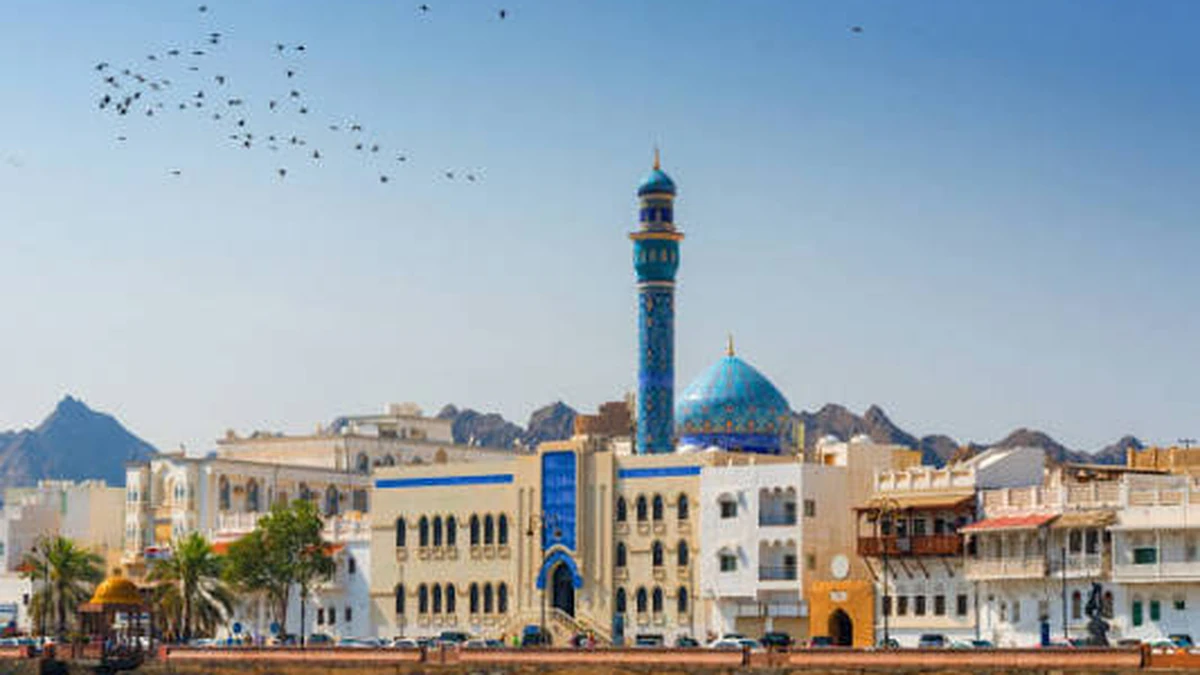
Land at Muscat International Airport and ease in with the capital. The Sultan Qaboos Grand Mosque is the obvious anchor — go in the morning before tour buses arrive, and note the dress code: women need a headscarf and full coverage of shoulders and knees, men need long trousers. Follow it with Muttrah Souq, one of the oldest working markets in the Middle East, and the Muttrah Corniche for a sunset walk with views of the twin harbor forts, Al Jalali and Al Mirani.
On day two, round out Muscat with the Royal Opera House (worth seeing even from outside), the Bait Al Zubair or National Museum for cultural context, and if you want a genuine highlight rather than a filler activity, book a half-day boat trip to the Daymaniyat Islands for snorkeling — turtles and reef fish are common sightings just 45 minutes offshore.
Quick Takeaway: Two nights in Muscat is enough. One night works if you’re tight on time, but you’ll skip either the opera house area or the islands trip.
Day 3: Bimmah Sinkhole, Wadi Shab & Sur
Leave Muscat early and head down the coastal highway. Bimmah Sinkhole (Hawaiyat Najm) is a quick, free stop — a turquoise, spring-fed pool in a limestone crater, good for a swim if you don’t mind an audience. Wadi Shab is the bigger draw: park, take the short boat crossing over the river mouth, then hike roughly 45 minutes up the canyon between turquoise pools to a hidden cave with a small waterfall. Wear water shoes; the rocks are slick.
Push on to Sur by late afternoon. It’s still a working dhow-building town, so the shipyards near the harbor are worth a stop before dinner. If turtle season aligns with your dates, drive the extra 40 minutes to Ras Al Jinz to watch green turtles nest after dark — book ahead, spots are limited and rangers control access.
Day 4: Wahiba Sands Desert Camp
This is the day most people build their whole Oman itinerary around, and it earns it. Drive inland to the edge of the Wahiba Sands (Sharqiya Sands) and either self-drive the final stretch in a 4WD or, more commonly, get picked up by your camp along a marked track. Spend the afternoon dune-bashing, sandboarding, or just walking the ridgelines as the light turns gold, then settle in for a Bedouin-style dinner cooked over an open fire.
Set an alarm for sunrise — it’s genuinely one of the best 20 minutes of the trip, and campers who sleep through it regret it every time.
Day 5: Nizwa
Drive roughly two hours from the desert to Nizwa, Oman’s old capital and still its cultural heart. Nizwa Fort is the country’s most visited fort for good reason — climb the tower for views over the surrounding date palm groves. If you’re there on a Friday morning, the cattle and goat market at the souq is chaotic, loud, and completely unstaged; it’s one of the few tourist-adjacent experiences in Oman that hasn’t been sanitized for visitors.
For deeper context on Omani fort life than Nizwa Fort itself provides, drive 30 minutes to Jabreen (Jibreen) Castle — better restored, with painted ceilings and a proper audio guide — or continue to Bahla Fort, a UNESCO World Heritage Site.
Day 6: Mountain Villages & Jebel Shams
Morning: the mud-brick villages of Al Hamra and Misfat Al Abriyyin, built into the mountainside and threaded with falaj — Oman’s centuries-old gravity-fed irrigation channels. Walk the narrow lanes on foot; this is where an Oman itinerary slows down and actually feels lived-in rather than sightseen. Bait Al Safah, a converted 400-year-old house, gives a hands-on look at traditional cooking and craft.
Afternoon: continue to Jebel Shams, Oman’s highest peak, nicknamed “Sun Mountain” because it’s the first place in the country to catch daylight. The rim walk along “Oman’s Grand Canyon” needs no technical skill, just decent shoes and a head for heights. Temperatures drop noticeably here — pack a layer even in summer.
Jebel Akhdar, a separate green mountain range known for rose and pomegranate terraces, is a worthwhile alternate or addition if you have a 10-day itinerary rather than 7 — don’t confuse the two when planning your route.
Day 7: Back to Muscat
Budget 2–2.5 hours to drive back to Muscat from the Jebel Shams area. If your flight is in the evening, that leaves a few hours for last-minute shopping at Muttrah Souq or a stop at Avenues Mall near the airport.
Extending to 10 Days: What to Add
With three extra days, don’t just add more stops — slow down the ones you already have. Split the desert night into two so you’re not rushing sunset. Give Misfat Al Abriyyin a proper morning hike instead of a 90-minute stop. If you’re willing to take a short domestic flight, three days in Salalah adds a genuinely different Oman: green hills, frankincense groves, and a coastline that looks nothing like the north.
What This Trip Actually Costs
Per person, sharing costs with a travel partner, for a 7-day self-drive Oman itinerary:
| Category | Estimated cost (per person) |
|---|---|
| Car rental (2WD, 7 days) | $80–130 |
| Fuel | $40–60 |
| Accommodation (mid-range) | $350–500 |
| Desert camp (1 night, full board) | $60–100 |
| Food | $150–200 |
| Activities/entry fees | $50–100 |
| Total (excluding flights) | ~$700–1,100 |
Flights are the biggest variable and aren’t included above since they depend heavily on origin city and season.
Practical Planning Essentials
- Best time to visit: October to March, when daytime temperatures are manageable. April–September gets brutally hot outside Salalah, where the summer khareef season actually cools things down.
- Visa: Citizens of over 100 countries can enter visa-free for stays up to 14 days; check current rules for your passport before booking.
- Currency: The Omani Rial (OMR) is pegged at roughly 1 OMR ≈ $2.60 USD; carry some cash for small cafés and rural tea houses.
- Dress code: Modest dress is expected at religious sites and appreciated generally — shoulders and knees covered, headscarf for women at the Grand Mosque.
- Power plugs: Oman uses Type G, the same three-pin plug as the UK.
- Connectivity: A local SIM at the airport covers you for the whole route; coverage is solid even in most desert and mountain areas.
Mistakes First-Timers Make
The single biggest one: packing too many stops into one day, especially day 3 and day 6, which each cram in three or four major attractions. If you only remember one piece of advice from this Oman itinerary, let it be this — build in slack, because Bimmah Sinkhole, Wadi Shab, and Sur in one afternoon means you’ll rush the best part (Wadi Shab) to make it to Sur before dark. The second mistake is assuming you need a 4WD for the entire trip when most of the route is paved highway. The third is skipping sunrise in the desert because the wake-up feels early — it’s the single most memorable moment most travelers report.
For more destination guides and trip-planning tips, explore our full travel guide collection.
FAQ Section
How many days do you need for an Oman itinerary?
Seven days covers Muscat, the desert, Nizwa, and the mountains without rushing every stop. Ten days lets you slow down and possibly add Salalah.
Do you need a 4WD to explore Oman?
Not for the whole trip. A 2WD sedan handles the paved highway network fine; you only need 4WD for the final stretch into Jebel Shams or self-driving onto the dunes, and most desert camps will pick you up in their own 4WD anyway.
Is Oman safe for tourists?
Yes, Oman is consistently ranked among the safest countries in the world for visitors, with low crime rates and a welcoming culture toward tourists.
What is the best time of year to visit Oman?
October to March offers the most comfortable temperatures for road-tripping and desert camping. Salalah is an exception, since its summer khareef season brings cooler, greener weather from roughly June to September.
Can you visit Oman without a rental car?
Yes, though it’s harder. Private drivers, multi-day guided tours, and Mwasalat buses connect the main towns, but buses won’t reach wadis, forts, or desert camps directly.
How much does a week in Oman cost?
Budget roughly $700–1,100 per person for a 7-day self-drive trip, excluding international flights, covering car rental, fuel, mid-range accommodation, one desert camp night, food, and entry fees.
Is Nizwa or Muscat better to stay in for a road trip?
Muscat is the better base to start and end your trip for flights and car rental logistics; Nizwa works well as a one- or two-night stop in the middle of the loop, closer to the mountains and villages.
What should I pack for an Oman road trip?
Modest clothing for mosque and village visits, sturdy water shoes for wadi hikes, a warm layer for Jebel Shams’ cooler evenings, and sun protection for the desert.