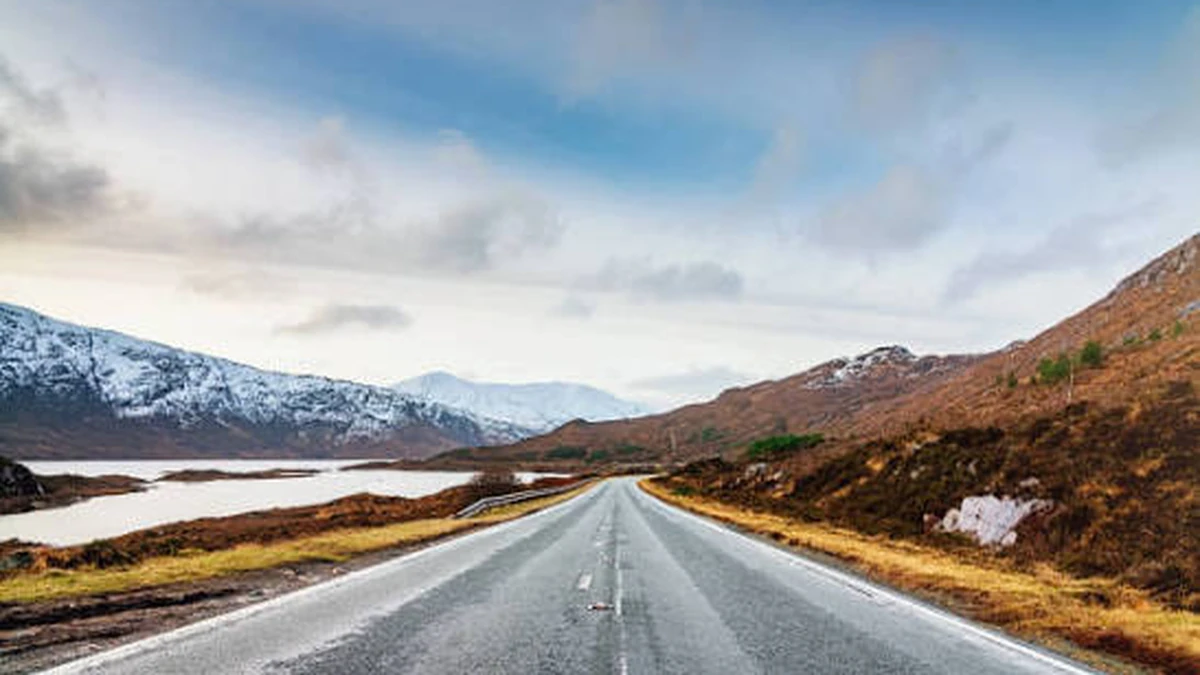
The road signs on Skye don’t lie: single track, passing places, sheep. That’s most of what you need to know about driving here — the rest is just deciding how much of this island you can realistically see before you run out of daylight.
An Isle of Skye road trip typically takes 2–3 days and covers around 140–200 miles, looping through the Trotternish Peninsula, west Skye, and the Sleat Peninsula. Base yourself in Portree, drive the A855 and A87, and expect single-track roads, changeable weather, and no shortage of places that make you pull over just to look.
How Long Do You Need for an Isle of Skye Road Trip?
You can technically drive the ring road around Skye in half a day. Nobody actually does this and enjoys it.
Realistically:
- One day — doable if you’re coming from Inverness or as part of a longer Highlands loop, but you’ll only manage the Trotternish highlights: Old Man of Storr, Kilt Rock, maybe the Quiraing.
- Two days — the sweet spot for a lot of travelers. One day north (Trotternish), one day west (Fairy Pools, Talisker, Neist Point).
- Three days — the version most seasoned Skye visitors recommend, because it adds the Sleat Peninsula and a boat trip to Loch Coruisk without feeling rushed.
- Four-plus days — if hiking is the priority, not just viewpoints from the car park.
Skye looks small on a map and drives much bigger than it looks, because almost none of the roads are straight and a lot of them are single-track. A 30-mile stretch can easily eat 90 minutes.
Getting to the Isle of Skye
Driving via the Skye Bridge
Most road-trippers arrive this way. The Skye Bridge connects Kyleakin on the island to Kyle of Lochalsh on the mainland, and — unlike its toll-charging past — crossing it is now free. From Edinburgh it’s roughly 5.5 hours via the A82 and A87, passing Glencoe and Fort William. From Glasgow, about 5 hours on a similar route. From Inverness, it’s the shortest run at around 2.5 hours via Loch Ness and Eilean Donan Castle, which is worth a stop in its own right.
Taking the Ferry from Mallaig
The Caledonian MacBrayne ferry runs from Mallaig on the mainland to Armadale on Skye’s Sleat Peninsula, a scenic 30-minute crossing. It’s frequent in summer (roughly every couple of hours, April to October) and drops to two sailings a day in winter. This route makes sense if you’re coming from the west Highlands or want to enter Skye from the south rather than over the bridge.
Where to Base Yourself on Skye
Skye rewards a central base more than hopping hotels every night.
| Base | Best for | Trade-off |
|---|---|---|
| Portree | First-timers, restaurants, tours | Busiest town, book early |
| Uig / Staffin | Trotternish focus, island-hopping to the Hebrides | Quieter, fewer dining options |
| Carbost | Early starts at the Fairy Pools, Talisker Distillery | Limited amenities |
| Broadford | Central location, only ~40 min from Portree | Less scenic than coastal bases |
| Sleat Peninsula | Off the beaten track, mountain views | Furthest from Trotternish sights |
Portree is the default for good reason — it’s the largest village, has fuel, a Coop supermarket, and puts you within striking distance of both the north and west loops.
The Isle of Skye Road Trip Itinerary, Day by Day
Day 1 — Trotternish Peninsula Loop
This is the itinerary everyone photographs, and it earns the reputation. Starting from Portree, drive the roughly 50-mile Trotternish Loop:
- Old Man of Storr — a 6-mile drive north on the A855, then a climb to a dramatic rock pinnacle formed by an ancient landslide.
- Kilt Rock & Mealt Falls — a waterfall dropping straight into the sea, next to sea cliffs that resemble pleated fabric.
- Quiraing — a shifting landscape of hidden plateaus and rock towers; the walking trail here is longer but worth the extra time if your legs are up for it.
- Fairy Glen, near Uig — a strange, miniature landscape of grassy cones that looks almost man-made.
Fuel up and pack food before you start — there are very few facilities along the Loop itself, though Portree has a large Coop and a smaller one is in Uig.
Day 2 — West Skye and the Cuillin
Head south and west from Portree:
- Sligachan Old Bridge — a stone bridge with the jagged Black Cuillin range behind it, one of the most photographed spots on the island.
- Fairy Pools — crystal-clear cascading pools below the Cuillin. The walk in from the car park takes 30–40 minutes depending on how far up you go.
- Talisker Distillery, Carbost — Skye’s oldest working distillery, worth a tour if whisky interests you at all.
- Neist Point — the island’s most westerly point and one of Scotland’s most photographed lighthouses. The walk is only 2.7km round trip but has steep sections; go for sunset if your schedule allows.
- Dunvegan Castle — continue north from Carbost to Dunvegan for one of Scotland’s oldest continuously inhabited castles, plus seal-spotting boat trips.
Day 3 — Sleat Peninsula and Loch Coruisk
Less crowded and often skipped by day-trippers, which is exactly why it’s worth the extra day.
- Sleat Peninsula — quieter roads, views across to the mountainous mainland, and a good spot for a slower morning.
- Elgol — a tiny village that’s the launch point for boat trips.
- Loch Coruisk boat trip — a short crossing takes you to a hidden loch ringed by the Cuillin, inaccessible by road. Most competitor guides skip this entirely, but it’s one of the best ways to see the mountains without hiking them.
- Armadale — if you’re catching the ferry back to Mallaig, this is your exit point.
If You Only Have One Day
Focus entirely on Trotternish: Old Man of Storr, Kilt Rock, and the Quiraing, with a stop at An Corran Beach if you have room. Accept you’re seeing a fraction of the island — that’s the honest trade-off of a single day.
Driving Skye’s Roads: What First-Timers Get Wrong
Most competitor guides mention single-track roads in passing. They deserve more detail, because this is where road trips actually go wrong.
- Passing places are mandatory courtesy, not decoration. On single-track sections, pull into the marked laybys to let oncoming traffic through, and use them to let faster local traffic overtake you too.
- Don’t park in passing places. It blocks the road for everyone and is a genuine source of local frustration.
- Large motorhomes struggle here. If you’re renting an RV, a smaller campervan handles Skye’s narrow roads and limited car parks far better than a full-size motorhome.
- Book campsites and car parks in advance in peak season — popular spots like the Fairy Pools and Neist Point fill their car parks by mid-morning in summer.
- Fuel up before you leave the main towns. Petrol stations thin out fast once you’re off the A87, and prices are noticeably higher on the island than the mainland.
- Mobile signal is patchy away from Portree and Broadford — download offline maps before you set off.
What an Isle of Skye Road Trip Costs
Budgeting for Skye is barely covered anywhere else, so here’s a realistic breakdown for a 3-day, 2-person self-drive trip:
| Expense | Approximate Cost |
|---|---|
| Car hire (3 days) | £120–£220 |
| Fuel | £40–£70 |
| Accommodation (2 nights, mid-range) | £180–£350 |
| Food and drink | £100–£180 |
| Attraction entry (Dunvegan Castle, Talisker tour) | £40–£70 |
| Total (2 people, 3 days) | £480–£890 |
Costs rise sharply in July and August, when accommodation books out weeks ahead. Wild camping and self-catering cottages can bring the total down considerably.
When to Go — Weather and Seasons
Skye gets rain in every month, so “best time to visit” is really about trade-offs. September through January is the wettest stretch, with October typically the soggiest month. March through June tends to be the driest window, and May through September brings the warmest temperatures — averaging roughly 7–13°C even in peak summer. Visiting in the shoulder season (April–June or September–October) means fewer crowds and a real shot at drier roads, without the near-guaranteed summer traffic on single-track sections.
Mistakes to Avoid and Responsible Travel on Skye
Skye has dealt with real overtourism pressure in the last decade, concentrated almost entirely on the Trotternish Peninsula. A few things make a genuine difference:
- Stay at least one night on the island rather than treating it as a day trip from Inverness or Glasgow — it spreads your spending into the local economy and gives you actual time to enjoy it.
- Stick to marked trails at the Old Man of Storr and Quiraing; erosion from off-trail shortcuts is a visible problem.
- Don’t wild camp in car parks or laybys near popular sights — use designated sites.
- Carry your rubbish out if bins are full, which they often are in peak season.
None of this requires sacrificing much — it just means treating a small island road network like the shared, limited resource it actually is.
Want to plan your next adventure? Browse more travel guides and itineraries.
FAQ
How many days do you need for the Isle of Skye?
Two to three days is the realistic minimum to see the island’s main highlights without rushing. One day is possible but limits you to the Trotternish Peninsula only, and four or more days suits hikers who want to get beyond the roadside viewpoints.
Do you need a car on the Isle of Skye?
Yes, for the most part. Public transport exists but is limited, and many of Skye’s best spots — Neist Point, the Fairy Pools, Loch Coruisk’s boat departure point — sit down single-track roads that buses don’t reach.
Is Skye Bridge free to cross?
Yes. The bridge connecting Kyleakin to Kyle of Lochalsh no longer charges a toll, so driving onto the island this way costs nothing beyond fuel.
Can you drive around the Isle of Skye in one day?
You can technically loop the ring road in half a day without stopping, but that means skipping almost every worthwhile stop. A genuine one-day visit should focus on the Trotternish Peninsula alone.
Do I need a 4×4 for Skye’s roads?
No. A standard car handles Skye’s roads fine, including the single-track sections. What matters more is comfort with passing places and narrow bends than the vehicle type — though very large motorhomes will struggle.
What’s the best month to road trip Skye?
May, June, and September tend to offer the best balance of drier weather and manageable crowds. July and August are warmest but busiest and priciest for accommodation.
Is the Isle of Skye worth a road trip?
Yes — it’s consistently rated among the best road trip destinations in the UK for the concentration of dramatic scenery within a small, drivable area, though the weather and narrow roads mean it rewards a relaxed pace over a rushed one.
Should I combine Skye with the NC500?
It’s common to add a couple of extra days onto a North Coast 500 route since Skye sits close to that loop, but treat it as its own leg rather than a quick detour — the island deserves dedicated time, not a drive-through.