Vienna doesn’t ease you in. You step off the U-Bahn and there’s a Baroque palace facade staring back at you, gold leaf and all, like it’s completely normal. For a lot of first-time visitors, the sheer density of Vienna attractions is the problem — not what to see, but what to skip.
Vienna’s must-see attractions include Schönbrunn Palace, Hofburg Palace, St. Stephen’s Cathedral, and Belvedere Palace, home to Klimt’s “The Kiss.” Add the Kunsthistorisches Museum, the Naschmarkt, and a coffeehouse stop, and two to three days covers the essentials without rushing.
I’ve split this guide the way I’d actually plan a trip: palaces first, then old town, then museums, then the stuff that makes Vienna feel lived-in rather than just visited.
The Imperial Palaces You Can’t Skip
Everything about the Habsburg era gets funneled through two buildings, and most visitors try to cram both in on day one. Don’t. They serve different purposes.
Schönbrunn Palace
Schönbrunn is Austria’s most-visited attraction, and the reason isn’t a mystery once you’re standing in the gardens looking up at the Gloriette. This was the Habsburgs’ summer residence — 1,441 rooms, though you’ll only tour a fraction of them, plus 160 hectares of grounds that include a maze, a palm house, and one of the world’s oldest zoos.
The mistake people make is treating Schönbrunn as a quick stop. Give it half a day. Walk the gardens before the ticket office even opens if you can, then do the interior tour, then climb to the Gloriette terrace for the skyline view. The palace itself charges separately from the gardens — the park is free to enter, but the Gloriette, maze, and Privy Garden are ticketed extras.
Hofburg Palace
Where Schönbrunn was the summer escape, the Hofburg was the actual seat of power for six centuries — and it still functions that way, since it’s now the Austrian president’s official residence. It’s really a cluster of buildings rather than one palace: the Sisi Museum, the Imperial Apartments, the Imperial Treasury, the Austrian National Library’s State Hall, and the Spanish Riding School all sit inside the complex.
The Sisi Museum is where most people spend their time, tracing Empress Elisabeth’s life from teenage bride to the isolated, restless figure she became later in life. It’s a more compact visit than Schönbrunn — 75 to 90 minutes covers the core rooms — which makes it a smart choice if you’re tight on time or the weather’s bad.
Schönbrunn vs. Hofburg: Which One First?
| Schönbrunn Palace | Hofburg Palace | |
|---|---|---|
| Location | Outskirts (U4 line) | City center, 1st district |
| Time needed | Half day with gardens | 1.5–3 hours |
| Best for | Gardens, families, full “palace day” | Short visits, bad-weather days, Sisi history |
| Combined ticket | Sisi Ticket (~€43) covers both plus the Furniture Museum | Hofburg Plus (~€26) adds the Treasury |
| Crowd pattern | Busiest 11am–2pm | Busiest late morning |
If you only have one full day in Vienna, most locals will tell you to do Hofburg in the morning — it’s central and quick — and save the afternoon for Schönbrunn’s gardens, since rushing those defeats the point of going.
Vienna’s Old Town and the Ringstrasse
St. Stephen’s Cathedral
Stephansdom anchors the historic center both literally and visually — its patterned tile roof is one of the most photographed things in the city, and the Gothic spire is visible from most of the 1st district. Entry to the nave is inexpensive and quick, but the real draw for a lot of visitors is climbing the south tower or descending into the catacombs, where Habsburg remains are interred. This is also one of the free-ish attractions in Vienna if you skip the tower and catacombs and just take in the interior.
Walking the Ringstrasse
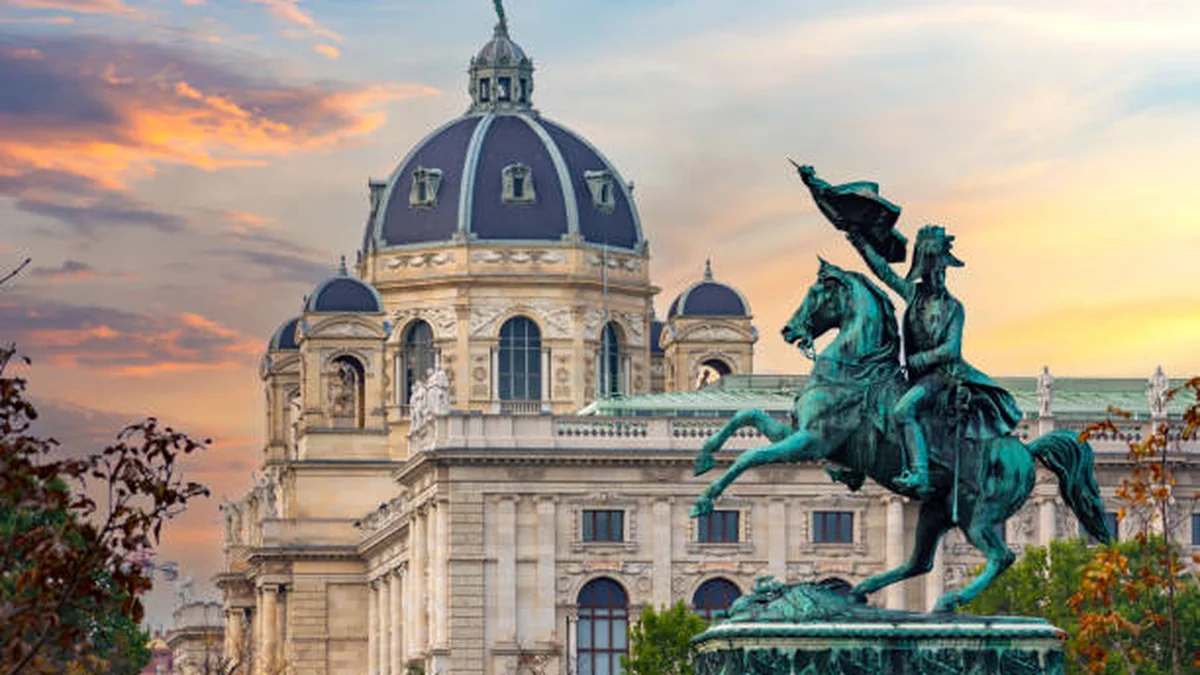
The Ringstrasse is the 19th-century boulevard that loops around the historic core, and it’s basically an open-air museum of grand architecture: the State Opera, the Parliament building, City Hall with its five ornate towers, and the Burgtheater all sit along it. You can walk the whole loop in under two hours, or take a tram (lines 1, 2, D, or 71) and hop off wherever something catches your eye. This is the single best way to get oriented on day one — everything else in this guide connects back to somewhere along or just off the Ring.
Museums and Art Worth Your Time
Vienna’s museum density rivals cities twice its size, so picking two or three well beats trying to see them all.
Kunsthistorisches Museum
The KHM holds one of the world’s great art collections — Bruegel, Raphael, Titian, Vermeer — spanning roughly five millennia if you count the Egyptian and classical antiquities wings. It’s closed Mondays, which trips up a surprising number of itineraries, so check that before you plan your route.
Belvedere and Klimt
The Belvedere complex — Upper and Lower, connected by French-style gardens — was built as Prince Eugene of Savoy’s summer residence and now functions as Austria’s national gallery. The main reason it’s on every list: Gustav Klimt’s “The Kiss” hangs in the Upper Belvedere, and it’s genuinely worth seeing in person, gold leaf and all, rather than as a poster.
Albertina and the MuseumsQuartier
The Albertina rotates through major international exhibitions — Picasso, Monet, and similar names show up regularly — and doubles as a look at 19th-century staterooms. Nearby, the MuseumsQuartier packs several museums (contemporary art, design, children’s activities) into one walkable courtyard complex, making it a good rainy-afternoon pick if you want variety without crossing the city.
Music, Markets, and Coffeehouse Culture
Vienna State Opera and the Spanish Riding School
Music isn’t decoration in Vienna — it’s infrastructure. The Vienna State Opera, opened in 1869 as the first major Ringstrasse building, schedules a different performance most nights so singers can rest their voices, and both tours and tickets are available if opera isn’t usually your thing but you want the experience once. The Spanish Riding School, inside the Hofburg, is the world’s oldest classical riding academy and stages Lipizzaner horse performances that book out well in advance on weekends.
Naschmarkt
Locals call it “Vienna’s stomach.” Stalls sell produce, cheese, and street food side by side with sit-down restaurants, and it’s as much a social scene on a Saturday as it is a shopping trip. It’s a good counterweight to a morning of palaces — noisy, informal, and entirely modern.
Coffeehouse Culture
This is the gap most guides underplay: Viennese coffeehouse culture is UNESCO-listed intangible heritage, not a marketing line. A “melange” (Vienna’s take on a cappuccino) served with a glass of water and a newspaper on a wooden rack is a real ritual, not a tourist photo op, and the traditional cafés (think Café Central, Demel, or a neighborhood Kaffeehaus) expect you to linger. Order a Sacher torte alongside it if you want the full cliché — it earns the reputation.
Free and Family-Friendly Attractions
Vienna’s not cheap, but it’s not stingy with free experiences either. Schönbrunn’s gardens, the interior of St. Stephen’s Cathedral, the Ringstrasse walk, and the Naschmarkt browsing are all free. Many major museums, including the Wien Museum and the Roman Museum, offer free entry on the first Sunday of each month.
For families, the Prater delivers — this landmark amusement park includes the historic Riesenrad (Giant Wheel) for skyline views, plus over 250 rides and attractions in the surrounding Wurstelprater, a planetarium, and a wax museum nearby. Schönbrunn’s zoo, one of the oldest in the world, is another strong pick for younger kids who’ve had enough of palace interiors.
Quick takeaway: If budget is tight, structure your day around free attractions in the morning (gardens, cathedral, Ringstrasse) and save ticketed sites for the afternoon, when queues are often shorter anyway.
Hidden Gems Most Guides Skip
Once the big names are covered, a few lesser-known spots reward the extra effort:
- Hundertwasserhaus — a private residential building with uneven floors and rooftop gardens, designed by artist Friedensreich Hundertwasser; you can’t go inside, but the nearby Hundertwasser Village lets you browse a similarly playful space over coffee.
- Cemetery of the Nameless — a small riverside cemetery honoring unidentified bodies once recovered from the Danube; unusual, quiet, and completely free.
- Central Cemetery (Zentralfriedhof) — sprawling and historically rich, with graves of major composers, and far less crowded than the palace circuit.
- Karlskirche — a Baroque church known for its striking columned facade and, occasionally, unusually good acoustics for classical concerts.
Planning Your Visit: Tickets, Passes, and Timing
Is the Vienna Pass Worth It?
It depends on how many paid attractions you’re realistically doing. The Vienna Pass runs roughly €84 for one day up to €164 for six, and covers unlimited entry to 70+ attractions (including Hofburg, Schönbrunn, and Belvedere) plus public transport. As a rule of thumb, it pays for itself once you’ve visited three or four major paid sites plus used transit — if your plan is one palace and a museum, buy tickets individually instead.
| Ticket | Covers | Approx. Price |
|---|---|---|
| Sisi Ticket | Hofburg (Sisi Museum + Imperial Apartments), Schönbrunn Grand Tour, Furniture Museum | ~€43 |
| Hofburg Plus | Imperial Apartments + Treasury | ~€26 |
| Vienna Pass (1-day) | 70+ attractions + transport | ~€84 |
| Vienna Pass (6-day) | Same, extended validity | ~€164 |
Best Time to Visit
Spring (April–June) and autumn (September–October) hit the sweet spot of mild weather and manageable crowds. Summer is warmer but busier, with July–August midday queues at Schönbrunn stretching 45–90 minutes without an advance ticket. December has its own appeal — the Christmas markets around City Hall and the Belvedere are genuinely worth braving the cold for.
A Sample 3-Day Vienna Attractions Itinerary
- Day 1: Ringstrasse walk → St. Stephen’s Cathedral → Naschmarkt lunch → Hofburg (Sisi Museum) in the afternoon
- Day 2: Schönbrunn Palace and gardens (full day), Gloriette terrace at the end
- Day 3: Kunsthistorisches Museum or Belvedere in the morning → Prater/Riesenrad in the afternoon → coffeehouse to close things out
Book timed tickets for Schönbrunn in advance regardless of season — it’s the one attraction where walk-up queues consistently cause the most lost time.
Want to plan your next adventure? Browse more travel guides and itineraries.
Frequently Asked Questions
How many days do you need in Vienna?
Two days covers the essential Vienna attractions comfortably; three lets you add a museum and a day trip without feeling rushed. Solo travelers or those skipping museums can manage a satisfying visit in a day and a half.
Is the Vienna Pass worth buying?
Only if you’re visiting three or more paid attractions plus using public transport regularly. For a lighter itinerary, individual or combo tickets like the Sisi Ticket usually work out cheaper.
Schönbrunn or Hofburg — which should I prioritize?
Choose Schönbrunn for gardens and a full “palace day,” and Hofburg if you’re short on time, want a Sisi-focused visit, or need an indoor option for bad weather. Many visitors do both across separate days.
What’s free to do in Vienna?
Schönbrunn’s gardens, the interior of St. Stephen’s Cathedral, walking the Ringstrasse, and browsing the Naschmarkt cost nothing. Several major museums also offer free entry on the first Sunday of each month.
Do I need to book Schönbrunn tickets in advance?
It’s strongly recommended, especially April through October. Walk-up queues during July and August midday can run 45–90 minutes, while advance timed tickets let you skip straight to security.
What is Vienna most famous for?
Imperial palaces, classical music heritage (Mozart, Beethoven, Strauss all worked here), Baroque architecture along the Ringstrasse, and a coffeehouse culture recognized by UNESCO as intangible cultural heritage.
Is Vienna expensive to visit?
It’s on the pricier side for Europe, but public transport is efficient and affordable, tap water is drinkable, and enough free attractions exist to balance ticketed palace and museum visits.
Can you walk between Vienna’s main attractions?
Most old-town attractions — the cathedral, Ringstrasse landmarks, MuseumsQuartier — are walkable from each other. Schönbrunn and the Prater sit further out and are better reached by U-Bahn or tram.