What to wear on safari comes down to one problem most packing lists skip: you’re standing in your bedroom with half your closet on the bed, and none of it feels right. Too hot for that fleece, too bright for that yellow shirt, and is white really that big a deal? It is, actually — just not for the reason most people assume.
Quick answer: Wear loose, breathable clothing in neutral tones like khaki, olive, and tan. Avoid blue and black, which attract tsetse flies, and skip bright colors and pure white. Pack layers for cold mornings that warm into hot afternoons, bring closed-toe shoes for any walking, and keep evening wear casual — most lodges don’t expect anything more than a clean shirt and trousers.
Why What to Wear on Safari Actually Matters
This isn’t a fashion shoot, even though the photos will look like one. Every clothing choice on safari solves a practical problem: temperature, insects, dust, or how easily you move in and out of a vehicle six times a day.
Guides notice outfit choices for a reason. A rustling jacket, a flash of bright color, or an outfit you can’t move in quietly costs you sightings. Comfort and function come first; everything else is a bonus.
Quick takeaway: Dress for the animals and the climate, not the camera. The photos turn out better anyway.
The Color Rules Nobody Explains Properly
Why khaki and neutrals win
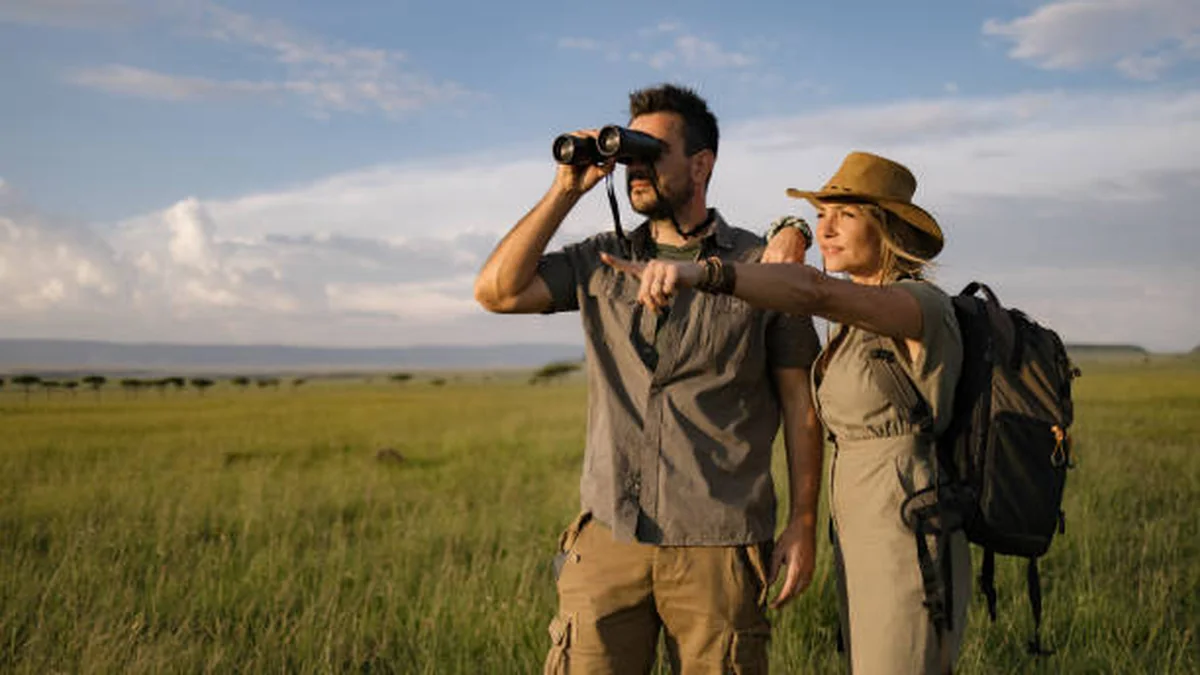
Earth tones — tan, khaki, olive, stone, muted green — blend into dry grass and brush. That matters most on walking safaris, where staying inconspicuous keeps both you and the wildlife calmer. You don’t need to buy an entire “safari collection.” A few neutral tees, a pair of khaki trousers, and whatever muted-color basics are already in your closet will do the job.
The tsetse fly problem with blue and black
Here’s the part most packing lists skip past: blue and black aren’t just “less ideal,” they’re a specific hazard in tsetse fly territory across parts of East and Southern Africa. Tsetse flies are visually drawn to those two colors, which is why conservation programs actually use blue fabric panels — sometimes treated with insecticide — as fly traps. Wear the same color the traps are made from, and you’re volunteering to be a target. Add the fact that black also absorbs heat in already-warm midday conditions, and the case against it gets stronger fast.
Why white isn’t banned, just impractical
Nobody will turn you away for wearing white, but there are two real downsides. First, dust turns it grey-brown within a day, so you’ll be doing laundry constantly or wearing dirt for the rest of the trip. Second, in the animal world, flashes of white and bright color are often alarm signals — many prey species show white when startled or fleeing. It doesn’t spook wildlife the way a loud noise would, but guides generally prefer guests blend in rather than stand out. And in several African countries, camouflage-pattern clothing is reserved for military and police use, so leave anything patterned like that at home entirely — it can cause real problems at checkpoints, not just a fashion faux pas.
Quick takeaway: Neutrals for blending in, no blue or black for the tsetse flies, and white only if you’re prepared for it to get dirty fast.
Layering for the Temperature Swing
The single hardest thing to plan for on safari isn’t color — it’s temperature. Mornings can start in the 50s°F (10-13°C), especially with wind chill from an open safari vehicle, and climb into the 90s-100°F (32-38°C) by early afternoon. That’s not a two-outfit day. That’s a four-layer day.
A workable system:
- A breathable base layer — long-sleeve cotton or linen shirt
- A light fleece or wool layer for the coldest part of the morning
- A windproof or packable outer shell for open-vehicle wind chill
- Lightweight trousers you can leave on all day, or zip-off styles that convert to shorts as it warms up
By mid-morning you’re usually down to layer one. By afternoon you might swap into shorts or a dress for downtime at the lodge. Packing cubes make this rotation far less chaotic — group your layers by type rather than by outfit, so you’re not digging through a duffel bag at 5:45 a.m.
Quick takeaway: Plan for four seasons in one day. Layers you can shed matter more than any single “right” jacket.
Fabric and Footwear That Actually Hold Up
Stick to cotton, linen, or quick-dry synthetic blends. They breathe in the heat, dry fast if a lodge does your laundry (most do), and don’t cling in humidity. Heavy denim is the wrong call — slow to dry, hot, and stiff for a day of getting in and out of a vehicle.
Best shoes by activity
| Activity | Best Footwear | Why |
|---|---|---|
| Game drives / lodge-based safari | Comfortable trainers or light hikers | You’re seated most of the day; flexibility beats ankle support |
| Walking safari | Trail shoe with solid grip | Uneven terrain, but full hiking boots usually aren’t necessary |
| Gorilla or chimp trekking | Waterproof hiking boots with ankle support | Steep, muddy, forested trails; gaiters help too |
| Around camp | Sandals or slip-ons | Comfort between activities, though avoid open-toed shoes once you’re past the immediate lodge grounds |
| Evening | Closed shoes or smart sandals | Bugs are more active after dark |
Bring two to four pairs of proper walking socks. It sounds minor until you’re on day three of a blister you could have avoided with better socks.
Dressing for the Activity, Not Just the Trip
Most packing advice treats “safari” as one single activity. It isn’t. What you wear should shift with what you’re actually doing that day.
Game drives
Long periods seated, often in cool wind at dawn. This is where the full layering system matters most: breathable long-sleeve shirt, lightweight trousers, fleece, windproof jacket, and a wide-brim hat with polarized sunglasses to cut glare.
Walking safaris
Here, neutral colors stop being optional. Guides are usually strict about it, since blending in matters more when you’re on foot and closer to wildlife. Closed-toe shoes with grip, long sleeves and trousers for thorn and insect protection, and a hat are the baseline.
Gorilla trekking
Closer to humid mountain hiking than savannah game viewing. Wear long sleeves and trousers regardless of heat (nettles and biting insects are common in the forest), waterproof boots, and pack a rain jacket and gloves. Gaiters aren’t mandatory, but they’re genuinely useful on muddy trails.
Quick takeaway: A gorilla trek and a game drive have almost nothing in common wardrobe-wise. Pack for the specific activity, not a generic “safari” outfit.
What to Wear to Dinner on Safari
This one varies more than people expect. At most tented camps and mid-range lodges, dinner is smart-casual at most — a clean shirt and trousers, or a simple dress, is more than enough. Many guests go straight from the afternoon game drive to the dinner table without changing at all.
Some of Africa’s higher-end lodges — properties in the Singita and &Beyond category, for instance — lean slightly more polished for à la carte dinners, but “polished” still means neat, not black-tie. If you’re dining outdoors, cover arms and legs against insects, and stick with the same neutral, non-blue, non-black palette from earlier — bugs don’t stop caring about color just because the sun’s gone down.
Quick takeaway: Pack one nicer outfit for dinner, not a whole evening wardrobe. Casual is the safari default, even at luxury camps.
The Complete Safari Packing List
Tops: 3 neutral breathable long-sleeve shirts, 1-2 short-sleeve tees, 1 smart-casual top for dinner
Bottoms: 2 pairs lightweight trousers (cargo or technical fabric), 1 pair zip-off trousers/shorts, 1 dress or skirt (optional, for downtime)
Layers: 1 fleece mid-layer, 1 windproof outer jacket, 1 packable rain shell (essential in green season)
Footwear: 1 pair trainers or light hikers, 1 pair camp sandals, hiking boots only if trekking
Accessories: wide-brim hat, polarized sunglasses, buff or lightweight scarf for dust, swimsuit (many lodges have pools), 2-4 pairs walking socks
Extras: sunscreen, lip balm, insect repellent, hand sanitizer, binoculars
Luggage Limits and Why Laundry Changes Your Packing Math
Most multi-camp safari itineraries in Botswana, Kenya, Tanzania, and Zambia involve light aircraft transfers, and those planes are strict. East Africa routes commonly cap baggage around 15kg (33lbs) per person, including your camera bag. Southern Africa routes are often slightly more generous, around 20kg (44lbs), but it varies by operator — always confirm your specific limit before you pack.
Two things make this manageable. First, soft-sided duffel bags are usually required — hard-shell suitcases frequently don’t fit in small aircraft holds. Second, nearly every safari lodge offers laundry service, often daily. That means you can realistically pack for 4-5 days of clothing on a two-week trip and simply have things washed along the way. It’s the single biggest lever for staying under the weight limit without leaving gear behind.
One practical habit: pack one full backup outfit (shirt, trousers, socks, base layer) in your carry-on daypack. If checked luggage is delayed, you’re still equipped for a game drive.
Common Safari Outfit Mistakes to Avoid
- Buying an entirely new “safari wardrobe.” Most neutral clothes you already own will work fine.
- Packing blue or black as your main colors, especially in tsetse fly regions.
- Bringing camouflage-patterned clothing, which is restricted or illegal for civilians in several African countries.
- Overpacking evening wear. One smart-casual outfit is plenty for nearly every camp.
- Ignoring the temperature swing and packing only warm-weather clothes, then freezing on the first morning drive.
- Choosing style over function for shoes—sandals for a walking safari, for example, is a real problem, not just a comfort issue.
For more safari planning guides and wildlife trip ideas, explore our travel guide library.
Frequently Asked Questions
What colors should you avoid on safari?
Avoid blue and black, which attract tsetse flies in many safari regions, and skip bright colors and camouflage patterns, which are restricted in several African countries. White isn’t prohibited, but it shows dust quickly and can stand out against the landscape.
Do you need hiking boots for safari?
Not for a standard game drive — comfortable trainers or light hikers are enough. Hiking boots become necessary for walking safaris on rough terrain and are essential for gorilla or chimp trekking.
What should you wear to dinner on safari?
Smart-casual is the norm almost everywhere. A clean shirt and trousers or a simple dress works, even at many luxury lodges. Only a handful of high-end properties lean slightly more polished for evening dining.
How many outfits do I need for a 7-day safari?
Far fewer than you’d think. Most lodges offer laundry service, so 4-5 days of clothing rotated with a wash cycle covers a week or two comfortably.
Can you wear white on safari?
Yes, but expect it to get dusty fast, and some walking safari guides discourage it since it stands out more against the landscape than neutral tones do.
What should I wear on a walking safari vs a game drive?
Walking safaris call for stricter neutral colors, closed-toe shoes with grip, and long sleeves and trousers for insect and thorn protection. Game drives allow more flexibility since you’re seated in a vehicle most of the time.
Is camouflage clothing allowed in Africa?
In many African countries, camouflage patterns are restricted to military and police use, and wearing it as a civilian can cause problems, including at checkpoints. Stick to plain neutral tones instead.
What’s the biggest safari packing mistake?
Underestimating the temperature swing. A day that starts near 50°F at dawn can climb past 90°F by afternoon, so packing only one type of clothing for the whole day leaves you either freezing or overheating.