This Sicily travel guide is for anyone tired of Rome, Florence, and Venice getting all the attention. Sicily is the largest island in the Mediterranean, and it doesn’t behave like the rest of Italy at all: different food, different dialect, different architecture, a different rhythm entirely.
A useful Sicily travel guide has to start here: the island rewards planning more than most Italian regions. It’s roughly the size of Vermont but takes a full week just to skim, thanks to mountain roads and a transport network that runs on its own schedule. Highlights include Mount Etna, the Baroque towns of the Val di Noto, Greek ruins at Agrigento and Syracuse, and a food scene shaped by Greek, Arab, Norman, and Spanish rule.
Sicily Travel Guide: When to Go
Sicily’s tourist season runs roughly April through October, but the island changes character month to month.
- April–June: Wildflowers, mild temperatures, thinner crowds. This is when archaeological sites like Agrigento and Selinunte are at their most photogenic and least crowded.
- July–August: Peak heat (often 35°C+), peak crowds, peak prices. Beach towns like Cefalù and San Vito Lo Capo are packed.
- September–October: Arguably the best window. The sea is still warm from summer, crowds thin out after early September, and October brings olive harvest season with plenty of olive oil tastings.
- November–March: Quiet and cheap, but many rural attractions and some island ferries cut back hours. Good for Palermo city breaks, less good for the Aeolian Islands or Mount Etna in bad weather.
Quick takeaway: If you can only pick one month, aim for late September or early October — warm sea, manageable heat, fewer crowds, and harvest-season food.
Sicily Travel Guide: Getting There and Getting Around
Sicily has three main airports — Palermo, Catania, and Trapani — with direct flights from most major European cities. Catania tends to work better if your trip leans east (Etna, Taormina, Syracuse); Palermo makes more sense for the west and north coast.
Once you’re on the ground, the honest answer is: you need a car for most of Sicily. Trains and buses connect the big cities (Palermo, Catania, Syracuse) reasonably well, but they thin out fast once you head toward smaller towns, wineries, or coastal reserves like Zingaro. Bus and train timetables also run on a noticeably relaxed schedule, so build in slack, especially around ferry or flight connections.
If you’d rather not drive mountain switchbacks yourself, a private driver for specific legs (say, Etna or the Baroque southeast) is a reasonable middle ground that several experienced Sicily travelers use instead of a full self-drive itinerary.
Where to Go in Sicily
Sicily splits naturally into a handful of regions, and few trips can hit all of them well in under two weeks. Here’s the breakdown.
| Region | Best For | Time Needed |
|---|---|---|
| Palermo | Street food, markets, Arab-Norman architecture | 2–3 days |
| Mount Etna | Hiking, wine, volcanic landscapes | 1–2 days |
| Taormina | Views, resort towns, Greek theatre | 1–2 days |
| Syracuse/Ortigia | Ancient history, seafront old town | 1–2 days |
| Baroque Southeast | Architecture, chocolate, slow travel | 2 days |
| West Coast | Ruins, salt flats, laid-back towns | 2 days |
| Aeolian/Egadi Islands | Beaches, island-hopping, volcanoes | 2–4 days |
Palermo — Chaos, Markets, and Arab-Norman History
Palermo isn’t polished, and that’s the point. It’s loud, a little rough around the edges, and one of the best street food cities in Italy. The Ballarò Market is the place to start — arancini, panelle, and grilled octopus sold out of stalls that have barely changed in decades. The city’s Arab-Norman architecture, a UNESCO-listed mix of Islamic, Byzantine, and Norman styles, shows up in the Cathedral, the Palatine Chapel, and nearby Monreale Cathedral, an easy half-day trip. If catacombs are your thing, the Capuchin Catacombs are unsettling in the way only centuries-old preserved remains can be — not for everyone, but memorable.
Mount Etna — Europe’s Tallest Volcano
At 3,329 metres, Mount Etna is Europe’s tallest and one of its most active volcanoes, and it dominates the skyline of eastern Sicily. Guided tours typically take you by cable car to around 2,900 metres, then by 4×4 to the crater zone — you can’t summit independently, and access depends on how active the volcano is that day. Beyond the summit hike, Etna’s slopes host over 100 wineries producing Etna DOC wines from Nerello Mascalese grapes, and the Circumetnea railway offers a scenic, low-effort alternative to driving the loop. Winter visitors can even ski down an active volcano — a genuinely strange sentence, but true.
Quick takeaway: Book Etna tours for the morning. Afternoon cloud cover regularly ruins the summit views.
Taormina — The Cliffside Classic
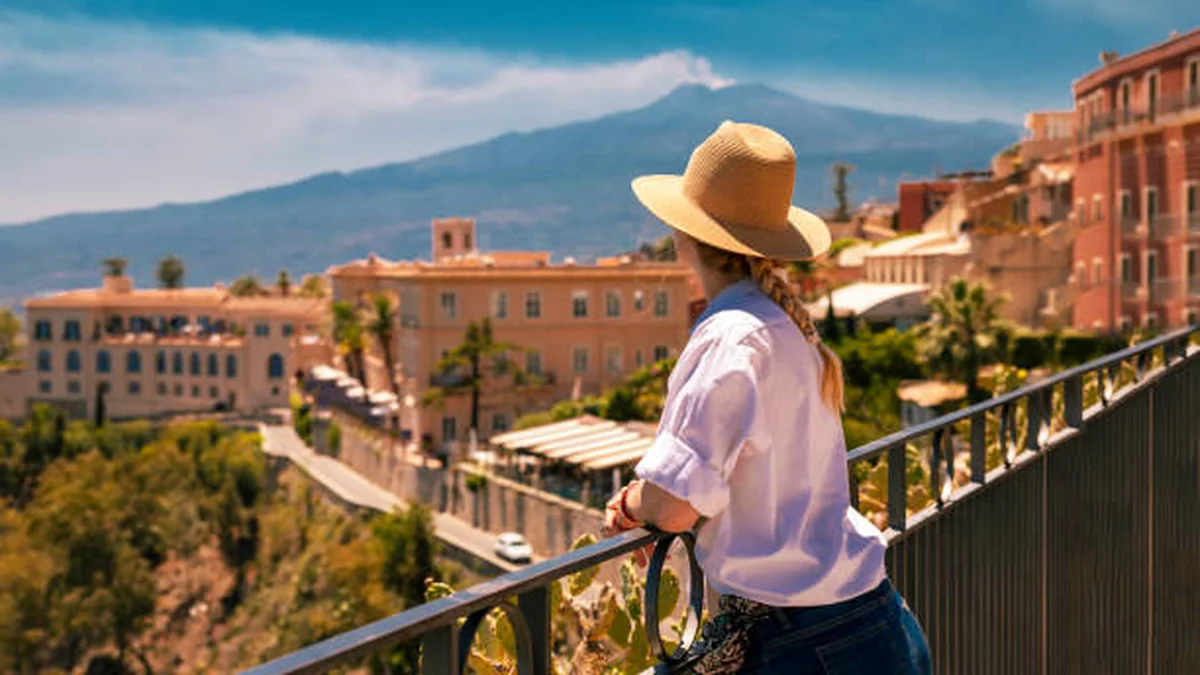
Taormina is Sicily’s classic postcard town — cliffside views, a Greek-Roman theatre with Etna as a backdrop, and a Grand Tour-era resort feel that draws high-end tourists. It’s touristy, and prices reflect that, but the theatre views alone justify a day trip even if you base elsewhere.
Syracuse and Ortigia
Syracuse (Siracusa) was once ancient Greece’s most powerful colony, and it still shows: the Greek Theater hosts performances to this day, and beneath it, the Ear of Dionysius cave is worth the short detour for the acoustics and the legend behind its name. The real draw, though, is Ortigia, the small island old town connected to modern Syracuse — a genuine Baroque piazza, seafront promenade, and none of the polish of Taormina.
The Baroque Southeast — Noto, Modica, Ragusa
After a devastating 1693 earthquake, this corner of Sicily was rebuilt almost entirely in Baroque style using local honey-coloured limestone — now UNESCO-listed as the Val di Noto. Noto is the showcase town, with its pedestrianised main street and a May flower festival. Modica is known for chocolate — its Aztec-influenced recipe, made without conching, is genuinely different from anything else in Italy, and the town’s Dolceria Bonajuto is the oldest chocolate factory in the country. Ragusa and the valley town of Scicli round out what’s often called the Southeast Trio.
The West Coast — Trapani, Erice, Segesta, Selinunte
Trapani is a low-key port town and a good base for the west. Nearby Erice is a hilltop medieval village with sweeping coastal views. History fans should not skip Segesta, a remarkably intact, unfinished Doric temple built around 420 BCE — no roof, unfluted columns — sitting in near-total isolation on a hillside, or Selinunte, Europe’s largest archaeological park, with eight temples in various states of ruin best seen in early morning light. The Saline di Trapani salt flats nearby are worth a sunset visit for the geometric salt pans and resident flamingos.
The Islands — Aeolian and Egadi
The volcanic Aeolian Islands offer real variety in a small area: Lipari is the liveliest with a proper harbour town; Stromboli erupts every 15–20 minutes and offers night hikes to watch glowing lava; Vulcano has mud baths and sulphur springs. The Egadi Islands off Trapani, especially Favignana, are quieter and better suited to a bike-and-beach day than a party scene, with a tuna-fishing history (the traditional mattanza) documented at the old Florio tonnara.
What to Eat in Sicily
Sicilian food is shaped by centuries of Greek, Arab, Norman, and Spanish influence, and it shows in the ingredients — lemons, pistachios, oregano, tomatoes — as much as the techniques.
- Arancini — fried, stuffed rice balls, a Palermo street food staple
- Cannoli — the fried pastry tube filled with sweetened ricotta everyone knows, but noticeably better fresh in Sicily than anywhere it travels to
- Granita — shaved-ice dessert, often eaten for breakfast with a brioche roll, in lemon, coffee, or pistachio
- Modica chocolate — grainy-textured, unconched, distinct from any other Italian chocolate
- Etna DOC wine — mineral-driven reds and whites grown in volcanic soil
Riposo — the Sicilian version of a siesta — is worth planning around. Many shops, restaurants, and museums in smaller towns close between roughly noon and 4:30pm. Do your errands and sightseeing in the morning; treat early afternoon as downtime, especially in summer heat.
Sicily Travel Guide: Sample Itineraries
7 days (tight, hits the essentials): Palermo (2) → Cefalù day trip → Mount Etna (1) → Taormina (1) → Syracuse/Ortigia (2)
10 days (the most common length): Palermo (2) → Cefalù/Madonie (day trip) → Agrigento/Valley of the Temples (1) → Baroque southeast: Ragusa, Modica, Noto (2) → Syracuse/Ortigia (2) → Catania/Etna (2)
14 days (adds the coasts and islands): Palermo (2) → West coast: Trapani, Erice, Segesta (2) → Agrigento (1) → Southeast Baroque towns (2) → Syracuse (2) → Etna/Taormina (2) → Aeolian Islands (3)
Ten days is genuinely the sweet spot for a first visit — long enough to avoid feeling rushed, short enough that you’re not fighting Sicily’s slower travel pace the whole way.
Costs, Safety, and Practical Tips
Sicily is one of Italy’s more affordable regions. Budget travelers can manage on roughly €60–90/day outside peak season (guesthouse or budget hotel, local trattorias, public transport); mid-range travel with a rental car and nicer meals runs closer to €120–180/day; Taormina and the Aeolian Islands in August push costs noticeably higher.
On safety: Sicily is generally safe for tourists, including solo travelers. Its reputation is more historical (organized crime, largely invisible to visitors today) than a current everyday risk. Normal city precautions apply in Palermo and Catania — watch belongings in busy markets, be alert around train stations at night — but violent crime against tourists is rare.
A few things that trip people up:
- Car rental in city centers of Palermo and Catania means dealing with ZTL (limited traffic zones) and steep, narrow streets — many experienced visitors pick up the car on the way out of the city rather than in the center.
- Ferries to the Aeolian and Egadi Islands get cancelled in rough weather, especially outside summer — build a buffer day if island-hopping.
- Cash still matters in smaller towns and markets; not everywhere takes cards.
Discover more destinations and planning tips in our travel guide library.
FAQ SECTION
How many days do you need in Sicily?
Ten days is the most practical length for a first visit — enough to cover Palermo, Etna, the Baroque southeast, and Syracuse without constant rushing. A week works if you narrow your focus to one coast; two weeks lets you add the Aeolian or Egadi Islands.
Is Sicily worth visiting?
Yes — Sicily offers Greek ruins, an active volcano, Baroque towns, and a food culture distinct from mainland Italy, all in one region. It’s less crowded than Rome, Florence, or Venice, though transport takes more planning.
Do you need a car in Sicily?
For most of the island, yes. Trains and buses connect major cities like Palermo, Catania, and Syracuse reasonably well, but reaching smaller towns, wineries, and coastal reserves is far easier with a rental car.
Is Sicily safe to visit?
Generally yes. Violent crime against tourists is rare, and normal city precautions in Palermo and Catania are enough. Sicily’s organized-crime reputation is largely historical and doesn’t reflect the day-to-day experience of visitors.
What is Sicily known for?
Mount Etna, Greek archaeological sites like the Valley of the Temples and Segesta, Baroque towns in the Val di Noto, Arab-Norman architecture in Palermo, and a distinct food scene built around arancini, cannoli, and granita.
What’s the best time to visit Sicily?
Late September to early October offers warm sea temperatures, thinning crowds, and olive harvest season. April–June is a close second for mild weather and blooming landscapes.
Palermo or Catania — which airport should I fly into?
Palermo suits itineraries focused on the west and north coast; Catania is better positioned for Etna, Taormina, and Syracuse. Many two-week trips fly into one and out of the other.
Is Sicily expensive?
It’s one of Italy’s more affordable regions. Budget travelers can manage on roughly €60–90 a day outside peak season; costs rise noticeably in Taormina and the Aeolian Islands during August.