This Australia travel guide exists because Australia is bigger than most people plan for, and that single fact trips up more first-time visitors than anything else. It’s not a country you “do” in a week — it’s a continent, and treating it like a compact European trip is the fastest way to end up exhausted, disappointed, or both.
Australia travel guide quick answer: the best time to visit depends on the region, since seasons run opposite to the Northern Hemisphere (winter is June–August); most visitors need an ETA or eVisitor visa before arrival; and getting between major sights like Sydney, Uluru, and the Great Barrier Reef almost always requires a domestic flight, not a scenic drive. Use this Australia travel guide to plan region by region rather than trying to cover the whole country in one trip.
Australia Travel Guide: Best Time to Visit
Because Australia sits in the Southern Hemisphere, its seasons are flipped. Summer runs December through February, winter June through August — the opposite of what most Northern Hemisphere travelers instinctively expect.
But “best time to visit” isn’t one answer, because the country is too large for one climate. What works for Tasmania in January will roast you in Darwin.
- East coast cities (Sydney, Melbourne, Brisbane): Spring (September–November) and autumn (March–May) hit the sweet spot — warm enough for the beach, mild enough to walk around all day.
- The Great Barrier Reef and tropical north (Cairns, Whitsundays): Visit during the dry season, May through October. The wet season brings humidity, stinger jellyfish in the water, and a real chance of cyclones.
- The Outback and Uluru: Winter (June–August) is genuinely the better call here. Desert summer heat regularly climbs past 40°C (104°F), which turns hiking and outdoor exploring into something closer to an endurance test than a holiday.
- Tasmania: Summer (December–February) gives you the mildest, most reliable weather for hiking and road-tripping.
Quick takeaway: there’s no single “best month” for Australia — match the season to the region, not the other way around. Shoulder season (September–October) is the closest thing to a universal sweet spot, since airfares tend to dip and most regions are comfortable at the same time.
Australia Travel Guide: Getting There and Entry Requirements
Most international flights land in Sydney, Melbourne, Brisbane, or Perth, which also happen to double as the easiest cities to base an initial itinerary around. Direct flights are available from major US gateway cities like Los Angeles and San Francisco, along with Honolulu; travelers from Canada can fly direct from Vancouver. Everyone else typically connects through Fiji, New Zealand, Singapore, or the Middle East.
Before you book anything, sort out entry requirements:
- ETA (Electronic Travel Authority) or eVisitor visa: Required for most short-term visitors from eligible countries and applied for online before departure. Processing is usually fast, but don’t leave it until the airport.
- Working Holiday visa: For travelers aged roughly 18–30 (up to 35 for a handful of countries) who want to work while backpacking. It comes with income requirements and health checks, so start the paperwork months ahead, not weeks.
- Biosecurity rules: Australia is strict about what crosses its border — food, plant material, and wooden items in particular. Declare everything on the arrival card; the fines for skipping this are real and enforced.
Australia Travel Guide: How to Get Around
This is where a lot of first-time itineraries fall apart. Australia’s cities are hours — sometimes days — apart by road, so “we’ll just drive between them” often isn’t realistic.
- Domestic flights are the backbone of most itineraries. Sydney to Cairns, for instance, is a roughly 3-hour flight, but a multi-day drive.
- The Ghan is a genuinely memorable way to cross the interior, running between Adelaide and Darwin through the Red Centre — more of a scenic experience in its own right than pure transport.
- Campervan and car rental make sense for regional trips (the east coast between Sydney and Cairns, or Tasmania), where distances between stops are manageable and the driving itself is part of the appeal.
- Driving the Outback deserves its own note of caution: distances between fuel stops can run into the hundreds of kilometers. Always carry extra water, tell someone your route, and don’t assume you’ll have phone signal.
Australia Travel Guide: Where to Go — Regions and Cities Worth Your Time
Sydney and Melbourne
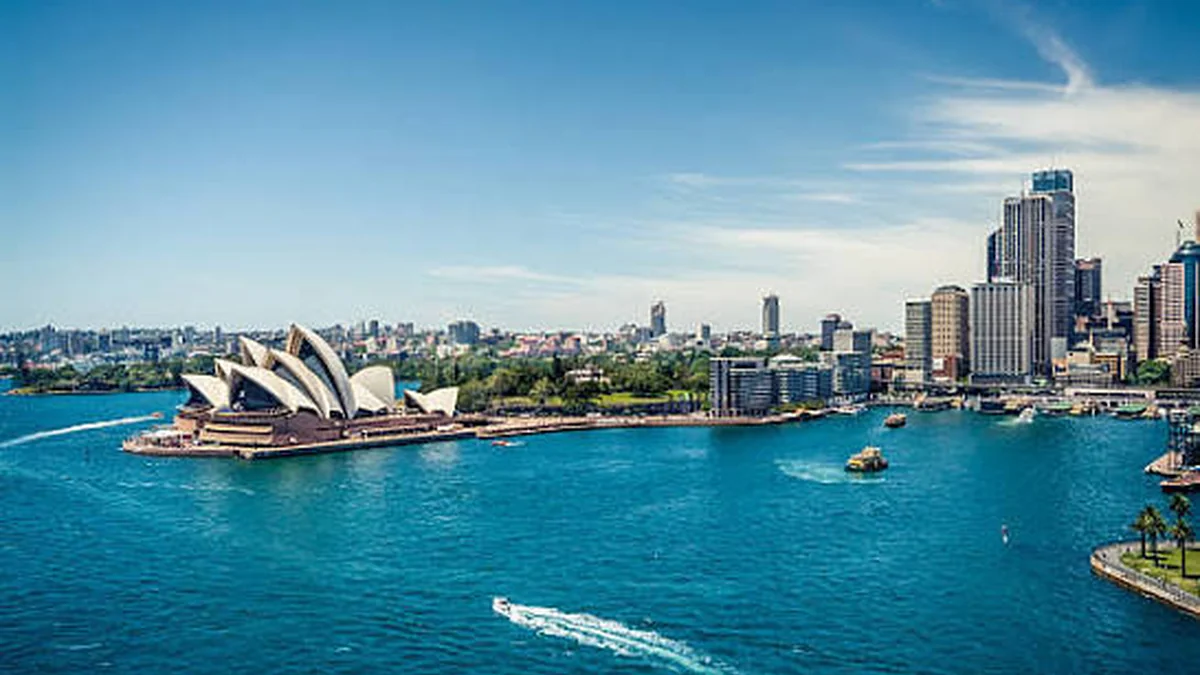
Sydney is the postcard: the Opera House, Harbour Bridge, and Bondi Beach all sit within reasonable reach of each other. Climbing the Harbour Bridge is a genuine bucket-list activity, though it comes at a real cost, so budget for it separately if it’s a priority.
Melbourne trades icons for atmosphere — laneway cafes, street art, and a arts scene centered around places like the National Gallery of Victoria. If Sydney is about the view, Melbourne is about how it feels to wander around. Most first-timers debating “Sydney or Melbourne” are better off doing both if time allows, since they’re different trips, not competing versions of the same one.
The Great Barrier Reef and Cairns
Cairns is the main gateway to the reef, and for good reason — it’s the shortest hop out to the coral. It’s worth being upfront here: rising sea temperatures have caused real coral bleaching in sections of the reef, and pretending otherwise does visitors a disservice. That said, it remains the largest living reef system on the planet, and a well-chosen operator can still put you over spectacular coral and marine life. Ask tour operators directly which reef sections they visit and how recently they’ve assessed coral health — the good ones will have a straight answer.
Uluru and the Red Centre
Uluru is far more than a photo stop. It’s a site of deep cultural significance to the Anangu people, the Traditional Custodians of the land, and the most rewarding way to experience it is with an Indigenous-led tour rather than a self-guided drive-by. Climbing the rock itself has been closed since 2019 out of respect for Anangu wishes — a detail some older guides still get wrong.
Beyond the Obvious
Tasmania is criminally underrated — Hobart’s food scene and the island’s hiking trails reward the extra effort of getting there. Byron Bay draws a laid-back, surf-and-wellness crowd. The Whitsundays offer some of the calmest, most photogenic sailing conditions in the country.
Australia Travel Guide: How Much Does It Actually Cost
Costs swing enormously depending on how you travel. Here’s a realistic breakdown by daily budget, based on typical hostel, food, and transport pricing:
| Travel style | Accommodation | Daily budget (AUD) | What it looks like |
|---|---|---|---|
| Backpacker | Hostel dorm (~30–55 AUD/night) | ~90–130 | Cooking most meals, public transport, limited paid activities |
| Mid-range | Budget hotel/private room | ~200–300 | Some restaurant meals, occasional car rental, a few paid tours |
| Comfort | Hotel | ~400+ | Restaurants daily, private transport, unrestricted activities |
A few cost realities worth knowing upfront: long-haul flights into Australia are rarely cheap, and once you’re there, distances mean transport (especially domestic flights) eats a bigger share of the budget than in more compact destinations. Exchange rates shift, so check a live conversion rather than relying on a number that might be months old by the time you land.
Australia Travel Guide: Safety Tips Most Guides Skip
Australia is, statistically, a very safe country to visit — violent crime against tourists is rare. The real risks are environmental, and they’re the ones generic guides tend to gloss over:
- Sun exposure: The UV index is often higher than visitors expect, even on overcast days. Sunscreen, a hat, and reapplication are not optional extras.
- Water safety: Swim between the red and yellow flags at patrolled beaches. Rip currents are a genuine hazard, not a formality.
- Wildlife: Snakes and spiders exist, but incidents are uncommon if you’re not putting your hands into log piles or under rocks. Watch where you step on bushwalks; that’s most of the precaution needed.
- Outback driving: This is the category that catches out the most travelers. Long stretches with no fuel, no signal, and no towns mean breakdowns can turn serious fast. Carry more water than feels necessary and check your fuel gauge obsessively.
Australia Travel Guide: Sample Itineraries by Trip Length
One week: Focus on one region rather than spreading thin. Sydney (3 days) plus a Great Barrier Reef add-on via Cairns (4 days) is a realistic, satisfying combination without excessive flight time.
Two weeks: Sydney (3 days) → Cairns/Great Barrier Reef (3 days) → Uluru (2 days) → Melbourne (3 days), with travel days built in between each leg.
Three weeks or more: Add Tasmania, the Whitsundays, or a proper east-coast road trip between Sydney and Cairns via Byron Bay. This is the length of trip where hopping between three or four regions starts to feel unhurried rather than rushed.
Australia Travel Guide: Getting Started
Australia rewards visitors who plan around its scale rather than fighting it. Pick two or three regions instead of trying to see everything, build in buffer days for the long distances, and book domestic flights early — prices climb fast as dates approach. From here, the practical next step is locking in your entry requirements and flights, then building your regional itinerary around the season you’re traveling in. Bookmark this Australia travel guide and come back to it as each leg of your trip takes shape.
For more in-depth itineraries and travel advice, see our full travel guide library.
FAQ Section
How many days should I spend in Australia?
A minimum of 10–14 days lets you cover two regions properly — for example, a city plus the reef, or a city plus Uluru — without the trip feeling like a series of airports.
Is Australia expensive to visit?
It can be, mainly due to long-haul flights and the cost of covering large distances internally. Daily costs on the ground are comparable to the US or UK, and backpacker-style travel keeps things manageable.
What is the best time of year to visit Australia?
It depends on the region: shoulder season (September–October) works well nationwide, but the reef is best May–October and the Outback is best June–August.
Do I need a visa to visit Australia?
Most visitors need an ETA or eVisitor visa, applied for online before departure. Requirements vary by nationality, so check the specific category that applies to you.
Is Australia safe for tourists?
Yes, in terms of crime. The bigger risks are environmental — sun exposure, ocean currents, and remote-area driving — all manageable with basic precautions.
What’s the best way to get around Australia?
Domestic flights connect major regions efficiently; car or campervan rental works well for shorter regional routes like the east coast or Tasmania.
Should I visit Sydney or Melbourne first?
Neither is objectively better — Sydney leans toward iconic landmarks and beaches, Melbourne toward food and culture. If time allows, visit both rather than choosing.
Is the Great Barrier Reef still worth visiting?
Yes, though coral bleaching has affected parts of it. Choosing an operator that’s transparent about current reef conditions gives you the best experience.