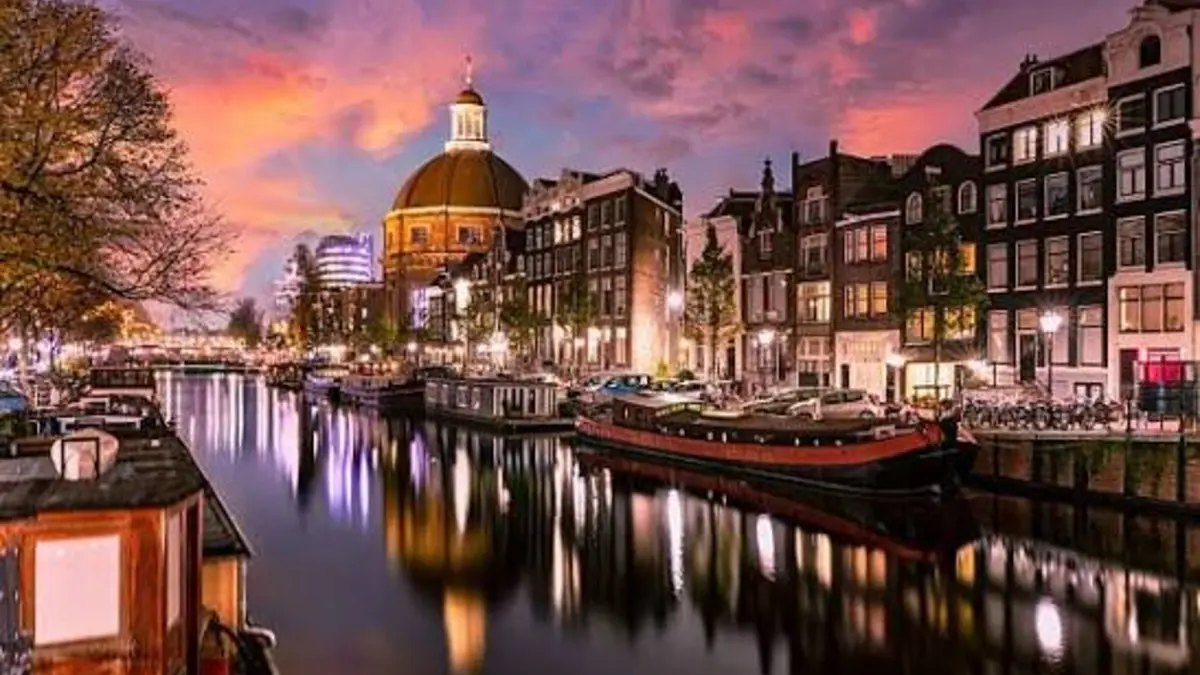
Things to do in Amsterdam range far beyond the postcard clichés — bikes, canals, and a reputation for vice. Spend three days there and you realize that’s the least interesting version of the city.
Amsterdam’s best experiences mix icons with local life: a canal cruise past Brouwersgracht, the Van Gogh Museum and Rijksmuseum, wandering Jordaan and De Pijp, eating stroopwafels warm off the griddle, and a short train ride out to Zaanse Schans. Most trips need three to four days to cover it without rushing.
The city rewards people who slow down. You can hit every major museum in a single exhausting day, or you can spend a morning getting lost in the Jordaan’s quiet courtyards and let the rest of the day organize itself. Both are valid. Here’s what actually deserves your time.
Things to Do in Amsterdam on the Water: The Canal Cruise
Everyone tells you to take a canal cruise, and everyone is right — it’s the one cliché in Amsterdam that earns its reputation. The city was built around roughly 165 canals, and from the water you understand the layout in a way that walking never quite delivers.
Skip the big glass-topped tour boats if you can. Open boats let you actually feel the narrow canals instead of watching them through glass, and smaller operators tend to give a livelier, more personal tour than the large fleet companies. Brouwersgracht is generally considered the prettiest canal in the city and worth requesting on your route if you’re booking a smaller tour.
Book ahead, especially in summer. Cruises sell out, and last-minute bookings usually mean paying more for a worse boat.
Quick takeaway: A basic hour-long cruise runs roughly €15–20 per person. Specialty cruises (wine and cheese, pizza, sunset) cost more but include food and drink in the price.
Museums: The Essential Things to Do in Amsterdam for Art and History
Amsterdam’s museum scene is dense enough that you genuinely have to choose. Here’s how to prioritize.
Anne Frank House
This is the one museum most first-timers feel they need to see, and for good reason — walking through the actual annex where Anne Frank and her family hid during the Holocaust lands differently than reading the diary ever did. The museum tells her story through photos, film, and the original rooms rather than heavy exhibition text, which keeps the experience quiet and personal rather than clinical.
One honest note: because the museum centers on one family’s experience, it doesn’t attempt to cover the broader story of Amsterdam’s Jewish community during the war. That’s a deliberate choice, not an oversight, but it’s worth knowing going in if you want fuller historical context elsewhere.
Tickets are timed-entry only and released in advance online. They sell out weeks ahead in peak season — this is not a museum you can walk up to and buy same-day tickets for.
Van Gogh Museum
The Van Gogh Museum holds the largest collection of his work anywhere in the world, spread across several floors that trace his life from early sketches to the paintings made in his final years. You don’t need to be an art person for this one to land — the way the museum sequences his output makes his development as an artist tangible in a way that a single painting in another museum never could.
Book timed tickets in advance; there’s no walk-up ticket counter. Bag restrictions are strict — lockers are small, so leave large backpacks at the hotel.
Rijksmuseum and Rembrandthuis
If you only have time for one more art museum, make it the Rijksmuseum. It houses centuries of Dutch history and art, including Rembrandt’s The Night Watch, which functions as something like Amsterdam’s answer to the Mona Lisa — everyone stops in front of it. Set aside a full morning; the building itself, extensively renovated, is worth wandering slowly.
For something smaller and more intimate, the Rembrandthuis — the painter’s actual home and studio in the 17th century — gives you a closer, more domestic view of how he lived and worked rather than just what he made.
Quick takeaway: Book all three major museums (Anne Frank House, Van Gogh, Rijksmuseum) online at least a few weeks ahead if you’re traveling in spring or summer. Afternoons tend to be less crowded than mornings.
More Things to Do in Amsterdam Beyond the City Center
The canal belt around Dam Square is what most tourists see and assume is the whole city. It isn’t.
Jordaan and De Pijp
Jordaan is Amsterdam’s most walkable neighborhood for people who want charm without a map full of pins — narrow streets, quiet courtyards tucked behind unremarkable doors, and a concentration of good cafés and small restaurants. It’s also become one of the more popular areas to actually stay in, since it puts you within walking distance of the center without the crowds directly outside your door.
De Pijp, further south, has a different texture: more local, less postcard-pretty, and home to the Albert Cuyp Market along with a strong concentration of Indonesian and other international restaurants.
Amsterdam Noord and the A’DAM Lookout
Take the free ferry from behind Centraal Station across the IJ river to Amsterdam Noord, a former industrial area that’s turned into one of the city’s more interesting pockets for design studios, breweries, and street art. The ferry ride itself, free and frequent, is worth doing just for the view back at the city.
Once you’re there, the A’DAM Lookout gives you a 360-degree view from a sky deck, plus — if you’re up for it — Europe’s highest swing, which lets you swing out over the harbor from about 100 meters up. It’s touristy in the best sense: genuinely fun rather than just photogenic.
Vondelpark rounds this section out as the city’s green lung — good for a slower afternoon, a picnic, or just watching Amsterdam be a normal city rather than a tourist set.
Food and Drink: The Tastiest Things to Do in Amsterdam
Dutch food doesn’t get the international reputation of French or Italian cooking, but it has its own logic, and skipping it is a mistake.
- Stroopwafels — thin waffle cookies with caramel syrup pressed between them, best bought warm from a street stall rather than the packaged supermarket version.
- Poffertjes — small, fluffy pancakes dusted with powdered sugar, usually sold from stalls at markets.
- Frieten (patat) — Dutch-style fries, traditionally served with mayonnaise, or ordered “oorlog” (literally “war”), which mixes mayo, satay sauce, and raw onion.
- Rijsttafel — an Indonesian “rice table” of many small dishes, reflecting the Netherlands’ historic ties to Indonesia and one of the more distinctive dining experiences in the city.
- Hagelslag — chocolate sprinkles on buttered toast, a genuinely normal Dutch breakfast rather than a novelty.
For atmosphere over food, spend an evening in a brown café — small, wood-paneled bars named for walls stained brown by decades of tobacco smoke, now just cozy year-round spots for a beer. They’re free entertainment in the loosest sense: no ticket, no reservation, just a seat and a look at how the city actually socializes.
A Note on the Red Light District
Most guides either skip this entirely or oversell it. Neither is honest. The Red Light District (De Wallen) is a real, legally regulated part of the city built around sex work, along with a cluster of coffee shops, souvenir stores, and a small museum on the history of prostitution. Amsterdam’s small Chinatown sits right at its edge, worth a quick detour if you’re already in the area.
If you’re curious, it’s safe to walk through during the day and reasonably safe at night, though crowded and a little chaotic on weekends. It’s rarely anyone’s favorite part of a trip, but it’s also not the city’s most representative neighborhood — treat it as one stop among many rather than a highlight.
Day Trips: Things to Do Near Amsterdam Worth the Extra Hour
Amsterdam is small enough that some of the best things to do near it are technically not in it.
- Zaanse Schans — a short train and bus ride away, this open-air area of preserved windmills and traditional green wooden houses is the postcard image of the Netherlands most people picture before they arrive.
- Keukenhof — if your visit falls between mid-March and mid-May, this is the tulip garden the country’s spring tourism runs on. It’s only open seasonally, so check dates before building a day around it.
Both are doable as half-day trips if you plan train times in advance.
Planning Your Things-to-Do-in-Amsterdam Itinerary
A few practical decisions shape the whole trip more than any single attraction does.
When to go: Major sights are open seven days a week, so day-of-week matters less than season. Spring (tulip season) and summer bring the heaviest crowds and highest prices. September offers a genuine sweet spot — mild weather, thinner crowds, and shorter museum lines.
Getting around: Walking covers the center easily; most distances feel shorter than they look on a map. For anything further out, renting a bike is the actual local default — it’s how Amsterdammers move through their own city, not just a tourist activity. Public transit (trams, buses, the metro) runs on the GVB network, and a rechargeable OV-chipkaart or contactless card works across all of it.
Should you get the I amsterdam City Card? It bundles free or discounted entry to most major museums and attractions, plus public transit, for a set daily rate. It’s worth it if you’re planning to hit three or more paid attractions per day; if your trip leans more toward walking and cafés than museum-hopping, buying individual tickets usually works out cheaper.
| Approach | Best for | Rough cost |
|---|---|---|
| I amsterdam City Card | Museum-heavy, fast-paced itineraries | ~€65–90/day depending on duration |
| Individual tickets | Slower trips, fewer paid attractions | Varies, often cheaper for 1–2 sights/day |
Budget expectations: A single museum ticket typically runs €20–25. A canal cruise starts around €15–20. A sit-down meal runs €15–30 per person outside of tourist-trap pricing near Dam Square. Card payment is accepted almost everywhere, including small cafés.
Amsterdam isn’t a city that needs a rigid itinerary to work. Book your two or three timed-entry museum tickets in advance, pick one neighborhood to wander without an agenda, and let the canals and cafés fill in the rest.
Want to plan your next adventure? Browse more travel guides and itineraries.
FAQ
How many days do you need in Amsterdam?
Three to four days covers the major museums, a canal cruise, and time to explore a neighborhood or two without rushing. Two days works for a quick first look, but you’ll have to skip a museum or a day trip.
Is Amsterdam expensive?
It’s moderately expensive by European standards — museum tickets run €20–25, meals €15–30. Free activities like the Noord ferry, park time, and neighborhood walking help balance the cost of paid attractions.
Is the I amsterdam City Card worth it?
Yes, if you’re visiting three or more paid attractions per day. If your trip is lighter on museums, individual tickets are usually cheaper.
What food should I try in Amsterdam?
Stroopwafels, poffertjes, Dutch fries with mayo, and rijsttafel (Indonesian rice table) are the essentials. Hagelslag on toast is worth trying for breakfast even though it sounds unusual.
Do I need to book museum tickets in advance?
Yes, for the Anne Frank House and Van Gogh Museum especially — both sell out weeks ahead in spring and summer, and neither sells walk-up tickets on-site.
Is Amsterdam safe at night?
Generally yes, including in the Red Light District, though it gets crowded and loud on weekends. Standard city precautions apply — watch belongings in busy areas and around Centraal Station.
Can you get around Amsterdam without renting a bike?
Yes. The city center is very walkable, and trams and buses cover longer distances. Biking is popular because it’s fast and how locals move, not because it’s required.
What’s the best time of year to visit?
September offers the best balance of good weather and thinner crowds. Spring (April–May) is beautiful for tulip season but busiest and priciest.