Three days in Rome sounds like plenty until you’re standing in Piazza Venezia at 4 p.m. realizing you’ve only crossed off half your list. This city rewards planning more than almost any other in Europe — the sites are close together, but they’re also enormous, and queuing badly can eat an entire morning.
A solid Rome itinerary for 3 days splits the city into three zones: ancient Rome (Colosseum, Forum, Palatine Hill) on day one, Vatican City plus the historic center on day two, and Rome’s piazzas, Trastevere, and Villa Borghese on day three — leaving room for food, rest stops, and getting a little lost.
That’s the shape this guide follows, built from what actually works on the ground rather than a wish list of every landmark in the city.
How Many Days Do You Really Need in Rome?
Three days is the realistic minimum for a first visit that doesn’t feel rushed. You can compress the essentials — Colosseum, Pantheon, Trevi Fountain, Spanish Steps — into a single very full day if you have to, and two days lets you add the Vatican comfortably. But Rome rewards a slower pace than most cities, partly because the metro doesn’t reach half the historic center (it was never built out there, to avoid disturbing archaeological layers underground), so you’re walking almost everywhere.
If you only have one day, skip the Vatican entirely and focus on the ancient core plus a fast loop through the piazzas at sunset. With two days, add Vatican City and cut Trastevere. With four or more days, this itinerary still works as your backbone — just add a day trip to Tivoli or Pompeii, or slow the pace and add the Borghese Gallery and Castel Sant’Angelo, both of which get cut here for time.
Quick Takeaway: Don’t try to see everything. Rome has been inhabited for nearly 3,000 years — nobody sees it all in a weekend, including people who live there.
Where to Stay: Best Neighborhoods for Your Rome Itinerary
Location matters more here than in most cities because so much of your itinerary is on foot.
- Monti — Between the Colosseum and Termini station, walkable to ancient Rome, full of good restaurants and small boutique hotels. The best all-around base for first-timers.
- Centro Storico (near Piazza Navona/Pantheon) — Puts you inside the evening walking loop, but rooms are pricier and streets are noisy at night.
- Trastevere — Charming and food-focused, slightly further from the ancient sites, best if nightlife and restaurants matter more to you than minimizing walking distance.
- Near Termini — Cheaper and well-connected by metro and train, useful if you’re also day-tripping to Florence, Naples, or Pompeii, but less atmospheric.
Whichever you choose, prioritize proximity to a metro stop on Line A or B, or a central spot you’re comfortable reaching on foot after dark.
Day 1: Ancient Rome
Start early — the Colosseum, Roman Forum, and Palatine Hill together take a full morning to half a day, and lines build fast after 9:30 a.m.
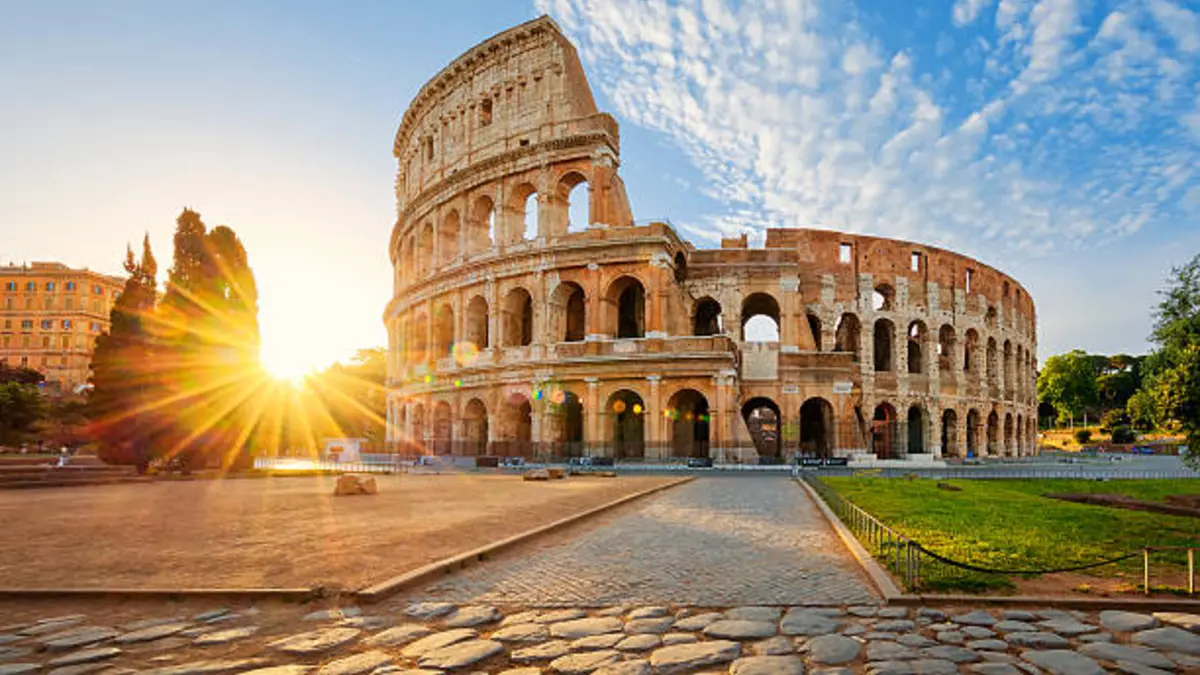
- Colosseum (8:30–11:00 a.m.). Book your timed entry online in advance; standard tickets covering all three sites run around €18 in 2026. If you want the Arena Floor or Underground hypogeum, those sell separately and release exactly 30 days ahead — set a reminder, because the popular slots disappear within minutes.
- Roman Forum & Palatine Hill (11:00 a.m.–1:00 p.m.). Included in the same ticket. Two to three hours is enough to see the Arch of Titus, the Senate House ruins, and the views from Palatine Hill without burning out.
- Lunch in Monti. A quick plate of cacio e pepe nearby resets you for the afternoon.
- Capitoline Hill & Piazza Venezia (2:30–4:30 p.m.). Walk up past the Vittoriano monument, then over to the Capitoline Museums terrace for one of the best free views of the Forum and Colosseum together.
- Evening. Wander toward the Jewish Quarter for an early aperitivo, then dinner nearby — the neighborhood has some of Rome’s best traditional trattorias and is usually calmer than the centro storico.
Quick Takeaway: Book Colosseum tickets the moment you have firm travel dates. This is the one reservation on your Rome itinerary that genuinely sells out.
Day 2: Vatican City & the Historic Center
This is the longest day, so start it early too.
- Vatican Museums & Sistine Chapel (8:00–11:00 a.m.). Pre-book timed entry online. Budget 2–3 hours minimum; the Sistine Chapel gets packed by mid-morning.
- St. Peter’s Basilica (11:00 a.m.–12:30 p.m.). Free entry, but the security line can be long — if you have time, climbing the dome is worth it for the view over St. Peter’s Square.
- Lunch near Borgo (the neighborhood between the Vatican and Castel Sant’Angelo).
- Castel Sant’Angelo (optional, 2:00–3:00 p.m.) if your legs can take it — otherwise skip and rest.
- Evening walk: Piazza del Popolo → Spanish Steps → Trevi Fountain → Pantheon → Piazza Navona. This is the single best evening in Rome and appears, in some form, on nearly every experienced traveler’s itinerary. Time it for sunset near Piazza del Popolo, then let the walk carry you through the historic center as the piazzas light up. Stop at the Trevi Fountain and toss a coin over your left shoulder with your right hand — tradition says it guarantees your return to Rome. (Note: the fountain is drained for cleaning on some weekday mornings, so evenings avoid any disappointment.)
- Dinner in the centro storico, ideally somewhere near Campo de’ Fiori.
Quick Takeaway: The Trevi Fountain now charges a small access fee at certain times as part of a 2026 pilot to manage crowding — check current signage or the comune’s site before you go, since policies here shift year to year.
Day 3: Piazzas, Trastevere & Hidden Gems
A gentler day after two intense ones.
- Morning: Villa Borghese Gardens. Rome’s answer to Central Park, with a lake, trails, and (if you booked months ahead) the Borghese Gallery, home to Bernini sculptures and paintings by Raphael, Titian, and Caravaggio. If you didn’t book, the gardens themselves are free and worth the walk.
- Janiculum Hill or a slow lunch, depending on energy levels.
- Afternoon: Trastevere. Cross the Tiber and get lost in the cobblestone streets deliberately — this is a neighborhood built for wandering, not checklists.
- Evening: Dinner in Trastevere, then an aperitivo at a small neighborhood bar before heading back.
Quick Takeaway: Day 3 is where most itineraries either become memorable or become exhausting. Build in unstructured time — it’s the difference between “seeing Rome” and actually enjoying it.
Rome Tickets & Passes: What’s Actually Worth Buying
This is the section most guides get wrong or skip the math on.
| Pass/Ticket | Approx. 2026 Price | Worth It If… |
|---|---|---|
| Colosseum standard ticket | ~€18 | You’re only visiting the Colosseum/Forum/Palatine Hill and nothing else paid |
| Roma Pass (48hr) | ~€32–38 | You’ll visit at least 2 paid major sites plus use public transport heavily |
| Roma Pass (72hr) | ~€52–63 | Same logic over a 3-day window — do the math against your actual planned visits |
| Rome Tourist Card | Varies | You want Vatican Museums bundled with Colosseum-area sites (Roma Pass doesn’t cover the Vatican) |
The honest rule: add up the entry price of every paid site you’ll realistically visit plus what you’d spend on metro/bus fares, then compare that total to the pass price. For most 3-day itineraries built around this guide, a single major museum plus transit is usually right at the break-even point — it can go either way depending on how much you walk versus ride.
Whatever you choose, book the Colosseum and Vatican Museums as named, timed reservations regardless of which pass you’re using — none of the passes skip the reservation step entirely.
Getting Around, Best Time to Visit & Day Trips
Getting around: Central Rome is dense enough to walk between most sites on this itinerary. The metro (Lines A and B) covers the Colosseum and Vatican but skips much of the historic center by design, since deeper tunneling risks disturbing archaeological layers. Budget comfortable shoes over transit passes for days 2 and 3 especially.
Best time to visit: Late spring (May–early June) and early autumn (September–October) bring warm days without the worst of the summer heat and crowds. Winter is cold but noticeably quieter and cheaper.
Day trips (if you have a 4th or 5th day): Tivoli, about an hour outside the city, pairs Hadrian’s Villa with the fountains of Villa d’Este. Pompeii and Ostia Antica are the other common add-ons, both reachable by train, though either genuinely deserves its own full day rather than a rushed half-day bolt-on.
A few practical notes worth keeping in mind: dress modestly for St. Peter’s Basilica and the Vatican Museums (shoulders and knees covered, no exceptions), keep your bag zipped and in front of you on the metro and around the Colosseum where pickpocketing is a known issue, and don’t schedule anything tight immediately after the Vatican — the security queue is unpredictable.
Final Thoughts
Rome doesn’t reward rigid planning so much as a loose structure with enough slack to wander. Follow the three-zone shape above, book your Colosseum and Vatican tickets the moment your dates are firm, and leave real time unscheduled on day three. That’s the combination that actually works, three days in a row, without anyone in your group hitting a wall by hour six.
Ready to lock in your dates? Start by booking your Colosseum and Vatican Museum time slots — they’re the two reservations that can make or break this itinerary.
Explore more destinations like this in our full travel guide collection.
FAQ Section
Q1: How many days do you need for a Rome itinerary?
Three days is the realistic minimum to see the Colosseum, Vatican, and main piazzas without rushing. Two days works if you cut Trastevere and hidden gems; one day means focusing only on the ancient core.
Q2: Is 3 days enough in Rome?
Yes, for the major landmarks. You won’t see everything — nobody does — but three days covers ancient Rome, the Vatican, and the historic center comfortably, with time to eat well and rest.
Q3: What is the best area to stay in for a Rome itinerary?
Monti is the best all-around base for first-timers: central, walkable to the Colosseum, and full of good restaurants. Trastevere suits travelers who prioritize atmosphere and food over minimizing walking distance.
Q4: Is the Roma Pass worth it?
Only if you’ll visit at least two paid major attractions plus use public transport significantly within your pass window. Add up your planned entry fees and transit costs first, then compare to the pass price.
Q5: Do I need to book Colosseum and Vatican tickets in advance?
Yes. Both sell out, especially in peak season (April–October). Colosseum tickets release 30 days ahead; book Vatican Museums as early as your dates allow.
Q6: Can you walk everywhere in Rome, or do you need the metro?
Most of this itinerary is walkable, especially days 2 and 3. The metro helps for the Vatican and Colosseum from farther-out accommodation, but the historic center itself has limited metro coverage.
Q7: What’s the best time of year to visit Rome?
Late spring (May–early June) and early fall (September–October) offer warm weather with fewer crowds than peak summer.
Q8: What shouldn’t I miss on a first Rome itinerary?
The Colosseum/Forum/Palatine Hill, the Vatican Museums and St. Peter’s Basilica, and the evening walk from Piazza del Popolo through the Trevi Fountain and Pantheon to Piazza Navona — these three anchor experiences appear on nearly every well-planned itinerary for good reason.