Things to do in Fes range from wandering the ancient medina and watching leather being dyed at Chouara Tannery to visiting the world’s oldest university and taking day trips to Meknes, Volubilis, or Chefchaouen. The first time you step through Bab Bou Jeloud, the noise changes before anything else does. Copper hammers, donkey bells, someone calling out “balak” to clear a path — and suddenly you’re inside a city that hasn’t rearranged itself for visitors. That’s the real draw of Fes: it’s not a stage set, it’s a working medieval capital that people still live in.
Fes is Morocco’s oldest imperial city and home to the world’s largest car-free urban area, the medina of Fes el-Bali. Top things to do include wandering the 9,000-plus alleys of the old town, watching leather being dyed at Chouara Tannery, visiting Bou Inania Madrasa and Al Qarawiyyin University, and taking day trips to Meknes, Volubilis, or Chefchaouen.
Why Fes Deserves More Than a Day Trip
Most Morocco itineraries treat Fes as a stopover between Chefchaouen and the Sahara. That’s a mistake. Marrakech gets the crowds and the Instagram feeds, but Fes is where you actually feel the country’s history — founded in the 9th century, it was Morocco’s political and religious capital long before Marrakech existed. The medina, Fes el-Bali, is a UNESCO World Heritage Site precisely because so little of it has changed.
It’s also, honestly, more work to enjoy. There’s no single square to anchor yourself around like Jemaa el-Fna in Marrakech, and the medina’s maze-like layout means you will get turned around at least once. Go in expecting that, and it stops being a problem and starts being the point.
Get Lost (On Purpose) in the Medina of Fes el-Bali
Fes el-Bali is the old walled city, and it’s less a neighborhood than an entire ecosystem — thousands of alleys sorted loosely by trade: one street of dyers, one of woodworkers, one of spice sellers. Unlike Marrakech’s medina, which leans heavily touristic, Fes’s is still primarily where locals shop, pray, and work.
Bab Bou Jeloud, the Blue Gate. This is the medina’s most photographed entrance, and for good reason: cobalt-blue mosaic tiles face outward toward the new city, while the interior side is green, the color associated with Islam. It’s usually the starting point for any walking route into Fes el-Bali.
Place Seffarine. A triangular, unglamorous square that happens to be one of the best free things to do in Fes. Coppersmiths hammer out trays, lanterns, and pots in the open air, right next to the entrance of Al Qarawiyyin’s library — a genuinely useful reminder that this isn’t a museum, it’s a functioning craft economy.
Quick Takeaway: budget at least half a day just for wandering, without a fixed list of stops. A local guide is optional but useful your first time — mainly to avoid backtracking, not for safety.
Fes’s Madrasas and the World’s Oldest University
Fes built its reputation on scholarship, and the buildings that housed it are some of the best examples of Marinid architecture anywhere in Morocco.
Bou Inania Madrasa. Built in the 14th century under Sultan Abu Inan, this is the only Fes madrasa that also functions as a mosque, which is why it’s one of the few religious sites in the country that non-Muslims can enter. The carved cedar, stucco, and zellige tilework in the courtyard are worth the entry fee alone.
Al-Attarine Madrasa. Smaller and quieter than Bou Inania, with comparable — some say finer — tilework. If you only have time for one madrasa, most repeat visitors say Bou Inania edges it out slightly, but Al-Attarine rewards a slower look.
Al Qarawiyyin University. Founded in 859 AD, it’s recognized as the oldest continuously operating institution of higher learning in the world, older than Europe’s medieval universities by a couple of centuries. Non-Muslims can’t enter the mosque-university itself, but you can view the ornate entrance from the street, and the attached library — restored and reopened to visitors in recent years — is worth checking separately.
Chouara Tannery and the Leather Souks
This is the image everyone has seen before they arrive: stone vats of red, yellow, and indigo dye arranged like an artist’s palette, with workers treading hides by hand. Chouara is the largest and most famous of Fes’s three tanneries, though Sidi Moussa and Ain Azliten offer a quieter, far less crowded version of the same process if you’d rather skip the crowds.
Two honest notes: the smell is strong (leather shop staff will hand you mint leaves — use them), and most viewing points are inside working leather shops, meaning you’ll get a sales pitch on the way out. That’s fine as long as you decide beforehand whether you’re buying, so you’re not negotiating under pressure.
Royal Palace, the Mellah & Fes’s Museums
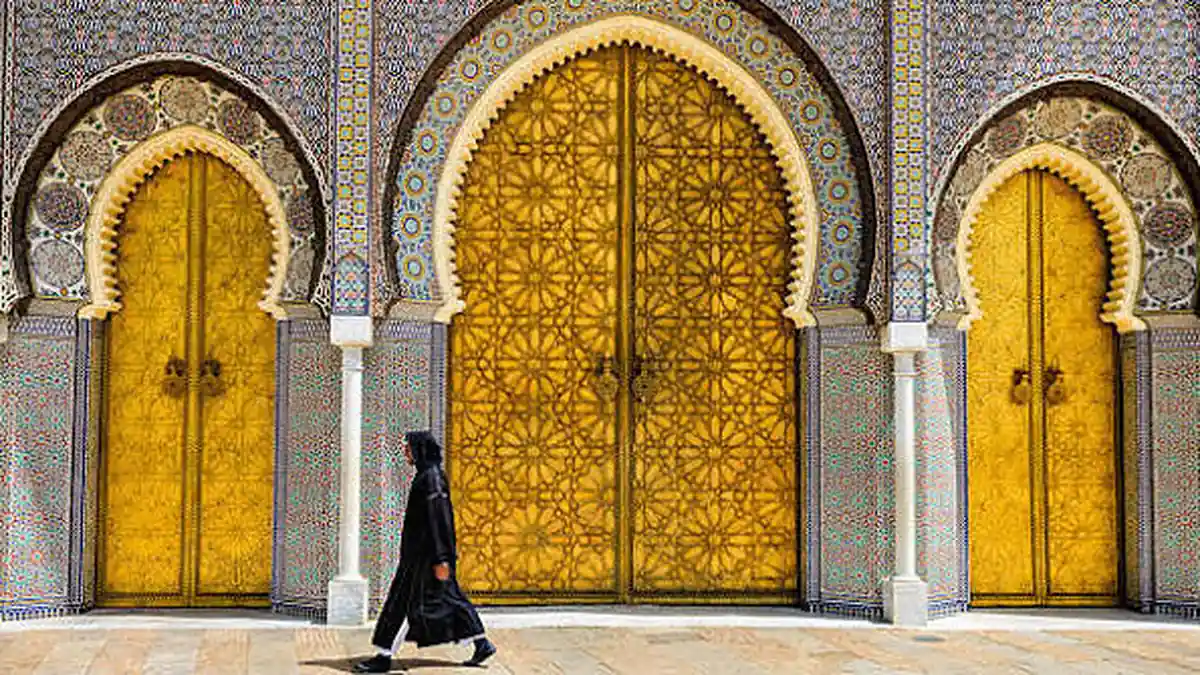
Dar el-Makhzen (Royal Palace). You can’t go inside — it’s still an active royal residence — but the seven brass gates, covered in geometric brasswork, are a destination on their own and one of the better free things to do in Fes.
The Mellah. Fes’s historic Jewish quarter sits just beyond the palace, distinguished by wooden balconies rather than the blank walls typical of the rest of the medina. Very few Jewish residents remain today, but the quarter’s architecture and its old synagogues are a distinct visual break from the rest of the city.
Nejjarine Museum of Wooden Arts and Crafts. Housed in a restored 18th-century inn (funduq), this museum covers Moroccan woodworking through everything from carved doors to musical instruments — and its rooftop café gives one of the better vantage points over the medina, if you ask permission before photographing.
Dar Batha Museum. A former royal palace turned museum of traditional Fassi crafts, most notably the city’s distinctive cobalt-blue pottery. It’s less crowded than the tannery or madrasas, which makes it a good midday reset between busier stops.
Slow Down: Food, Hammams & Gardens
Fes cooking has its own identity within Moroccan cuisine — pastilla (a sweet-savory pigeon or chicken pie), fish tagines with preserved lemon, and mint tea poured from height as a matter of hospitality rather than habit. Riads throughout the medina run cooking classes if you want to take a recipe home rather than just a rug.
A hammam is worth building into your schedule, not squeezing in. Local neighborhood hammams cost a few dollars for a proper scrub; upscale versions inside riads like Riad Laaroussa run closer to a few hours and a higher price tag, but include robes, a private treatment, and a pool. Either version is more physical than a spa day back home — expect a firm scrub, not a gentle massage.
For a break from the medina’s density, Jnan Sbil Gardens near Bab Dekkakin is a genuinely relaxing green space with a pond and old trees, and it’s free.
The Best Day Trips from Fes
Fes sits at the doorway to some of Morocco’s best short excursions, and this is where a lot of guides skimp — here’s what each trip actually gets you.
| Day Trip | Distance/Time from Fes | What You’ll See |
|---|---|---|
| Meknes & Volubilis | ~1 hour / ~1.5 hours | Imperial gates and granaries in Meknes; Morocco’s best-preserved Roman ruins and mosaics at Volubilis |
| Chefchaouen | ~2.5–4 hours | The Blue City’s painted alleys, Plaza Uta el-Hammam, Spanish Mosque viewpoint |
| Ifrane & the Middle Atlas | ~1–1.5 hours | Alpine-style architecture, Barbary macaques near Azrou’s cedar forest, mountain lakes |
| Moulay Idriss Zerhoun | Combined with Volubilis | The hillside shrine town of Fes’s founder, with panoramic valley views |
| Sefrou | ~45 minutes | A quieter, less-visited town known for waterfalls and its cherry festival |
Meknes and Volubilis pair naturally as a single half-day, since they sit along the same route. Chefchaouen is a longer haul and works better as an overnight if your schedule allows it, though plenty of tour operators run it as a (long) single day.
How Many Days Do You Actually Need in Fes?
One full day covers the highlights — the medina, one or two madrasas, and the tannery — but you’ll be moving quickly and skipping the museums. Two days is the sweet spot for most travelers: one day for the medina and its monuments, a second for a slower pace, the Ville Nouvelle, and either a cooking class or hammam. Three days or more only makes sense if you’re using Fes as a base for day trips to Chefchaouen, Meknes, and the Middle Atlas rather than seeing them from Marrakech or elsewhere.
Practical Tips: Scams, Safety & Getting Around
Fes has a reputation, deserved to a point, for persistent unofficial “guides” who’ll offer directions and then expect payment. It’s rarely dangerous, just tiresome. A few things that actually help: download offline maps before you arrive, since GPS works fine even in the narrow alleys; decline help firmly and keep walking rather than engaging; and if you do want a guide, book one through your riad rather than off the street, since official guides carry ID cards and set rates.
Petit taxis handle short trips within the city at metered rates; grand taxis (shared, larger cars) cover longer routes like Fes to Meknes for a few dollars per seat. The medina itself is entirely pedestrian — no cars, though donkeys and handcarts still move goods through it, so stay alert.
Spring (April–May) and autumn (September–November) bring the mildest weather and the smallest crowds. Summer heat inside the medina’s narrow, shade-starved alleys can be brutal; winter nights are cold, and most riads and budget hotels aren’t heavily heated.
Fes vs. Marrakech: Which Should You Visit?
| Fes | Marrakech | |
|---|---|---|
| Atmosphere | Older, more local, less polished for tourists | Livelier, more tourist infrastructure |
| Medina size | Larger, more maze-like (9,000+ alleys) | Smaller, easier to navigate |
| Best for | History, architecture, authenticity | Nightlife, shopping variety, easier logistics |
| Day trips | Meknes, Volubilis, Chefchaouen, Middle Atlas | Atlas Mountains, Essaouira, Ourika Valley |
| Ideal stay | 2 days | 2–3 days |
Neither replaces the other — if your schedule allows both, Fes rewards travelers who want fewer crowds and more texture, while Marrakech is the easier first stop if it’s your only Moroccan city.
Final Thoughts
Fes isn’t a city you tick off a list. It’s one you wander through, get mildly lost in, and leave with a better sense of what pre-modern Morocco actually looked like — tanneries, madrasas, and all. Give it two full days if you can, build in a day trip to Meknes or Chefchaouen, and let the medina slow you down rather than fighting it.
Ready to plan your next trip? See more destination guides for inspiration.
FAQ Section
What is Fes known for?
Fes is known for having Morocco’s oldest and largest medina, its centuries-old tanneries and leather goods, Marinid-era madrasas like Bou Inania, and Al Qarawiyyin University, recognized as the oldest continuously operating university in the world.
How many days do you need in Fes?
Two days is generally enough to see the main medina sights, madrasas, and tannery at a comfortable pace. One day works if you’re short on time, and three or more suits travelers using Fes as a base for day trips.
Is Fes safe for tourists?
Yes, generally. The main risks are persistent unofficial guides and minor scams rather than serious crime. Booking a guide through your riad and declining unsolicited help on the street avoids most issues.
Do I need a guide in the Fes medina?
Not strictly, especially with offline maps downloaded in advance, but a guide saves time on your first visit since the medina’s layout has no clear logic and getting lost is common.
Can non-Muslims enter mosques in Fes?
Generally no, with the exception of Bou Inania Madrasa, which functions as both a mosque and a school and is open to all visitors. Al Qarawiyyin’s mosque itself remains closed to non-Muslims, though its entrance and library can be viewed.
What’s the difference between Fes and Marrakech?
Fes has an older, larger, more locally-lived-in medina and leans into history and craft, while Marrakech offers a livelier atmosphere with more tourist infrastructure and nightlife. Many travelers visit both rather than choosing one.
What is the best time to visit Fes?
Spring (April–May) and autumn (September–November) bring mild temperatures and smaller crowds. Summer gets very hot inside the medina, and winter nights are cold with limited heating in many buildings.
What day trips can I take from Fes?
The most popular are Meknes and Volubilis (often combined), Chefchaouen, and Ifrane with the Middle Atlas cedar forests and Barbary macaques. Moulay Idriss Zerhoun and Sefrou are quieter, less-visited options.