Things to do in Oaxaca range from wandering a UNESCO-listed historic center to day-tripping out to 2,500-year-old ruins — and most visitors only scratch the surface. It’s one of the only cities in Mexico where the ruins, the markets, and the mezcal all feel equally essential — skip any one of them and you’ve missed a real piece of the place.
The best things to do in Oaxaca mix ancient history with daily life: wander the Zócalo and Santo Domingo church, eat at Mercado 20 de Noviembre, tour Monte Albán’s Zapotec ruins, taste mezcal at a family palenque, and day-trip to Hierve el Agua’s petrified waterfalls or the stone mosaics of Mitla.
Things to Do in Oaxaca’s Historic Center on Foot
Start here, and start early — the light on the cantera stone buildings is best before 9am, before the tour groups arrive.
The Zócalo is the obvious anchor. It’s Oaxacan life on display: shoeshine stands, marimba bands, families eating ice cream on benches. Grab a coffee at a café on the edge and just watch for twenty minutes before you do anything else. It’s not a wasted twenty minutes.
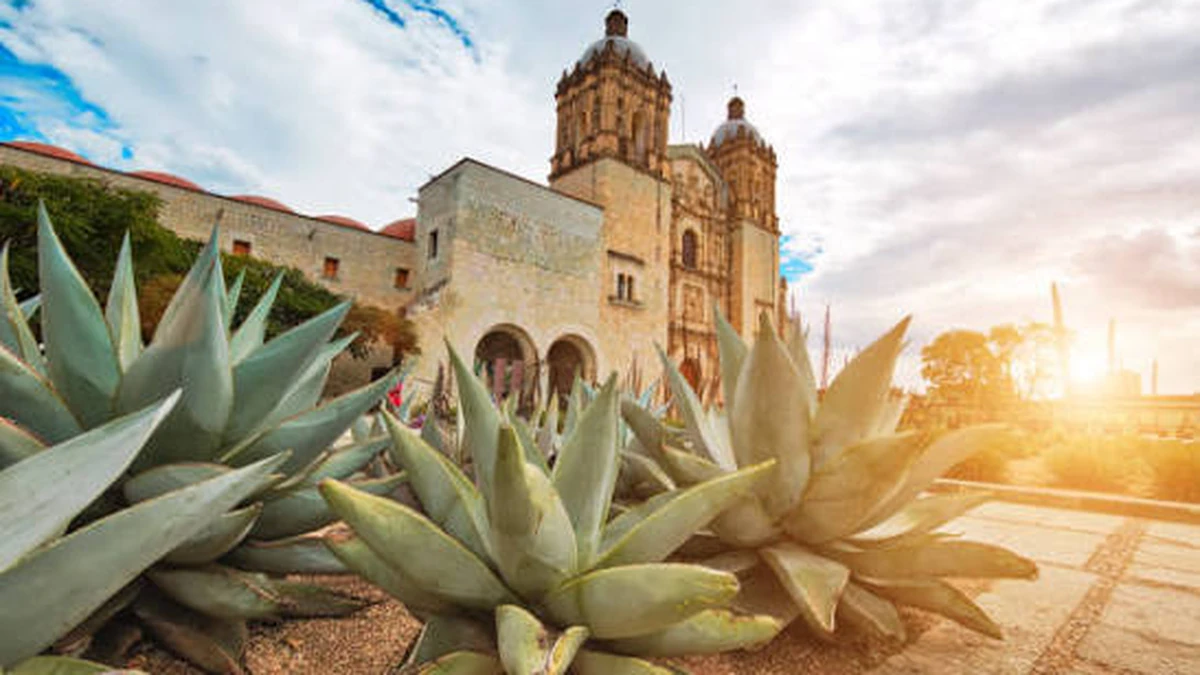
From there, walk north to Templo de Santo Domingo de Guzmán — the Baroque church that shows up on every postcard, and deservedly so. The gold-leaf interior takes your breath away even if you’ve seen a hundred churches in Mexico already. Right next door, the Museo de las Culturas de Oaxaca occupies a former convent and does a genuinely good job explaining Zapotec and Mixtec history before you head to the ruins. Budget two to three hours. Behind the museum sits the Jardín Etnobotánico, a garden of native desert plants that’s only accessible via guided tour — worth booking a slot the same morning.
For a quieter afternoon, cross into Jalatlaco, a cobblestoned neighborhood a short walk east of the center. It has fewer souvenir shops and more street murals, small galleries, and mezcalerías with no line out the door. Many businesses here close on Sundays, so plan accordingly.
The Museo Textil de Oaxaca deserves a slot too — free entry, English signage, and a real education in the state’s weaving traditions before you visit Teotitlán del Valle in person.
Quick takeaway: give the historic center a full day before you do anything else. Everything you’ll want context for later — the mole, the mezcal, the ruins — gets explained here first.
Things to Do in Oaxaca’s Markets: Eat Your Way Through
Oaxaca is regularly called Mexico’s culinary capital, and the two main markets are where that reputation gets earned.
Mercado 20 de Noviembre is the one to build a meal around. Head to the “hall of meat” (pasillo de humo), pick your protein at a butcher stall, and they’ll grill it and walk it over to a communal table where you order tortillas, salsas, and a cold beer separately. It’s chaotic the first time and completely normal by the second visit. Go on a weekday if you want elbow room.
Next door, Mercado Benito Juárez is more of an everyday market — cheese, chocolate, textiles, fresh juice — and a good spot for quesillo (Oaxacan string cheese) and tejate, a foamy pre-Hispanic corn-and-cacao drink you won’t find much outside the state.
While you’re market-hopping, work through the food checklist Oaxaca is known for: tlayudas (the local answer to a pizza — a large crisp tortilla folded over beans, cheese, and meat), the region’s famous moles (there are far more than the popularly cited seven), and, if you’re adventurous, chapulines — toasted grasshoppers, usually served with lime and chile. None of this requires a reservation. A cooking class is worth the half-day if you want to actually take the mole technique home with you.
| Market | Best for | Typical cost |
|---|---|---|
| Mercado 20 de Noviembre | Grilled meats, tlayudas | 100–200 MXN per person |
| Mercado Benito Juárez | Cheese, chocolate, tejate, crafts | 30–80 MXN per item |
Things to Do in Oaxaca for Mezcal Lovers
Oaxaca is mezcal’s home state, and treating a tasting as an afterthought is the single biggest mistake first-time visitors make. Mezcal isn’t a rougher tequila — it’s made differently, often from wild or semi-cultivated agave, and roasted in earthen pits that give it a smokiness tequila never has.
You can taste in the city — there are dozens of mezcalerías around the center — but the better experience is visiting a palenque (small-batch distillery), most concentrated around Santiago Matatlán, about 40 minutes from the city. Watching the roasting, crushing, and copper-pot distillation in person changes how the tasting afterward lands. Many day-trip tours bundle a palenque stop with Teotitlán or Hierve el Agua, which is the efficient way to do it if you’re short on time.
One thing almost nobody tells first-timers: ask your guide to explain the difference between joven, reposado, and añejo mezcal before you start tasting, and sip slowly — it’s stronger than it tastes, and a rushed tasting flight will flatten your afternoon.
Things to Do in Oaxaca on a Ruins Day Trip: Monte Albán, Mitla & Yagul
This is where Oaxaca separates itself from a typical colonial-city visit, and it’s the section most guides shortchange.
Monte Albán is the mandatory stop — a Zapotec capital founded around 500 BC, perched on a flattened mountaintop 20 minutes from downtown, with sweeping views over the whole valley. Hire a certified guide at the entrance (roughly 200–400 MXN for a small group); the on-site signage has faded badly, and the ballcourt and tomb areas make far more sense with narration.
Less crowded but genuinely worth the detour: Mitla, famous for geometric stone mosaics fitted together without mortar — a building technique found nowhere else in Mexico — and Yagul, a hillside site near caves where archaeologists found some of the earliest evidence of domesticated plants in North America, dating back roughly 10,000 years. If Monte Albán feels crowded, Atzompa is a quieter alternative on the same mountain range, best done as a half-day combo.
A realistic day: Monte Albán first thing at 8am opening (2.5–3 hours), lunch back in the city, then either Atzompa in the afternoon for a shorter day, or push out toward Mitla and Yagul if you’re doing a longer valley circuit. Entry fees at most sites run 60–90 MXN ($3–5 USD).
| Site | Distance from Oaxaca City | Entry Fee | Highlight |
|---|---|---|---|
| Monte Albán | 20 min | ~85 MXN | Zapotec capital, ballcourt, tombs |
| Mitla | 45 min | ~85 MXN | Mortar-free stone mosaics |
| Yagul | 40 min | ~60 MXN | Hillside ruins, ancient cave dwellings |
| Atzompa | 25 min | ~85 MXN | Quieter Monte Albán counterpart |
Things to Do in Oaxaca Near Hierve el Agua’s Petrified Waterfalls
Hierve el Agua is one of only two petrified waterfall formations on Earth — the other is Pamukkale in Turkey — and photos genuinely undersell it. Mineral-rich spring water, cold rather than hot despite the name (“the water boils”), has deposited calcium carbonate over thousands of years, building up cliffside formations that look frozen mid-fall, dropping 30 to 50 meters down. Two natural pools, Piscina Grande and Piscina Chica, sit right at the cliff edge — bring a swimsuit.
Go early. Tour groups arrive by 11am, and the site has almost no shade, so a hat and sunscreen aren’t optional in the middle of the day. It’s about 70km (roughly 1.5–2 hours by road) from the city, and most travelers combine it with Mitla on the same road out, since Hierve el Agua sits about 25km past it.
One honest caveat other guides skip: the site occasionally closes for maintenance or local community reasons, so confirm it’s open with your hotel or guide the morning of your trip rather than assuming.
Things to Do in Oaxaca’s Artisan Villages
Oaxaca’s craft traditions aren’t museum pieces — they’re still made and sold in the villages where they originated, and buying directly there gets you both a better price and a story worth telling.
Teotitlán del Valle, about 30km from the city, is the center of Zapotec wool weaving. Family workshops walk you through washing, carding, spinning, and natural dyeing (cochineal insects for red, indigo for blue) before you get to the loom itself. It’s a legitimate half-day activity, not just a shopping stop.
San Bartolo Coyotepec is the source of barro negro, the distinctive matte-black pottery you’ll see all over Oaxaca City’s shops — worth a stop if you’re driving the valley circuit south. And if you’re chasing folk art specifically, look for alebrijes, the brightly painted carved wooden creatures that originated in Oaxaca state, not Mexico City, despite the common assumption.
Quick takeaway: buying crafts in the villages themselves, rather than in city shops, usually means a fairer price for the artisan and a lower price for you.
Planning Things to Do in Oaxaca: Timing, Safety & How Long to Stay
How many days do you need? Three days covers the historic center, one market crawl, and one ruins day trip. Five days lets you add Hierve el Agua, a village day, and a proper mezcal afternoon without rushing. If you can extend further, Puerto Escondido and Mazunte on the Pacific coast are a common add-on, though the drive is a genuine 7–8 hours over mountain roads — flying is worth the extra cost if a beach extension is the plan.
Best time to visit: The dry season, roughly October through April, is the most comfortable window, with late October/early November hitting Día de los Muertos — the single best time to see Oaxaca’s culture at full volume, with elaborate ofrendas and parades, though hotel prices spike and booking ahead is essential. July brings the Guelaguetza festival, a major showcase of regional dance and dress.
Is it safe? Oaxaca is consistently ranked among the safer Mexican states, including for solo female travelers, and most visitors report feeling comfortable walking the historic center at night. Ordinary precautions apply: don’t flash cash, keep valuables out of sight, and be more careful once you’re outside the main tourist zones — some outlying markets and neighborhoods have a reputation for pickpocketing.
Getting oriented: A free walking tour (tip-based, via companies like Oaxaca Free Walking Tour or Guruwalks) on day one is genuinely useful — it gives you the historical and cultural framing that makes everything else on this list land better.
Oaxaca rewards people who slow down. The city is compact enough to walk everywhere, but rich enough — in ruins, markets, and craft traditions — that rushing it defeats the point. Pick two or three of the day trips above rather than all of them, leave room for a slow lunch and an aimless walk through Jalatlaco, and you’ll get a better trip than anyone trying to check every box.
Explore more destinations like this in our full travel guide collection.
FAQ Section
What is Oaxaca famous for?
Oaxaca is known as Mexico’s culinary capital — home to mole, mezcal, and tlayudas — as well as Zapotec and Mixtec archaeological sites like Monte Albán, colonial architecture, and strong indigenous traditions including textile weaving and Día de los Muertos celebrations.
How many days should I spend in Oaxaca?
Three days is enough to cover the historic center, markets, and one ruins day trip. Five days lets you add Hierve el Agua, an artisan village, and a proper mezcal tasting without feeling rushed.
Is Oaxaca safe to visit?
Oaxaca is generally considered one of Mexico’s safer states, including for solo travelers. Standard precautions — avoiding flashing valuables and staying alert outside tourist areas — are recommended, as they would be in any city.
What is the best time of year to visit Oaxaca?
The dry season from October to April is most comfortable weather-wise. Late October into early November coincides with Día de los Muertos, and July brings the Guelaguetza festival — both incredible but busier and pricier.
Can you visit Monte Albán and Hierve el Agua in one day?
It’s possible but rushed, since they’re in roughly opposite directions from the city. Most travelers pair Monte Albán with Atzompa for a half-day, and do Hierve el Agua as a separate day combined with Mitla, which sits on the same road.
Do you need a guide at Monte Albán?
It’s not required, but strongly recommended — on-site signage has faded significantly, and a certified guide (available at the entrance) adds context to the ballcourt, tombs, and layout that’s otherwise easy to miss.
What food should I try in Oaxaca?
Start with tlayudas, at least two of the region’s moles, tejate, quesillo, and — if you’re up for it — chapulines. Mercado 20 de Noviembre is the best single stop to try several at once.
Is mezcal different from tequila?
Yes — mezcal is typically made from a wider range of agave species (often wild-harvested), roasted in earthen pits that give it a smoky flavor, and distilled in small batches, whereas tequila is made only from blue agave and usually distilled at larger scale.