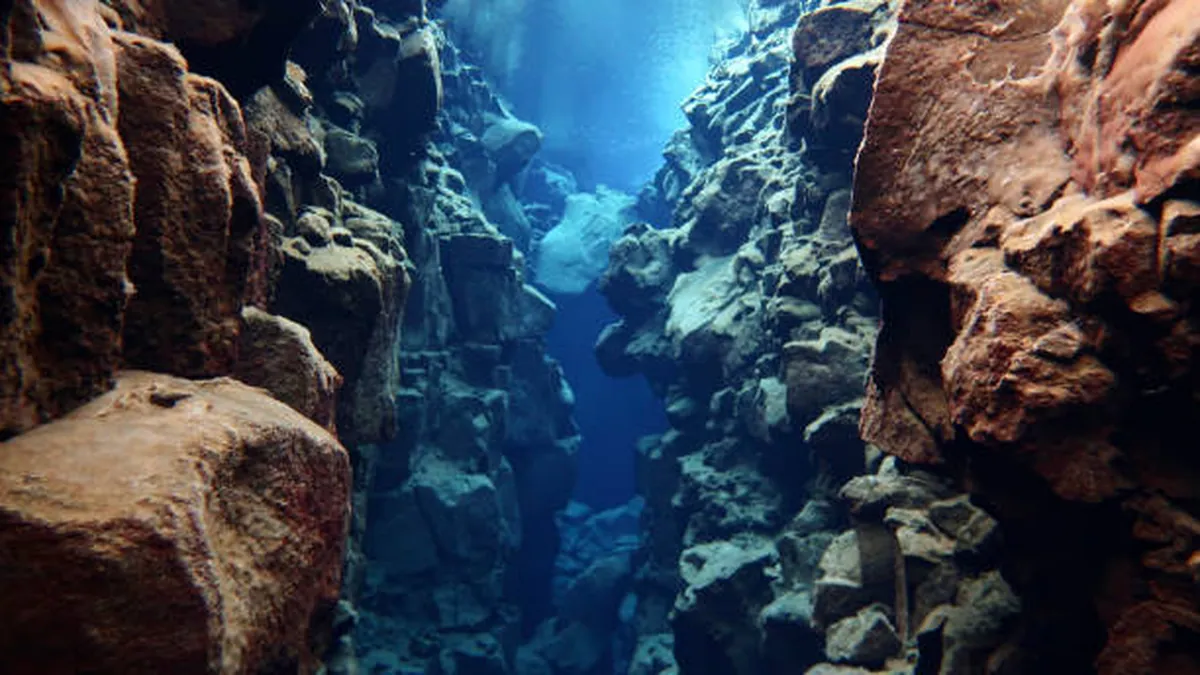
Snorkeling Iceland means one thing above all else: Silfra, a fissure inside Thingvellir National Park where the North American and Eurasian tectonic plates meet. Most snorkeling trips involve warm water, coral, and fish. This one involves none of that — and it’s still one of the most talked-about water activities in the world.
The glacial water at Silfra is filtered through lava rock for decades, giving it visibility past 100 meters and a temperature that hovers between 2–4°C year-round. You wear a full drysuit, so you stay dry and reasonably warm the entire time.
Snorkeling in Iceland: What Is Silfra and Why It’s Unlike Anywhere Else on Earth
Thingvellir National Park sits inside a rift valley — the visible seam where two continents are slowly pulling apart. A 1789 earthquake widened several underground fissures here, and one of them, Silfra, happened to connect with a spring fed by the Langjökull glacier roughly 50km away.
That’s the part that makes Silfra special. The water isn’t just cold glacial meltwater — it spends decades, sometimes closer to a century, being filtered through porous underground lava before it ever reaches the fissure. By the time it surfaces, it’s some of the clearest natural water measured anywhere on the planet. Snorkelers regularly see 100+ meters in every direction, and on a good day the far wall of the fissure looks close enough to touch even when it isn’t.
Thingvellir itself isn’t just a dive site — it’s a UNESCO World Heritage Site and the location of Iceland’s original parliament, Alþingi, founded in 930. So the ground you’re standing on before you even get in the water has its own thousand-year backstory.
Silfra is broken into four connected sections divers and snorkelers move through in sequence: Silfra Crack, Silfra Hall, Silfra Cathedral, and Silfra Lagoon, each with a slightly different feel — narrower and more dramatic near the start, opening into a wider, brighter lagoon by the end.
Quick takeaway: Silfra isn’t a beach activity with better views. It’s a geological one-off — the only place on Earth where you can swim in the literal gap between two continents, in water this transparent.
Snorkeling in Iceland: How Cold Is the Water, Really?
Here’s the number everyone asks about first: the water sits at a constant 2–4°C (35–39°F), all year, regardless of season. It doesn’t warm up in July and it doesn’t get meaningfully colder in January, because it’s spring-fed rather than surface-fed.
That sounds brutal on paper, and it would be — if you were snorkeling in a wetsuit. Nearly every operator requires a drysuit instead, which is a genuinely different experience. A drysuit keeps water off your skin entirely; the cold you feel is more like standing in a walk-in freezer than being submerged in ice water. Most people describe their hands and face — the only exposed skin — as the coldest part, while the rest of their body stays surprisingly comfortable.
People who’ve done it more than once tend to agree it’s uncomfortable in a manageable, short-lived way rather than something that ruins the experience. You’re typically in the water for 30–40 minutes, out of a 2–3 hour tour that’s mostly suiting up, briefing, and the walk to and from the entry point.
Snorkeling Iceland Gear: What You’ll Wear (And What Goes Underneath)
Every reputable operator supplies the same core kit: a neoprene drysuit, hood, gloves, mask, snorkel, and fins. What changes trip to trip is what you wear underneath, and getting this right matters more than any other prep step.
The standard layering order looks like this:
- Base layer — thin thermal underwear (top and bottom), not bulky ski gear. Thin is the goal because you’ll have several more layers going on top.
- Wool socks — ideally two pairs. Feet and hands lose heat fastest, and this is the one layer most first-timers underpack.
- Fleece or wool mid-layer — sweatpants and a hoodie work fine.
- Thermal onesie — usually provided by the operator, worn over your own clothes.
- The drysuit itself — sealed at the wrists and neck, with built-in boots.
A few things worth knowing before you go: don’t wear glasses, since they don’t fit under a snorkel mask (bring contacts if you need correction). Leave your own GoPro in the car if you’d rather not deal with it — most guides take underwater photos of the group and share them afterward, sometimes for free, sometimes for a small fee. And bring a full change of clothes plus a towel, because you will want to get out of every wet layer the moment you’re back at the car park.
Who Can Snorkel Silfra — Safety and Requirements
Silfra snorkeling is more accessible than most people expect. You don’t need any diving certification or prior snorkeling experience — this is different from diving Silfra, which does require a documented drysuit-diving certification within the last two years.
That said, there are real requirements:
- Minimum age is typically 12, and under-18s must be accompanied by a parent or guardian on the same tour
- A minimum weight around 45kg, since drysuits need a certain body mass to seal and function properly
- You need to be a comfortable swimmer — the drysuit makes you buoyant, but you can’t grab onto rocks or edges to steady yourself, and you’ll need to kick and move with some control
- Reasonable physical fitness, since you’re walking in gear and managing yourself in cold water for half an hour
Access itself is tightly controlled. Silfra sits inside a protected national park, so independent snorkeling isn’t a casual option — you either book with a licensed tour operator or apply for a permit directly through the Thingvellir National Park authority, which involves proving you meet the park’s own equipment and safety standards. For nearly everyone, going with a guide is simpler, safer, and only marginally more expensive than doing it independently once gear rental is factored in.
Snorkeling in Iceland: What a Silfra Tour Actually Costs
Pricing is one of the most inconsistent things about Silfra tours online, so here’s a real comparison based on current operator listings:
| Tour Type | Typical Price (per person) | What’s Included |
|---|---|---|
| Meet at Silfra (no transfer) | ~$110–150 (≈15,000–21,000 ISK) | Gear, drysuit, guide, admission fee |
| Reykjavík pickup + transfer | ~$150–200 (≈21,000–28,000 ISK) | Above + round-trip transport |
| Golden Circle combo tour | ~$230–260 | Snorkeling + Geysir, Gullfoss, Thingvellir sightseeing |
| Private/small-group tour | $250+ | Above + dedicated guide, smaller group size |
| Booking via aggregators (Manawa, GetYourGuide) | Often 10–15% below direct listings | Same tour, third-party booking + weather-guarantee rebooking |
A separate Thingvellir National Park admission fee (around 1,500 ISK / $10.50) sometimes applies on top of the tour price, so check whether it’s bundled in before comparing quotes. Booking through an aggregator can save money and often adds a weather-guarantee reschedule policy, but you lose the ability to ask an operator direct questions before paying — worth weighing depending on how flexible your itinerary is.
Step-by-Step — What Happens on Tour Day
- Meet your guide — either at a Reykjavík pickup point or directly at the P5 car park in Thingvellir, about 45–60 minutes from the city via Route 36.
- Get briefed — your guide covers the geology, safety rules, and how the gear works before anyone changes.
- Suit up — base layers first, then the thermal onesie, then the drysuit itself, sealed at the wrists and neck. This step alone can take 20–30 minutes for a group.
- Walk to the entry point — a short walk (often under 200 meters) to the platform where you enter the water.
- Snorkel through the four sections — Crack, Hall, Cathedral, Lagoon — over 30–40 minutes, moving with the gentle current rather than swimming hard against it.
- Exit and dry off — change back into your own clothes, often with hot chocolate or a snack provided.
- Review photos — if your guide took underwater shots, you’ll usually get a link or download before you leave.
Snorkeling in Iceland Beyond Silfra — Other Places to Explore
Silfra gets nearly all the attention, but it isn’t the only underwater site in the country, and a few make for a genuinely different kind of trip:
| Site | Location | Water Temp | What Makes It Different |
|---|---|---|---|
| Silfra | Thingvellir National Park | 2–4°C | The tectonic-plate fissure; clearest and most famous |
| Kleifarvatn | Reykjanes Peninsula | 2–6°C | Geothermal hot springs and volcanic fissures on the lakebed |
| Litla-Á (Little River) | Northeast Iceland | 17–24°C | Geothermally warmed river, shallow, occasional trout sightings |
| Nesgjá | Near Húsavík/Ásbyrgi | Similarly cold | Sometimes called the “Northern Silfra” — a quieter, less-crowded fissure |
| Strýtan (Eyjafjörður) | Near Akureyri | Cold, with warm vents | Hydrothermal chimneys venting ~75°C water — mainly a dive site |
If Silfra’s crowds or price put you off, Nesgjá offers a similar tectonic-fissure experience with far fewer people. If cold water itself is the dealbreaker, Litla-Á is the rare Icelandic spot where you can snorkel without a drysuit at all.
Best Time of Year for Snorkeling in Iceland
Silfra runs year-round, and the water temperature genuinely doesn’t change with the seasons — it’s spring-fed, not surface-fed, so summer visitors get the same 2–4°C as winter visitors. What changes is everything around the water: air temperature, daylight, road conditions, and how crowded the site is.
Summer (June–August) gives you easier driving, long daylight for photos, and warmer conditions for changing in and out of gear — but also the highest crowds, so book ahead.
Winter (November–March) means suiting up in the cold and possibly snow underfoot, but also fewer tourists, a chance at Northern Lights afterward, and a strange, quiet beauty to snorkeling glacial water with snow falling above the surface.
Shoulder seasons (May, September) tend to offer a reasonable middle ground — decent daylight, manageable crowds, and milder air temperatures for the pre- and post-snorkel changing process.
Is Snorkeling in Iceland Actually Worth It?
Most people call it one of the best things they did in Iceland. It’s also fair to say it isn’t universally loved, and being honest about that upfront will save you a disappointing booking.
What people consistently praise: the visibility is genuinely unlike anything else — seeing 100 meters underwater in a fissure between two continents is not an experience you can find anywhere else on Earth. The gentle current does most of the work, so it feels closer to floating than active swimming. And most tours end with hot chocolate and a real sense of “I can’t believe I just did that.”
What trips people up: it is physically uncomfortable, at least briefly — cold hands and a cold face are close to unavoidable even in a good drysuit. The prep time (suiting up) often takes longer than the swim itself, which surprises first-timers expecting more time in the water. And a handful of past snorkelers say once was plenty; it’s a bucket-list tick more than something they’d repeat on a return trip.
If you’re comfortable in cold conditions, reasonably fit, and want an experience you genuinely can’t get elsewhere, it’s worth the cost and the shivering. If cold water or claustrophobia in gear is a real concern for you, Litla-Á’s warm river or simply watching Thingvellir from land are both legitimate alternatives.
Final Thoughts
Snorkeling in Iceland isn’t about marine life or tropical scenery — it’s about visibility, geology, and doing something almost nowhere else on the planet allows. Book with a licensed operator, dress in thin warm layers, and go in expecting a short, cold, unforgettable half hour rather than a leisurely swim. If you’re ready to plan the logistics, compare a couple of operators on price and pickup options before locking in a date, especially in peak summer months when slots sell out early.
For more hiking and outdoor adventure guides, browse our full collection of travel guides.
FAQ Section
Is snorkeling in Iceland worth it?
Most first-timers say yes — the visibility and the novelty of swimming between two continents are hard to replicate anywhere else. It is physically uncomfortable for a short stretch, so it suits people comfortable with cold conditions more than those seeking a relaxing swim.
How cold is the water when snorkeling in Silfra?
A constant 2–4°C (35–39°F) year-round, since it’s fed by filtered glacial spring water rather than surface temperature. A drysuit and thermal layers keep you dry and reasonably warm for the 30–40 minutes you’re in the water.
Do I need diving experience to snorkel in Silfra?
No. Snorkeling requires no certification or prior experience, just comfort in water and reasonable fitness. Diving Silfra is different — it requires a drysuit-diving certification completed within the last two years.
Can I snorkel in Silfra without a guide?
Only with a permit from the Thingvellir National Park authority and your own qualifying gear. For nearly all visitors, booking a licensed tour operator is simpler and often similarly priced once gear rental is included.
What should I wear under a drysuit?
Thin thermal base layers, wool socks (ideally two pairs), and a fleece or wool mid-layer. Keep it thin, since the operator adds a thermal onesie and the drysuit itself on top.
Is Silfra snorkeling safe for beginners?
Yes, for most healthy adults and children over 12. Requirements include a minimum weight around 45kg, basic swimming comfort, and reasonable fitness, since the drysuit adds buoyancy but limits how you can steady yourself in the water.
How long does a Silfra snorkeling tour take?
Around 2–3 hours total, though only 30–40 minutes of that is spent actually in the water — the rest covers briefing, suiting up, the walk to the entry point, and changing afterward.
What’s the difference between snorkeling and diving in Silfra?
Snorkelers stay near the surface with a mask, snorkel, and fins and need no certification. Divers descend deeper into the fissure using scuba gear and must hold a drysuit-diving certification obtained within the last two years.