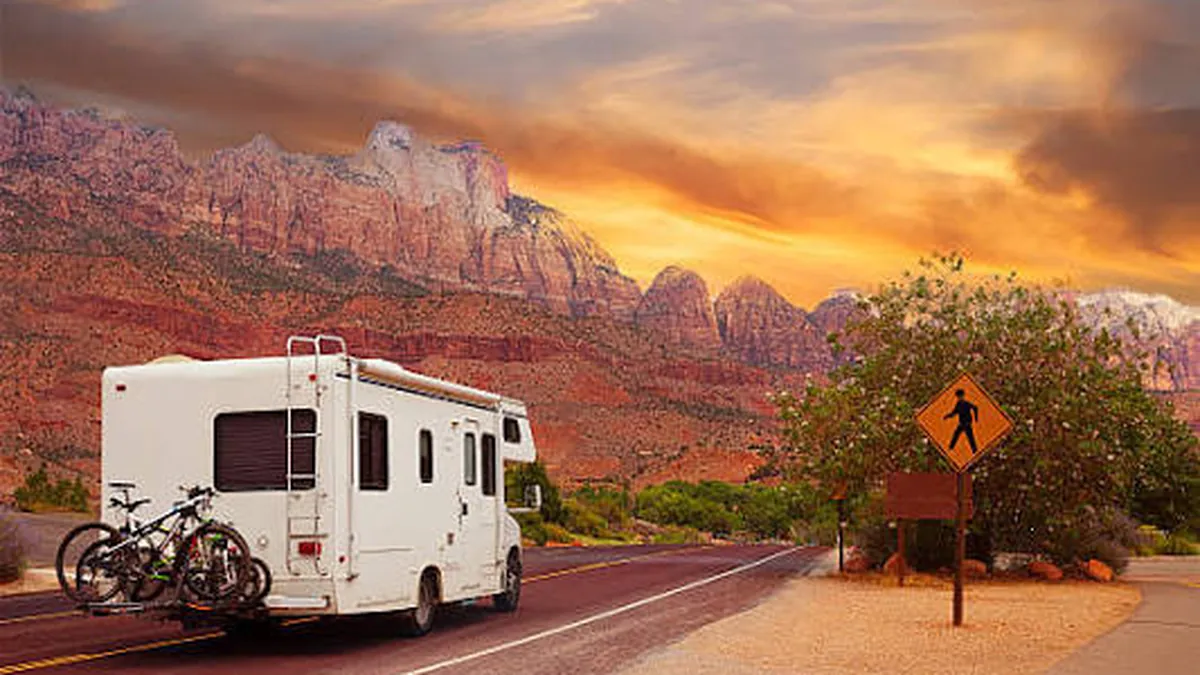
Utah crams five national parks, a dozen ghost-town backroads, and some of the strangest rock formations on the planet into one state you can loop in a week. Most people don’t realize that until they’re standing at Dead Horse Point wondering why nobody told them sooner.
A solid Utah itinerary covers all five national parks — Zion, Bryce Canyon, Capitol Reef, Canyonlands, and Arches — in 7 to 10 days, looping from Salt Lake City through Springdale, Torrey, and Moab. Seven days works if you move efficiently; ten gives you breathing room for longer hikes and slot canyons.
How Many Days Do You Actually Need in Utah?
Seven days is the realistic minimum for the full Mighty 5 loop. You could technically rush it in five, but you’ll spend more time driving than hiking, and Utah’s parks reward slowing down — the best moments (sunrise at Bryce, the Narrows at low water, a quiet stretch of the White Rim Road) don’t happen on a tight clock.
If you have ten to twelve days, add a night in Escalante for slot canyons, a scenic detour down Highway 12, or a side trip to Monument Valley. Twelve days also lets families skip the long hiking days and swap in shorter, stroller-friendly trails.
Quick takeaway: 7 days = full loop, moderate pace. 10 days = same loop plus slot canyons and Highway 12. 12 days = family pace or a Monument Valley add-on.
Best time to go is April–May or September–October. Summer (June–August) means triple-digit heat in the lower desert parks and crowded trailheads; winter closes some high-elevation roads at Bryce and Capitol Reef.
2026 Park Pass and Fee Changes You Need to Know
This is the part most Utah itinerary guides still get wrong or skip entirely, and it changes your budget math.
Starting January 1, 2026, the National Park Service overhauled how passes work. U.S. residents still pay $80 for an annual America the Beautiful pass, but non-U.S. residents now face a separate $250 annual pass tier. On top of that, non-resident visitors aged 16 and up pay a $100 per-person surcharge at 11 of the country’s most-visited parks — and Zion and Bryce Canyon are both on that list.
All passes are now digital through Recreation.gov, so you can buy and store yours on your phone before you land. If your itinerary includes Zion or Bryce Canyon and you’re not a U.S. resident, budget for that surcharge — for a family of four, it adds up fast.
Fee-free days still exist for U.S. residents on select dates throughout the year, but the non-resident surcharge applies regardless of those dates.
| Pass Type | Who It’s For | 2026 Price |
|---|---|---|
| America the Beautiful (resident) | U.S. residents, covers all 5 Utah parks + more | $80/year |
| America the Beautiful (non-resident) | Non-U.S. residents | $250/year |
| Non-resident surcharge | Ages 16+, applies at Zion, Bryce Canyon, and 9 other top parks | $100/person, per park |
| Capitol Reef single-vehicle entry | Anyone, no annual pass | $20, valid 7 days |
The Complete 7-Day Utah Itinerary, Day by Day
This loop starts and ends in Salt Lake City, which has the state’s main international airport. If you’re combining Utah with a Las Vegas trip, flip the order and start from the south instead — either direction works with this same route.
Day 1–2: Salt Lake City to Zion National Park
Fly into Salt Lake City and drive roughly 4.5 hours south to Springdale, the gateway town for Zion. Spend your first full day tackling Zion’s signature hikes. The Narrows — wading up the Virgin River between thousand-foot canyon walls — needs no permit for the bottom-up route and works for most fitness levels.
Angels Landing is the other must-do, but it’s not a walk-up trail anymore. You need a permit, applied for online in advance through a lottery system, since demand far outstrips capacity. The trail itself is a 5.5-mile round trip with about 1,500 feet of elevation gain, hacked into the rock face back in 1926, narrow enough in spots that hikers have to take turns.
Day 3: Bryce Canyon National Park
Two hours from Zion. Bryce’s hoodoos look almost fake in early morning light, so plan to be at Sunrise or Sunset Point at dawn if you can manage it. The Navajo Loop and Queen’s Garden combo trail gives you the full amphitheater experience in about 2–3 hours without an all-day commitment.
Day 4: Capitol Reef National Park
Another 2–2.5 hour drive northeast. Capitol Reef is the smallest and least crowded of the five, and most visitors underestimate it — that’s a mistake. The 9-mile scenic drive covers most of the highlights in an afternoon, and the historic Gifford Homestead sells fruit pies from the orchard planted by Mormon pioneers in the 1880s. If you have an extra half-day, Cathedral Valley’s clay formations are worth the detour on high-clearance roads.
Day 5–6: Canyonlands and Moab
Drive roughly 2.5 hours to Moab, your base for both Canyonlands and Arches. Canyonlands’ Island in the Sky district delivers the state’s best panoramic views for the least effort — most overlooks are a short walk from the parking area. Stop at Dead Horse Point State Park on the way in; it’s not a national park, but the canyon view rivals anything inside one.
Day 7: Arches National Park and the Drive Home
Arches is compact enough to see in a day. Delicate Arch is the iconic shot, but it’s a 3-mile round-trip hike with real elevation gain and almost zero shade — go early or late to avoid both heat and crowds. From Moab, it’s about 4 hours back to Salt Lake City for your flight home.
Where to Stay Each Night
| Night | Town | Why |
|---|---|---|
| 1–2 | Springdale | Walking distance to Zion’s south entrance |
| 3 | Bryce Canyon area / Tropic | Close to sunrise viewpoints |
| 4 | Torrey | Gateway to Capitol Reef, fewer crowds than Moab |
| 5–6 | Moab | Central base for Canyonlands and Arches |
| 7 | Salt Lake City (if flight is early) or drive straight through | Depends on flight time |
Permits, Reservations, and Booking Timeline
Book these before anything else — they sell out faster than lodging:
- Angels Landing permit — apply through the seasonal lottery or day-before lottery; this is the single most common reason people miss out on Zion’s best hike.
- America the Beautiful pass — buy digitally through Recreation.gov before you leave home.
- Fruita Campground (Capitol Reef) — reservations open 6 months in advance and fill quickly in shoulder season.
- Rental car — book 2–3 months out for summer travel; Utah’s rental fleet is smaller than you’d expect for the volume of visitors.
Budget Breakdown: What This Trip Actually Costs
For two U.S.-resident adults, one week, mid-range lodging and a rental car:
- Park pass: $80 (one annual pass covers the whole trip)
- Rental car (7 days, mid-size): $450–650
- Gas: $150–200 for the full loop
- Lodging (6 nights, mid-range): $900–1,400
- Food: $400–600
- Rough total: $1,900–2,900 for two people, excluding flights
Non-U.S. residents should add the $250 non-resident pass or budget for the $100-per-park surcharge at Zion and Bryce Canyon specifically.
Family-Friendly and Alternative-Length Itineraries
With kids: stretch the same route to 8–9 days, swap Angels Landing for the Riverside Walk, and lean on shorter trails like Weeping Rock — a gentle 0.4-mile path in Zion that ends at a dripping alcove. Stroller-friendly stretches exist at Bryce’s rim trails and Arches’ main viewpoints.
5-day version: doable but rushed — most people who’ve done it (including some tour operators) admit it’s better as a “we saw it” trip than a “we experienced it” one. Cut Capitol Reef down to a half-day stop rather than a full overnight.
10–12 day version: add Grand Staircase-Escalante National Monument for slot canyons like Peekaboo and Spooky Canyon, and drive the scenic Highway 12 corridor between Bryce and Capitol Reef instead of the direct route. Some travelers extend south into Arizona for Monument Valley or the Grand Canyon’s North Rim.
What to Pack for a Utah Road Trip
- Water — more than you think; the desert air hides how much you’re sweating
- Sturdy hiking shoes with grip for slickrock (not just trail runners)
- Layers — desert nights drop 30+ degrees from daytime highs
- Offline maps — cell service disappears for long stretches between parks
- Sun protection: hat, high-SPF sunscreen, sunglasses
Final Thoughts
A week in Utah is enough to hit all five national parks without feeling like you’re just checking boxes — as long as you book permits and passes before you land, not after. Start with the Angels Landing lottery and your park pass, then build lodging around the route above.
Ready to lock in dates? Check current park alerts on nps.gov before you finalize your itinerary, since seasonal road closures at Bryce and Capitol Reef can shift your day-by-day order.
Ready to plan your next trip? See more destination guides for inspiration.
FAQ Section
How many days do you need for a Utah road trip?
Seven days covers all five national parks at a comfortable pace. Five days is possible but rushed. Ten to twelve days lets you add slot canyons, Highway 12, and Monument Valley without cutting other stops short.
What is the best route for a Utah national parks itinerary?
A loop from Salt Lake City through Zion, Bryce Canyon, Capitol Reef, Canyonlands, and Arches works well because it minimizes backtracking. Starting from Las Vegas instead works too — just run the loop in reverse.
Do you need a permit for Angels Landing?
Yes. Since permits became mandatory, hikers must apply through a seasonal or day-before lottery on recreation.gov. It’s the most commonly missed reservation in a Utah itinerary.
How much does the Utah national parks pass cost in 2026?
U.S. residents pay $80 for an annual America the Beautiful pass. Non-U.S. residents pay $250 for the annual pass, or face a $100 per-person surcharge at Zion, Bryce Canyon, and nine other top parks if they skip the annual pass.
Is Utah good for a family road trip?
Yes, especially at 8–9 days with shorter trails like Weeping Rock and the rim walks at Bryce Canyon. Stroller-friendly sections exist at several main overlooks.
Should I start my Utah itinerary in Salt Lake City or Las Vegas?
Salt Lake City puts you closer to Arches and Canyonlands first; Las Vegas puts you closer to Zion first. Either works — pick based on your flight options and whether you want to end near a bigger city for a flight home.
What’s the best month to visit Utah’s national parks?
April–May and September–October offer the mildest temperatures and fewer crowds than summer, while avoiding winter road closures at higher elevations.
Can you see all five Utah national parks in one week?
Yes, a 7-day loop is the standard way most travelers cover Zion, Bryce Canyon, Capitol Reef, Canyonlands, and Arches without over-scheduling driving days.