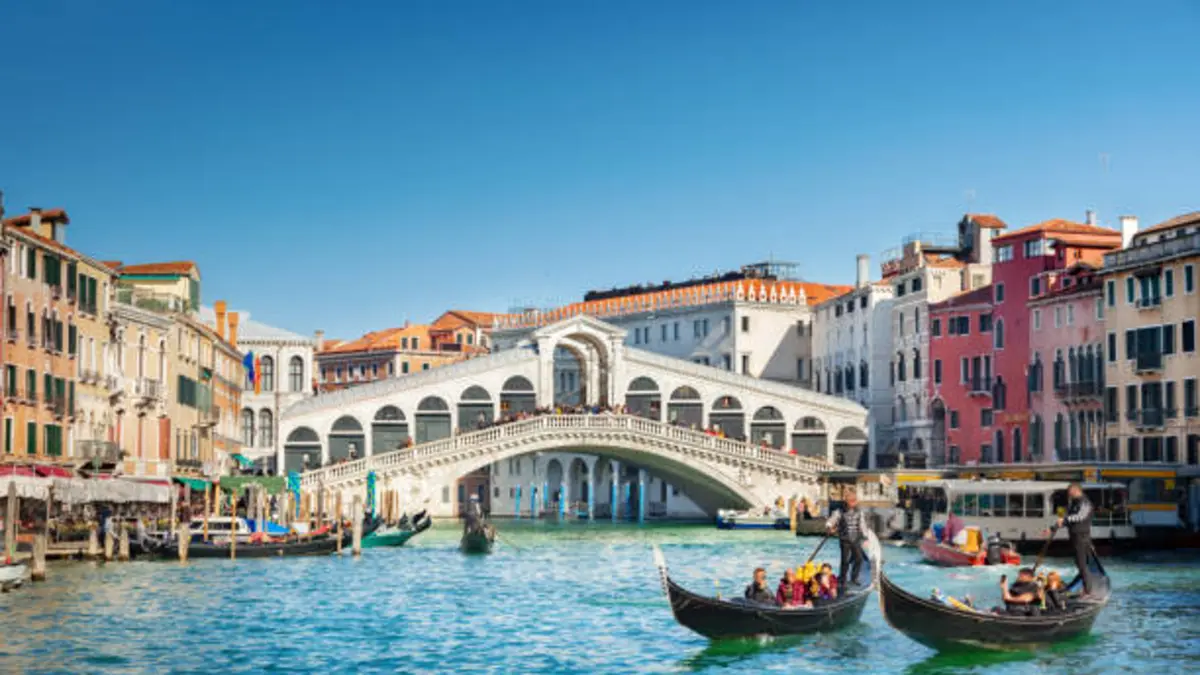
The first time you step off the vaporetto and see the Grand Canal open up in front of you, you’ll understand why people get precious about this city. Venice doesn’t have cars, doesn’t have straight lines, and doesn’t really care about your schedule. Three days is enough to fall for it properly — as long as you plan the days in the right order.
3 days in Venice is enough time to see St. Mark’s Square, Doge’s Palace, and the Rialto Bridge, wander Cannaregio and Dorsoduro, and take a half-day trip to Murano and Burano. It’s tight for the islands and top sights both, but doable if you start early and skip the midday crowds around San Marco.
Is 3 Days Really Enough for Venice?
Short answer: yes, for a first visit. Venice’s historic center is small — you can walk from one end to the other in under an hour. A single day only gets you the highlights with a crowd of cruise-ship day-trippers breathing down your neck. Two days is workable but rushed. Three days gives you room to see the big three sights, get properly lost in the back canals of Cannaregio or Dorsoduro, and still fit in Murano and Burano without feeling like you’re running a marathon.
If you’re stitching Venice into a longer Italy trip — Rome, Florence, Venice in ten or fourteen days — three days here is close to the sweet spot. Locals and long-time visitors agree on one thing: the city rewards people who slow down, not people who try to see everything.
Quick takeaway: 3 days = enough for the essential sights + one island day trip + real downtime. Don’t try to add a fourth island or a day trip to Verona unless you’re willing to cut something else.
Where to Stay: Picking the Right Sestiere
Venice is divided into six historic districts, or sestieri. Since the whole city is walkable, “where to stay” is really about vibe and noise level, not distance.
| Sestiere | Best for | Trade-off |
|---|---|---|
| San Marco / San Polo | First-timers, being near everything | Busiest, priciest |
| Dorsoduro | Quiet evenings, art lovers | Slightly farther from the station |
| Cannaregio | Local feel, better value | A bit more walking to San Marco |
| Castello | Space, fewer tourists | Less central for island boats |
Best for first-timers: San Marco / San Polo
You’ll be steps from St. Mark’s Square, the Doge’s Palace, and the Rialto Bridge. Expect to pay a premium for that convenience, and expect crowds outside your front door most of the day.
Best for quiet evenings: Dorsoduro
Home to the Peggy Guggenheim Collection and the Accademia, Dorsoduro empties out at night in a way San Marco never does. Good base if you want to actually sleep.
Best for value: Cannaregio
This is where a lot of Venetians actually live. You’ll find better-priced trattorias, the Jewish Ghetto, and a 15–20 minute walk (or one vaporetto stop) to the main sights.
Book St. Mark’s Basilica, the Doge’s Palace, and any skip-the-line tickets before you land — availability tightens up fast in shoulder and peak season.
Day 1: Grand Canal, San Marco & Your First Cicchetti
Start on the water. If you arrive by train, walk straight from Santa Lucia station to the vaporetto stop out front and ride line 1 down the Grand Canal — it’s the cheapest gondola-adjacent experience in the city, and it doubles as your orientation tour.
Morning: Check into your hotel, then head toward Piazza San Marco. Go before 9am if you can; this square gets uncomfortably packed by mid-morning.
Midday: Tour St. Mark’s Basilica (reserve a slot in advance — it closes early and lines move slowly without one) and the Doge’s Palace. A combined ticket usually covers both plus the Correr Museum.
Afternoon: Walk the quieter route from San Marco toward the Rialto Bridge instead of the main thoroughfare — you’ll hit fewer souvenir shops and more actual Venice.
Evening: Do a cicchetti crawl. These small-plate Venetian bar snacks — think baccalà mantecato on crostini, or fried polenta bites — are cheaper and more fun than a sit-down dinner, and every bacaro (wine bar) has its own specialty. Finish with a drink somewhere that isn’t directly on the piazza; you’ll pay a “view tax” of several extra euros for a spritz there.
Day 2: Rialto, Art & the Backstreets
Morning: Walk the Rialto Market before 9am while the produce and fish stalls are still setting up and the crowds haven’t caught up.
Midday: Cross the Rialto Bridge, then choose your own adventure — art lovers should head to the Gallerie dell’Accademia or the Peggy Guggenheim Collection in Dorsoduro; history lovers can add the Scuola Grande di San Rocco.
Afternoon: Wander Dorsoduro’s back lanes near Campo Santa Margherita, or duck into Cannaregio near the Jewish Ghetto — both feel dramatically less touristy than San Marco, sometimes just a five-minute walk away.
Evening: Cross the Accademia Bridge at sunset for one of the best Grand Canal views in the city, then find dinner somewhere off the main tourist strip in San Polo or Dorsoduro.
Optional add-on: A gondola ride is genuinely worth doing once — prices are standardized citywide (no need to book ahead), and sunset or after-dark rides are quieter and more atmospheric than midday ones.
Day 3: Murano, Burano & One Last Wander
Morning: Take the vaporetto out to Murano for glassblowing demonstrations and glass shopping, then continue to Burano for its famously candy-colored houses and lace-making history. Budget a half day for both islands together; if you only have time for one, Burano photographs better and feels less commercial.
Afternoon: Back in Venice, use your remaining hours for whatever you missed — St. Mark’s Campanile for a bell-tower view, a boat out to San Giorgio Maggiore, or simply more aimless walking, which is honestly one of the best things to do here.
Evening: Save your nicest dinner for the last night, and take one final night walk to St. Mark’s Square — it’s genuinely a different, calmer place after 9pm when the day-trip crowds are gone.
Getting Around Venice: Vaporetto, Walking & Water Taxis
There are no cars in historic Venice, and that’s a feature, not a bug. Here’s how you’ll actually get around:
- Walking — This is the default. Venice is small enough that most sights are 15–20 minutes apart on foot.
- Vaporetto (water bus) — A single ticket costs around €9.50 and is valid for 75 minutes of travel. If you’ll ride more than twice a day, a multi-day pass (roughly €45 for 3 days) pays for itself and includes unlimited rides to Murano and Burano.
- Alilaguna — The dedicated airport boat line from Marco Polo Airport, with three routes serving different parts of the city; a one-way ticket runs about €15 and isn’t covered by the standard vaporetto pass.
- Traghetto — A cheap, no-frills gondola-style ferry that shuttles locals across the Grand Canal at a handful of points where there’s no bridge.
- Gondola — Purely a scenic/romantic experience, not real transport, with citywide standardized rates.
Google Maps’ walking directions can be unreliable in Venice’s maze of alleys and dead ends — a paper map or an offline app built for the city works better.
The 2026 Venice Access Fee — What You Actually Need to Pay
This is the part of planning a Venice trip that’s changed the most in the last couple of years, and it trips up a lot of first-time visitors.
Since 2024, Venice has charged a day-tripper entry fee (officially the Contributo di Accesso) aimed at visitors who come for the day without staying overnight. In 2026, it applies on 60 specific peak days between April 3 and July 26 — mostly Fridays through Sundays, plus a few holiday stretches — from 8:30am to 4:00pm.
- €5 per person if you register at least 4 days before your visit
- €10 per person if you book closer to your travel date
- Applies only to the historic center (centro storico) — Murano, Burano, Lido and the other lagoon islands are excluded
- Free/exempt: children under 14, overnight guests staying anywhere in the Venice municipality (including Mestre and Marghera), residents, students, and people traveling for medical or professional reasons
Here’s the part that surprises people: even if you’re staying overnight and therefore don’t owe the fee, you still have to register online and get an exemption QR code, or risk a fine during a spot check. Overnight guests pay a separate, much smaller nightly tourist tax instead (roughly €1–5 per person, per night, capped at the first five nights), which is usually added directly to your accommodation bill.
Registration happens on the official portal, cda.ve.it, where you select your travel date, indicate whether you’re a day-tripper or overnight guest, and receive a QR code by email to keep on your phone.
Quick takeaway: If you’re staying 3 nights in Venice, you almost certainly won’t pay the access fee itself — but you do need to register for your exemption if your trip falls on one of the 60 listed dates.
What to Eat in Venice (Beyond the Tourist Menus)
Venetian food leans hard on the lagoon and the sea. A few things worth seeking out over three days:
- Cicchetti — Venice’s answer to tapas: small toasts and bites served at neighborhood bacari, usually eaten standing up with a glass of wine.
- Baccalà mantecato — Whipped salt cod, usually served on crostini or spread on toast.
- Sarde in saor — Sweet-and-sour marinated sardines, a genuinely old Venetian recipe.
- Fritto misto — Mixed fried seafood, often served in a paper cone from a hole-in-the-wall counter.
- Spritz — The Aperol spritz was practically born in this region; expect to pay noticeably more for one sitting directly on Piazza San Marco than a few streets away.
Restaurants near the major sights tend to be the most overpriced and least memorable. Walk two or three streets away from St. Mark’s Square or the Rialto Bridge and quality goes up while prices come down.
How Much Does 3 Days in Venice Cost?
Costs vary a lot by season and hotel choice, but as a rough framework per person, per day (excluding flights):
- Budget: €80–120/day — hostel or budget hotel, cicchetti and casual trattorias, vaporetto pass
- Mid-range: €150–250/day — 3-star hotel, mix of casual and sit-down meals, one paid attraction per day
- Higher-end: €300+/day — boutique hotel or B&B on the Grand Canal, guided tours, a gondola ride, fine dining
Add roughly €5–10 for the access fee if it’s not covered by your accommodation, and factor in skip-the-line tickets for St. Mark’s Basilica and the Doge’s Palace, which are worth the small premium in peak season.
Quick Packing & Etiquette Notes
- Dress code: St. Mark’s Basilica enforces a modest dress code — shoulders and knees covered, no exceptions, even in summer heat.
- Footwear: Comfortable, broken-in walking shoes matter more here than almost anywhere else in Italy — expect 6–8 km of walking on uneven stone most days.
- Water: Bring a reusable bottle; the city has public water fountains (nasoni) all over the historic center.
- Accessibility: Venice has hundreds of small bridges with steps, which makes it genuinely difficult for wheelchair users or anyone with mobility issues — some vaporetto routes and specific bridge ramps help, but plan routes in advance.
3 days in Venice won’t let you see every corner of the city, but it’s enough to understand why people keep coming back. Nail the timing — early mornings at the big sights, wandering in the afternoons, one island day trip — and you’ll leave with the version of Venice that doesn’t feel like a theme park.
Explore more destinations like this in our full travel guide collection.
Frequently Asked Questions
Is 3 days enough time in Venice?
Yes, for a first visit. Three days lets you see the major sights, explore quieter neighborhoods, and take a half-day trip to Murano and Burano without feeling rushed.
Do I need to pay to enter Venice in 2026?
Only if you’re a day-tripper visiting on one of the 60 designated peak days between April 3 and July 26, 2026, between 8:30am and 4pm. Overnight guests are exempt from the fee but still need to register online.
What’s the best area to stay in Venice for 3 days?
San Marco or San Polo for convenience to the main sights, Dorsoduro for quieter evenings, or Cannaregio for better value and a more local feel.
How do you get around Venice?
Mostly on foot, supplemented by the vaporetto water bus network. There are no cars in the historic center, and a multi-day vaporetto pass is worth it if you’ll ride more than a couple of times a day.
Is a gondola ride worth it?
Most first-time visitors say yes, once — treat it as a scenic experience rather than transport, and consider a sunset or evening ride for a quieter, more atmospheric trip.
Should I visit Murano and Burano on a 3-day trip?
If you can spare half a day, yes — Burano’s colorful houses and Murano’s glassblowing are worth the vaporetto ride, but don’t sacrifice a full day of your three to it.
How much does the Venice Access Fee cost in 2026?
€5 per person if booked at least 4 days ahead, or €10 if booked closer to your travel date. It applies only to day-trippers on specific peak dates, not to overnight guests.
What should I avoid doing in Venice?
Avoid Piazza San Marco between roughly 10am and 4pm if you want to actually enjoy it, avoid restaurants directly facing major landmarks, and don’t rely solely on Google Maps for walking directions — the app frequently struggles with Venice’s alleys.