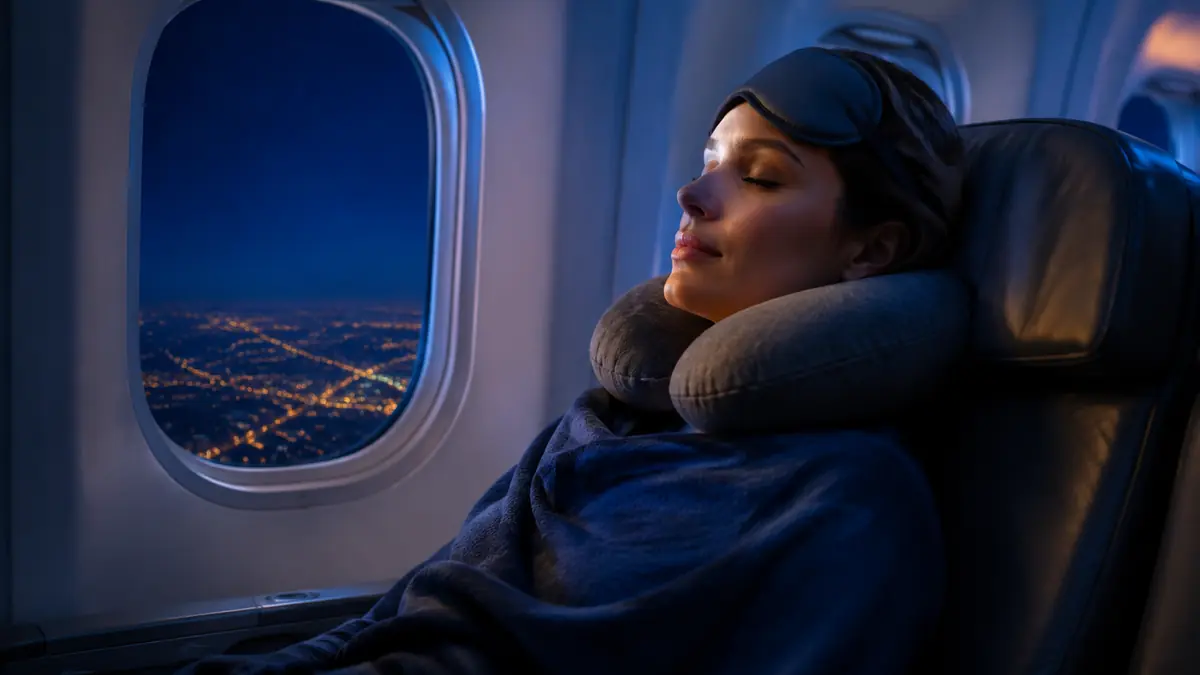
An overnight flight can save valuable daytime hours, but arriving after a poor night’s sleep may leave you exhausted, irritable, and unable to concentrate. That tradeoff is exactly what makes a red eye flight appealing to some travelers and difficult for others.
A red eye flight is a commercial flight that departs late at night and arrives the following morning. Passengers sleep—or attempt to sleep—during the journey. The name refers to the tired, bloodshot eyes commonly associated with overnight travel and insufficient rest.
Understanding how these flights affect sleep, choosing the right seat, and preparing before departure can make the experience considerably more comfortable.
What Is a red eye flight?
A red-eye is an overnight passenger flight scheduled to take off late in the evening and land early the next morning. Although there is no universal airline definition, departures commonly occur between 9 p.m. and 1 a.m., with arrival scheduled for the early morning.
The route is often too short to provide a complete night’s sleep. A flight may last five or six hours, but boarding, meal service, announcements, cabin lighting, turbulence, and preparation for landing reduce the actual sleeping window.
A familiar example is an overnight flight from the West Coast of the United States to the East Coast. A traveler might leave Los Angeles or San Francisco around 10 p.m. and reach New York, Boston, or Washington, D.C., the next morning.
The time-zone difference makes these schedules possible. Passengers travel east while the local clock advances several hours, producing an early-morning arrival even when the time spent in the air is relatively short.
Why is it called a red-eye?
The expression comes from the physical appearance of tired passengers after traveling through the night. Sleep deprivation, dry cabin air, prolonged screen use, and contact lenses can contribute to irritated or bloodshot eyes.
The name describes the schedule rather than a particular aircraft, airline, fare class, or route. A flight does not need to cross several time zones to qualify; it simply needs to operate overnight and arrive the following morning.
Red-eye flight versus an ordinary overnight flight
The terms are frequently used interchangeably, but there can be a subtle distinction.
A long-haul overnight service lasting ten or more hours may give passengers enough time for a substantial sleep period. A traditional red-eye is often shorter, making it difficult to obtain the seven or more hours of sleep many adults normally need.
| Flight type | Typical schedule | Common characteristic |
|---|---|---|
| Red-eye | Late-night departure, early-morning arrival | Sleeping window is usually limited |
| Long-haul overnight flight | Evening departure, arrival the next day | May allow a longer rest period |
| Late-evening flight | Departs at night, lands before midnight | Does not continue through the night |
| Early-morning flight | Departs around dawn | Requires waking early but is not overnight |
Why Do Airlines Operate Red-Eye Flights?
Aircraft only generate revenue when they are being used. Overnight services allow airlines to operate planes that might otherwise remain parked until morning.
These schedules can also help carriers reposition aircraft for the next day’s operations. An airplane arriving in a major business or aviation hub early in the morning may subsequently serve several daytime routes.
Airport capacity is another factor. Slots at congested airports can be scarce or expensive during peak hours. Overnight departures distribute passenger traffic across a wider part of the day, although local noise restrictions may limit late-night operations at certain airports.
Routes that naturally support red-eye schedules include:
- Los Angeles to New York
- San Francisco to Boston
- Seattle to Washington, D.C.
- Honolulu to the continental United States
- Perth to Sydney or Melbourne
- Overnight connections between Asia and Australia
- Selected transatlantic and transcontinental routes
Airlines may market such services as overnight flights without using the term “red-eye” during booking.
Benefits and Drawbacks of Taking a red eye flight
The main advantage is efficient use of time. Instead of spending most of a day in transit, passengers travel while they would ordinarily be sleeping and arrive with the next day available.
That convenience comes with a real cost: sleep aboard an aircraft is usually shorter and more fragmented than sleep in a bed.
Potential benefits
More usable time at the destination: An early arrival can provide nearly a full day for meetings, sightseeing, or onward travel.
One fewer hotel night: Travelers may avoid paying for accommodation on the night spent aboard the plane. This saving matters most when the airfare is comparable to a daytime service.
Less daytime disruption: Business travelers can finish a working day, fly overnight, and reach another city the following morning.
Quieter airport experience: Late-night terminals may have shorter security lines and fewer passengers, though this varies by airport.
Possible fare savings: Some overnight services cost less because many passengers prefer daytime travel. However, red-eyes are not automatically the cheapest option.
Common drawbacks
Insufficient sleep: A five-hour flight does not provide five hours of rest. Boarding, taxiing, announcements, service, and landing may leave only two or three uninterrupted hours.
Reduced alertness: Poor sleep can affect concentration, reaction time, memory, mood, and decision-making. This matters if you plan to drive or attend an important meeting immediately after arrival.
Jet lag: Crossing multiple time zones can disrupt the circadian rhythm—the internal biological clock that helps regulate sleep and wakefulness. The CDC notes that sleep loss during travel can intensify jet-lag symptoms.
Physical discomfort: Upright seats, limited legroom, cabin noise, temperature changes, and dry air can make sustained sleep difficult.
Limited arrival services: Hotel rooms may not be ready early in the morning, while public transportation, restaurants, and airport lounges may operate reduced hours.
Is a red-eye worth it?
It is usually worthwhile when protecting daytime hours or avoiding a hotel night matters more than arriving fully rested. It is less suitable when the first day includes driving, examinations, physical activity, complex transfers, or work requiring sharp judgment.
A longer overnight route in a lie-flat seat is also very different from a short journey in a standard economy seat. Evaluate the complete sleeping opportunity, not merely the scheduled flight duration.
How to Prepare Before an Overnight Flight
What happens before boarding often determines how well the night goes. The goal is to make the flight resemble your normal bedtime routine without deliberately depriving yourself beforehand.
1. Protect your sleep before departure
Do not stay awake late the previous night in the hope that extreme exhaustion will guarantee sleep on the plane. Noise, stress, or an uncomfortable seat can still keep you awake, leaving you with two poor nights instead of one.
Get normal rest before the trip. If you are crossing several time zones, gradually shifting your bedtime toward the destination’s schedule may ease adjustment. The CDC suggests moving sleep roughly one hour per day during the two or three days before travel when practical.
2. Check the actual sleeping window
Review the following times:
- When boarding begins
- When the plane departs
- Whether a meal will be served
- Total time in the air
- When cabin preparation for landing begins
- Destination time at departure and arrival
A scheduled six-hour journey may offer far less than six hours of darkness and quiet. If sleep is the priority, eat before boarding and skip the main meal service.
3. Choose an appropriate seat
A window seat is generally best for sleeping because it provides a surface to lean toward and prevents other passengers from waking you when they need the aisle. It also lets you control the window shade where airline rules permit.
An aisle seat offers easier access to the restroom and more freedom to move. It may be preferable for travelers with circulation concerns or anyone who dislikes feeling confined.
Consider paying for extra legroom if the price is reasonable and sleep quality matters. Check the aircraft layout carefully: some exit-row seats do not recline, and seats near lavatories or galleys can experience more light, noise, and foot traffic.
4. Dress for changing temperatures
Cabin temperature can fluctuate during the flight. Wear loose, breathable layers rather than restrictive clothing.
Keep essential sleep items in your personal bag instead of the overhead compartment:
- Supportive neck pillow
- Eye mask
- Earplugs or noise-canceling headphones
- Warm socks
- Light sweater or scarf
- Toothbrush and travel-size toothpaste
- Lip balm and moisturizer
- Refillable water bottle
If you wear contact lenses, remove them before sleeping. Sleeping in daily-wear contacts can worsen dryness and increase the risk of irritation or infection.
How to Sleep on a red eye flight
Perfect sleep is unlikely in a standard aircraft seat, but several practical choices can increase both sleep duration and comfort.
Follow the destination clock
Set your watch or phone to the destination time after boarding. If it is nighttime there, begin winding down. If the route crosses few or no time zones, follow your usual bedtime as closely as the schedule allows.
Avoid repeatedly checking how little flight time remains. Watching the clock often increases frustration and makes relaxation harder.
Create darkness and reduce noise
An eye mask blocks reading lights, screens, and changes in cabin illumination. Earplugs or noise-canceling headphones reduce engine noise and conversations.
Download calming audio before leaving home so it remains available without an internet connection. Choose something familiar that does not require close attention.
Support your head and lower back
A neck pillow should prevent the head from repeatedly falling forward rather than simply adding padding behind the neck. Depending on its design, turning the thicker section toward the front may provide better chin support.
Place a small folded blanket or sweater behind the lower back if the seat creates uncomfortable pressure. Recline only when permitted, and check behind you before moving the seat.
Never sleep with your head unsupported on the tray table. The hunched position can strain the neck and lower back, and tray tables are frequently touched surfaces.
Fasten the seat belt visibly
Buckle the seat belt over your blanket or outer layer. Flight attendants must confirm compliance when the seat-belt sign is illuminated, and a visible buckle reduces the chance that you will be awakened during turbulence.
Limit screens
Phone, tablet, and seatback-screen use can delay the transition into sleep, particularly when the content is stimulating. Dim the display and stop watching shortly before you intend to rest.
Put devices away securely rather than allowing them to fall between or beneath the seats.
Be careful with caffeine and alcohol
Caffeine can remain active for hours, so coffee, strong tea, cola, and energy drinks near departure may interfere with sleep. Save caffeine for the appropriate part of the morning after landing if needed.
Alcohol may initially make you drowsy, but it tends to fragment sleep and can worsen dehydration. The CDC recommends limiting both alcohol and caffeine when trying to maximize in-flight sleep.
Do not experiment with sleeping medication
A flight is a poor place to try an unfamiliar sedative. Side effects may include confusion, impaired balance, prolonged drowsiness, or unusual behavior.
Melatonin can help some travelers manage circadian timing, but the correct timing matters, and it is not appropriate for everyone. Speak with a qualified healthcare professional before using melatonin, prescription sleep medication, or other sedating products—particularly if you take regular medicines or have an underlying condition.
Quick takeaway: The most effective sleep setup is simple: choose a supportive seat, eat before boarding, use an eye mask and ear protection, avoid alcohol and late caffeine, and make the seat belt visible.
Eating, Hydration, and Movement During the Flight
A heavy meal shortly before trying to sleep can cause bloating, reflux, or discomfort. If possible, have a balanced meal at the airport or at home, then choose a light snack onboard.
Drink water regularly, but avoid consuming a large amount immediately before sleep if it will cause repeated restroom visits. Hydration will not cure jet lag, yet it can prevent thirst, dry mouth, and headaches from making the experience worse.
Movement matters during longer journeys. Remaining in the same position for hours can cause stiffness and swelling. When conditions permit:
- Flex and extend your ankles while seated.
- Make slow circles with each foot.
- Change leg position regularly without obstructing another passenger.
- Stand or walk briefly at sensible intervals.
- Avoid placing bags where they restrict leg movement.
Prolonged immobility is associated with venous thromboembolism, including deep vein thrombosis. Risk is higher for some passengers because of medical history, recent surgery, pregnancy, certain medications, or other factors. The FAA identifies hydration, adequate legroom, leg exercises, and avoidance of sedating medication and alcohol among relevant precautions.
Compression stockings may be useful for some travelers, but anyone with an elevated clotting risk should seek individualized medical advice before flying.
How to Recover After Landing
The recovery plan should reflect the destination’s local time and your responsibilities that day.
Get daylight at the appropriate time
Light is one of the strongest signals affecting the circadian rhythm. After a morning arrival, exposure to natural daylight can encourage alertness and help the body adjust to local time.
Light timing becomes more complicated when crossing many time zones because poorly timed exposure may shift the body clock in the wrong direction. Travelers with demanding schedules or significant jet-lag problems may benefit from a personalized plan from a sleep or travel-medicine specialist.
Stay awake until a reasonable local bedtime
Going straight to bed for several hours after a morning arrival can make it harder to sleep that night. When feasible, remain awake until the evening according to local time.
If exhaustion makes functioning unsafe, take a short, controlled nap rather than sleeping through much of the day. Set an alarm and leave enough time to become fully alert afterward.
Use caffeine strategically
A moderate amount of caffeine early in the local day may improve alertness. Large quantities or caffeine late in the afternoon can delay nighttime sleep and prolong adjustment.
Caffeine cannot replace sleep. It may temporarily mask fatigue without restoring reaction time or judgment completely.
Eat according to the new schedule
Have breakfast, lunch, and dinner based on destination time rather than the schedule you left behind. Regular meals, activity, daylight exposure, and bedtime cues work together to establish the new routine.
Avoid driving when severely fatigued
This is one of the most overlooked red-eye risks. If you slept poorly, arrange public transportation, a taxi, rideshare, shuttle, or pickup rather than beginning a long drive.
Do not schedule critical decisions, strenuous activity, or tightly timed connections immediately after landing if they can be avoided.
Common Red-Eye Mistakes
Small planning errors can erase the time and money saved by flying overnight.
Assuming the whole flight is available for sleep
Scheduled flight time includes periods when the cabin is bright or busy. Realistic expectations prevent disappointment and help you decide whether the itinerary suits your needs.
Booking an important morning commitment
Landing at 6 a.m. does not mean you will be ready for a presentation at 8 a.m. Delays, immigration, baggage collection, ground transportation, and fatigue can consume the apparent time advantage.
Choosing a short connection
Fatigue makes unfamiliar airports and complicated transfers more stressful. Leave sufficient time to navigate the terminal, pass through formalities, eat, and recover from a delayed arrival.
Overpacking the overhead bin
If your eye mask, headphones, medication, sweater, or charger is inaccessible, you may have to disturb other passengers after the cabin becomes dark. Prepare a small seat-side kit before boarding.
Expecting children to sleep normally
A nighttime schedule does not guarantee that a baby or child will sleep through the journey. Cabin stimulation, pressure changes, an unfamiliar seat, and disrupted routines can keep children—and their caregivers—awake.
Bring familiar comfort items and allow a lighter schedule after arrival.
Who Should Avoid a Red-Eye?
An overnight itinerary may be a poor fit for people who cannot sleep while seated, become unwell after disrupted sleep, or must perform safety-sensitive work shortly after landing.
Extra caution is sensible for:
- Travelers who must drive a long distance after arrival
- People with significant sleep disorders
- Passengers recovering from surgery
- Anyone with an increased risk of blood clots
- Travelers who require regular medication at precise times
- Parents managing infants or young children alone
- People with an important examination, meeting, or athletic event that morning
Medical conditions do not automatically rule out overnight travel. They do make individualized planning more important. A clinician can advise on medication timing, mobility precautions, compression garments, oxygen requirements, or sleep-related concerns.
Making the Final Decision
Before booking, compare the entire journey rather than the airfare alone. Consider the departure time, airport transportation, seat type, flight duration, time-zone change, hotel check-in policy, and your first-day schedule.
A red eye flight works best when you can rest reasonably well in transit and keep the arrival day flexible. Select a window or extra-legroom seat when possible, prepare a compact sleep kit, avoid using alcohol as a sleep aid, and plan safe transportation after landing.
The smartest next step is to calculate the genuine sleeping window between takeoff service and landing preparation. If that window is too short for your needs, a daytime flight may be worth the additional time or cost.