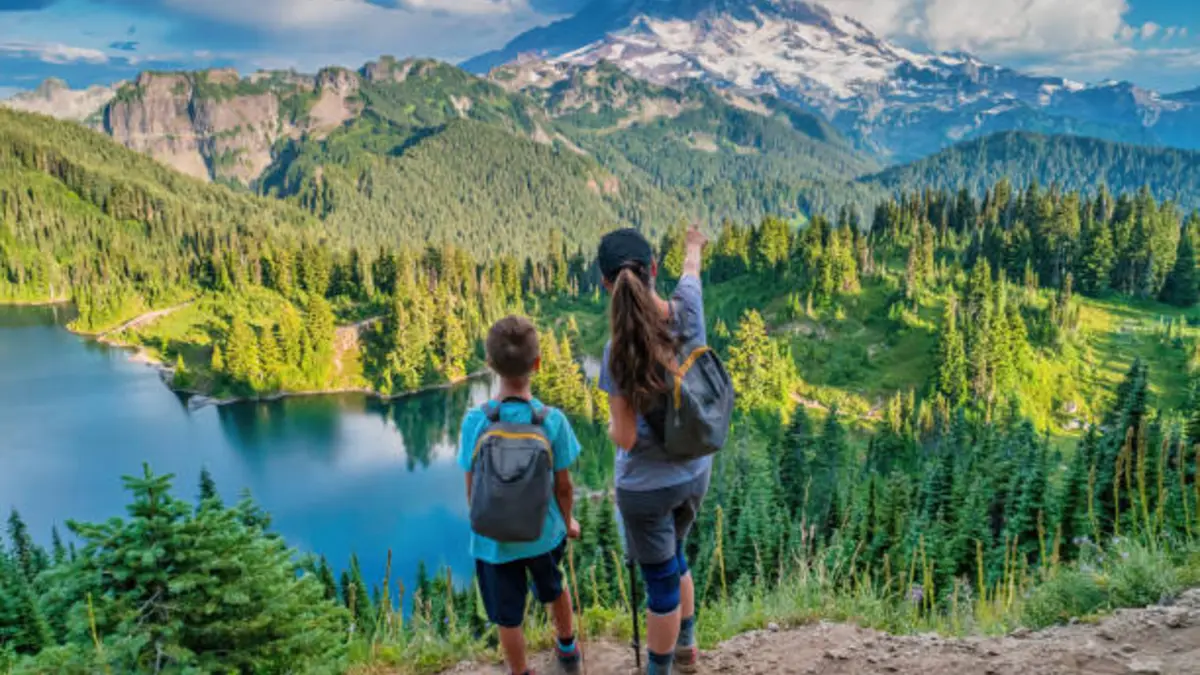
Washington doesn’t do subtle. You get glacier-covered volcanoes, turquoise alpine lakes, and moss-draped rainforest, often within a two-hour drive of downtown Seattle. The hard part isn’t finding a good trail — it’s narrowing down which one deserves your Saturday.
Quick answer: The best hikes in Washington include the Skyline Trail and Naches Peak Loop in Mount Rainier National Park, Colchuck Lake and the Enchantments near Leavenworth, Mount Si and Mailbox Peak close to Seattle, and Hall of Mosses in Olympic National Park. Together they cover every difficulty level, from stroller-friendly loops to full-day scrambles.
I’ve hiked most of these myself over the past several summers, and I’ve also made the mistakes so you don’t have to — showed up without a permit, got skunked on parking, hiked in shorts through a hailstorm in July. Here’s what actually works.
The Best Hikes in Washington at a Glance
| Trail | Region | Distance (RT) | Elevation Gain | Difficulty |
|---|---|---|---|---|
| Mount Si | Near Seattle | 8 mi | 3,150 ft | Hard |
| Mailbox Peak (old trail) | Near Seattle | 9.4 mi | 4,000 ft | Hard |
| Skyline Trail | Mt. Rainier NP | 5.5 mi | 1,700 ft | Moderate |
| Naches Peak Loop | Mt. Rainier area | 3.5 mi | 650 ft | Easy-moderate |
| Colchuck Lake | Alpine Lakes Wilderness | 8 mi | 2,280 ft | Hard |
| The Enchantments (day hike) | Alpine Lakes Wilderness | 18+ mi | 6,500+ ft | Very hard |
| Lake Serene | Cascades / Stevens Pass | 8.6 mi | 2,000 ft | Moderate-hard |
| Gold Creek Pond | Snoqualmie Pass | 1.2 mi | 45 ft | Easy |
| Wallace Falls | Near Gold Bar | 5.6 mi | 1,300 ft | Moderate |
| Marymere Falls | Olympic NP | 2.1 mi | 500 ft | Easy |
| Hall of Mosses | Hoh Rainforest | 0.8 mi | Minimal | Easy |
| Cascade Pass / Sahale Arm | North Cascades NP | 12 mi | 4,000 ft | Hard |
| Mount Pilchuck | Mountain Loop Highway | 5.4 mi | 2,300 ft | Moderate |
Distances and elevation gains are approximate and vary slightly by source — always check current trail conditions on WTA or AllTrails before you go.
Best Hikes Near Seattle
If you’ve only got a morning and want a real payoff, these are the trails locals actually go back to.
Mount Si
Mount Si is the classic Seattle burner: 8 miles round trip with roughly 3,150 feet of elevation gain, almost all of it on relentless switchbacks through second-growth forest. There’s no technical scrambling, which is exactly why it’s so popular — it’s a straightforward, if punishing, cardio test with a rock scramble finish and views over the Cascade foothills.
Quick takeaway: Go early. The trailhead lot fills by 8 a.m. on weekends, and overflow parking means a longer road walk before you even start.
Mailbox Peak
Mailbox Peak has two routes to the same summit: an old trail that gains around 4,000 feet in 2.7 miles (brutal, root-choked, genuinely one of the steepest maintained trails in the state), and a newer, longer trail that’s gentler on the knees. Most locals recommend going up the old trail and down the new one, so you get the workout and the softer landing. At the top, there’s a literal mailbox where hikers leave notes — a small, weird tradition that somehow makes the suffering worth it.
Chirico Trail
Less famous, more forgiving. Chirico Trail sits just off I-90 in Issaquah, and after about 700 feet of climbing, road noise disappears completely. It’s a good pick when Mount Si’s parking lot is already full — which, on a summer Saturday, it usually is by 9 a.m.
Best Hikes in Mount Rainier National Park
Rainier has 183 trails inside the park boundary, but two consistently top every local’s list.
Skyline Trail
The Skyline Trail starts at Paradise and climbs through subalpine meadows that explode with wildflowers in late July and August. On a clear day, you get Rainier looming directly overhead, plus views south toward Mount Adams and Mount St. Helens. It’s moderately strenuous rather than brutal, which is part of why it draws crowds — get there before 9 a.m. if you want a parking spot at Paradise in peak season.
Naches Peak Loop
Naches Peak Loop is the easier, equally scenic alternative near Chinook Pass — 3.5 miles with about 650 feet of gain, wildflower meadows, and reflection views of Rainier in small alpine tarns. It’s an ideal choice for families or anyone who wants Rainier’s drama without Rainier’s leg day.
Note: Mount Rainier National Park now requires timed-entry reservations for several corridors, including Paradise, between roughly 7 a.m. and 3 p.m. during peak season. Book on Recreation.gov well in advance, since slots for the popular entrances go fast.
Best Alpine Lake Hikes
This is where Washington hiking gets genuinely spectacular — and genuinely crowded.
Colchuck Lake
Colchuck Lake is a turquoise alpine lake framed by the twin spires of Dragontail and Colchuck Peak, and it’s arguably the state’s most photographed day hike. The trail climbs steadily through forest before a steeper final push, gaining about 2,280 feet over 4 miles one-way. The trailhead access road is rough gravel; a high-clearance vehicle helps but isn’t strictly required if you take it slow.
The Enchantments (and how the permit lottery actually works)
The Enchantments is the crown jewel of the Alpine Lakes Wilderness — a chain of granite basins and glacier-fed lakes so popular that overnight access is capped and rationed by lottery. Here’s the part most guides gloss over: the area is split into five zones (Eightmile/Caroline, Stuart, Colchuck, Core Enchantments, and Snow), and roughly 75% of overnight permits are handed out through an early-season lottery in February, with the rest released through a daily walk-up lottery during the season. Demand is enormous — tens of thousands of applications compete for only a few thousand overnight spots each year, so most people don’t get picked.
The good news: day hikes don’t require a lottery. You still need a free day-use permit (available at the trailhead) and a Northwest Forest Pass to park, but there’s no cap on how many day permits are issued — the real bottleneck is parking, not paperwork. If you’re set on seeing the Enchantments without winning the lottery, a long, hard day hike is genuinely doable for a strong hiker, especially via Aasgard Pass.
Lake Serene
Lake Serene sits below the sheer face of Mount Index, near Stevens Pass. It’s 8.6 miles round trip with about 2,000 feet of gain — front-loaded into a well-graded first stretch, then steeper switchbacks near the end. It’s a strong middle-ground choice for hikers who want Enchantments-level scenery without Enchantments-level logistics.
Best Easy & Family-Friendly Hikes
Not every great Washington hike requires suffering.
Gold Creek Pond
Gold Creek Pond, near Snoqualmie Pass, is barely a hike at 1.2 miles round trip with only 45 feet of elevation gain — but the mountain backdrop punches well above its weight. The path is wheelchair- and stroller-accessible, which makes it one of the few genuinely inclusive scenic hikes in the Cascades.
Wallace Falls
Wallace Falls, about an hour from Seattle, follows the Woody Trail alongside the Wallace River to a series of waterfalls. You can turn around at any point — the lower falls make a fine short outing, while continuing to the upper falls adds real elevation and a bigger payoff. Go early on weekends; it’s one of the most popular family hikes in the state.
Marymere Falls
In Olympic National Park, Marymere Falls is an easy, well-maintained 2.1-mile round trip through old-growth forest to a 90-foot waterfall. It’s a good option if you’re combining a hike with a Lake Crescent day trip and don’t want to commit half your day to a trailhead.
Best Hikes in North Cascades & Olympic National Park
Cascade Pass / Sahale Arm
Cascade Pass climbs into some of the most jagged, glaciated scenery in the Lower 48, and continuing up to Sahale Arm adds sweeping ridge views over the North Cascades National Park — which, despite its dramatic terrain, sees far fewer visitors than Rainier or Olympic. Expect around 12 miles round trip and roughly 4,000 feet of gain if you go all the way to the arm.
Hall of Mosses, Hoh Rainforest
A short, flat loop through the Hoh Rainforest’s moss-draped big-leaf maples, Hall of Mosses is less than a mile but delivers one of the most atmospheric landscapes in the state — closer to a fantasy set than a typical Pacific Northwest forest.
Mount Pilchuck
Mount Pilchuck combines a short, steep forest climb with a historic fire lookout tower at the summit — one of the few “hike-to-a-lookout” trails in easy driving distance of Seattle, and a strong option if you want big views for a moderate effort (about 5.4 miles round trip, 2,300 feet of gain).
Washington Hiking Passes and Permits, Explained
This trips up more visitors than any trail navigation ever will, mostly because Washington layers several different pass systems depending on who manages the land.
- Discover Pass ($10/day or $45/year): Required at Washington State Parks, DNR lands, and WDFW trailheads. Not valid on federal land.
- Northwest Forest Pass ($5/day ePass or $30/year): Required at developed U.S. Forest Service trailheads in Washington and Oregon — this is the one you’ll need for Colchuck Lake, the Enchantments day-use area, and most Cascades trailheads.
- America the Beautiful Interagency Pass ($80/year): Covers National Parks and National Monuments, and it also substitutes for a Northwest Forest Pass. If you’re hitting Rainier, Olympic, and North Cascades in the same season, this pays for itself fast.
- Sno-Park Permit: A separate winter-only pass for snow-covered parking areas; it doesn’t overlap with the Discover Pass, even during shoulder season.
For overnight backcountry travel in high-demand areas like the Enchantments, you’ll also need a separate wilderness permit on top of your parking pass — the pass gets you to the trailhead, the permit gets you overnight in the wilderness.
When to Go: Season-by-Season
- Late June–early July: Lower-elevation trails (Wallace Falls, Mount Si) are clear; high alpine trails may still hold snow through early July.
- Late July–August: Peak wildflower season at Rainier and Naches Peak — also peak crowds and peak parking headaches.
- September–early October: My personal favorite window. Fewer people, larch trees turning gold in the Enchantments and around Colchuck Lake, and cooler hiking temperatures.
- Winter: Most alpine trails close under snow; lower-elevation rainforest hikes like Hall of Mosses and Marymere Falls stay open and often feel most atmospheric in the rain.
What to Pack and Trail Etiquette
Washington weather turns fast, even in summer — pack a rain shell regardless of the forecast. Beyond that, bring the basics: extra layers, more water than you think you need, a paper map or downloaded offline route (cell service disappears fast in the Cascades), and a headlamp if there’s any chance you’re finishing near dusk.
On crowded trails, step aside for uphill hikers, keep dogs leashed where required, and pack out everything you packed in — popular trailheads like Mount Si and Colchuck Lake see enough foot traffic that small habits add up fast.
For more hiking and outdoor adventure guides, browse our full collection of travel guides.
FAQ
What is the number one hike in Washington state?
There’s no single official “best,” but Colchuck Lake and the Skyline Trail at Mount Rainier are the two most frequently ranked at the top by locals and guidebooks alike, thanks to their scenery-to-effort ratio.
Do I need a permit to hike in Washington?
For most day hikes, you need a parking pass (Discover Pass or Northwest Forest Pass, depending on the land manager), not a hiking permit. Overnight trips into high-demand wilderness areas like the Enchantments require a separate backcountry permit.
What is the hardest hike in Washington on this list?
A day-hike attempt of the full Enchantments traverse is the hardest — 18+ miles and over 6,000 feet of gain in a single push. Mailbox Peak’s old trail is the toughest short hike, with 4,000 feet of gain in under 3 miles.
What’s the best time of year to hike in Washington?
Late July through August for wildflowers and reliably clear high-elevation trails; late September for fall color and thinner crowds.
Are dogs allowed on Washington trails?
It varies by land manager. Dogs are generally allowed on leash on U.S. Forest Service and Washington State Parks trails, but are prohibited on most trails inside National Parks, including Mount Rainier and Olympic.
How do I get an Enchantments permit?
Apply during the early-season lottery in February for the best odds, or try the daily walk-up lottery in season if you’re already nearby. Day hiking doesn’t require winning anything — just a free day-use permit at the trailhead and a Northwest Forest Pass to park.
What’s the easiest scenic hike near Seattle?
Gold Creek Pond, near Snoqualmie Pass — under a mile and a half, minimal elevation gain, and wheelchair/stroller accessible.
Is Mount Rainier or the Enchantments better for a first-timer?
Mount Rainier’s Naches Peak Loop or Skyline Trail are far more beginner-friendly. Save the Enchantments for once you’ve built up mileage and elevation tolerance on shorter alpine hikes like Lake Serene.